Continuous Efforts in the Healthcare Sector: "New Quality Medical Networks" Emerge into the Spotlight | NIDA Co-Hosts the 2nd Medical Industry Digital Innovation Conference & the National Grand Finale of the 8th Smart Medical Innovation Comp
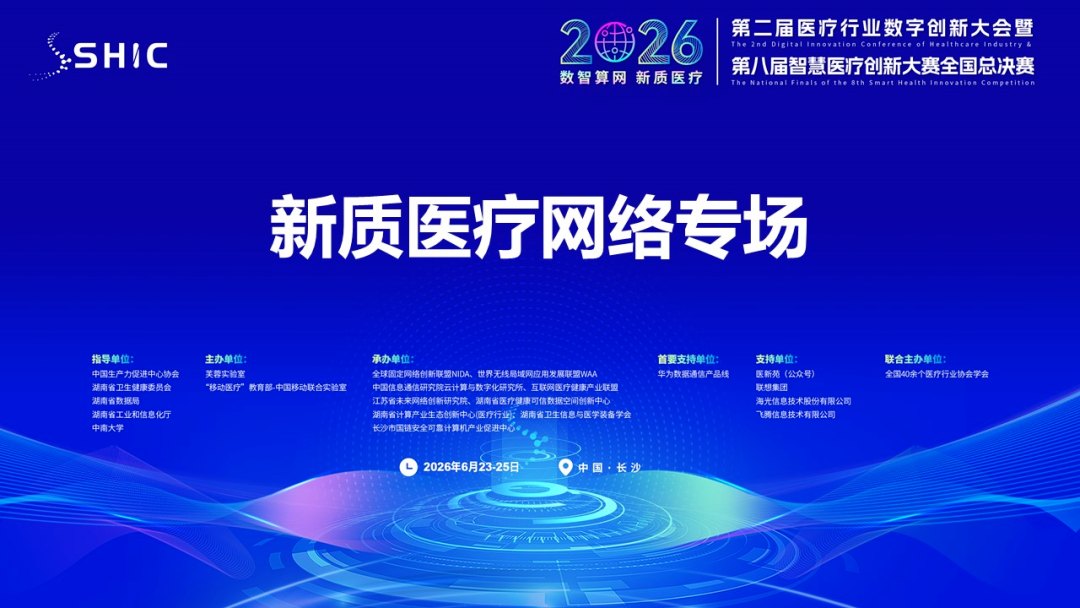
[Changsha, Hunan, June 24, 2026] — Under the theme of "Digital Intelligence Computing Network, New Quality Healthcare," the 2nd Medical Industry Digital Innovation Conference & the National Grand Finale of the 8th Smart Medical Innovation Competition grandly convened. The Network Innovation and Development Alliance (NIDA) not only deeply participated in the keynote activities of the main forum but also co-hosted the "New Quality Medical Network" sub-forum themed "10-Gigabit Foundation, AI-Empowered Digital and Intelligent Healthcare." Participating healthcare experts and scholars engaged in in-depth discussions on how 10-Gigabit AI medical networks can construct a converged foundation for "Healthcare + AI," achieving highly fruitful results.
At the "New Quality Medical Network" sub-forum co-hosted by NIDA, Tan Hang, Executive Vice President of the Jiangsu Future Networks Innovation Institute and Vice Chairman of NIDA, delivered the opening remarks:
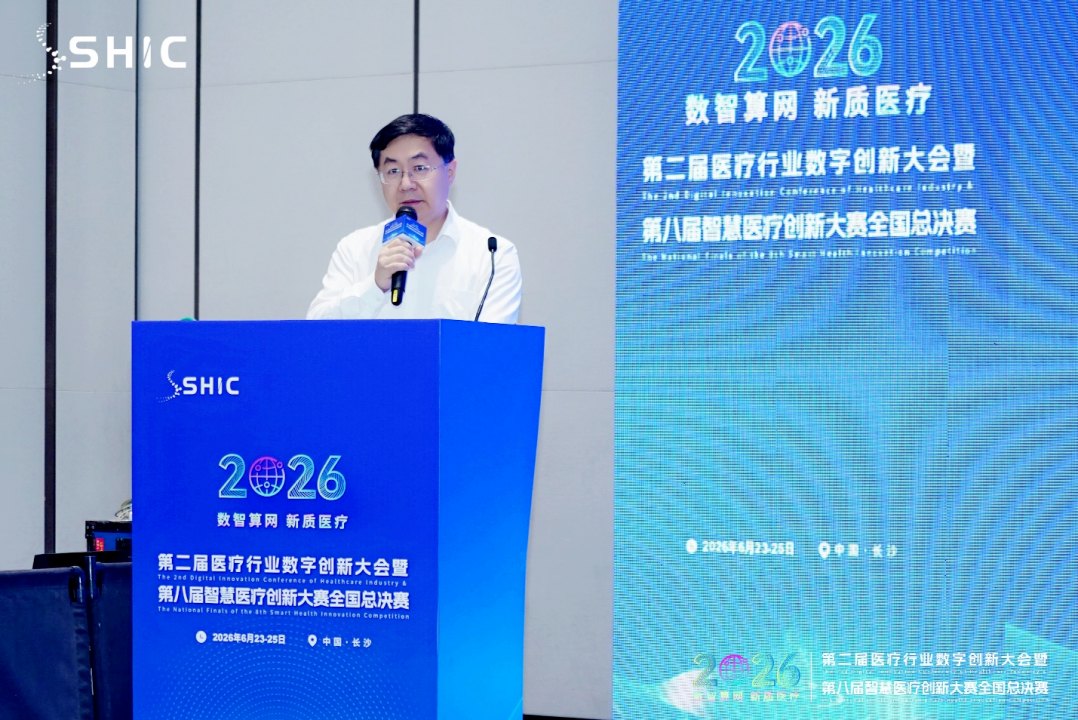
Tan Hang, Executive Vice President of the Jiangsu Future Networks Innovation Institute and Vice Chairman of NIDA, Delivers Opening Remarks for the Sub-Forum
In his speech, Tan Hang stated, "First of all, on behalf of the Jiangsu Future Networks Innovation Institute and the NIDA Alliance, I would like to extend my warmest congratulations on the grand opening of this conference, and express my sincere gratitude to all the organizing units and colleagues involved in its preparation. The implementation of smart healthcare must be deeply rooted in information networks. Medical networks cannot simply copy the architecture of the general Internet; they must accommodate the specific requirements of medical operations for low latency and strong encryption. We are jointly dedicated to researching and creating a faster, more accurate, safer, more flexible, and customizable future network, forging a trustworthy network foundation for smart healthcare, and providing robust support services to meet the networking needs of hospitals and universities nationwide."
Following this, Huang Weihong, Executive Deputy Director of the Joint Laboratory of Mobile Medical Ministry of Education & China Mobile and Chairman of the NIDA Medical Industry Committee, introduced the definition of the "New Quality Medical Network" competition track and provided an overview of the competition:
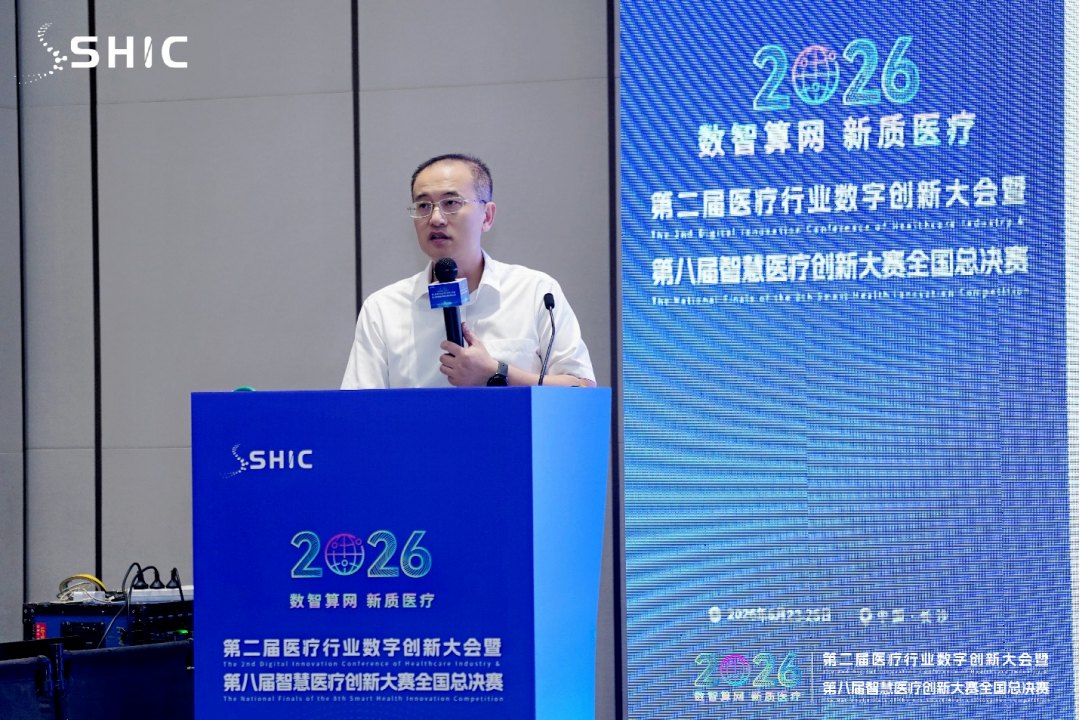
Huang Weihong, Chairman of the NIDA Medical Industry Committee, Introduces the "New Quality Medical Network" Track
Huang Weihong expressed that the application of AI and big data has brought tremendous changes to the information construction of the healthcare industry. Medical networks must also innovate alongside evolving business applications. New network architectures and technologies are emerging continuously to embrace the challenges of AI applications and massive data. The new track will continue to open up space for collaborative innovation between healthcare and networking, injecting new momentum into the coordinated development of computing networks, intelligence, data, and healthcare within the industry.
During the standard interpretation segment, Jiang Wenchuan, a standards expert from the NIDA Campus Working Group, delivered an in-depth interpretation and shared insights on the two released standards in conjunction with intra-campus and cross-campus business scenarios and requirements. He stated that the construction of supporting standards will continue moving forward to serve the development of medical operations.
In the standard application practice segment, the Hengqin Hospital of the First Affiliated Hospital of Guangzhou Medical University shared its practice of building a Hengqin-Macau cross-border medical foundation based on a new-generation all-optical Ethernet network and Wi-Fi 7. Relying on a "premium, converged, secure, and reliable" network solution, they achieved 10-Gigabit access and second-level medical image viewing, while establishing a trusted medical data corridor across Guangdong and Macau to realize information interoperability among hospitals in Hengqin, Zhuhai, and Macau.
The Pingshan District People's Hospital of Shenzhen shared its smart diagnosis and treatment system built upon 10-Gigabit connectivity and zero-roaming technology. Through the zero-roaming network solution, the system realizes three core characteristics—wireless connectivity, IoT convergence, and intelligent O&M—breaking down traditional network barriers, which not only solidifies the foundation of current smart healthcare but also unlocks infinite possibilities for future operational innovations.
The Third Affiliated Hospital of Sun Yat-sen University shared its network solution based on high-quality smart wards and intelligent O&M systems. By setting up "one single network" across the entire hospital, network devices and users became fully visible, manageable, and controllable. At the same time, the supporting AI-powered intelligent O&M system substantially reduces manual operation labor, establishing a reproducible benchmark for autonomous smart hospital networks.
Finally, two first-prize winners from the New Quality Medical Network track were specially invited to deliver brilliant presentations, bringing the successful sub-forum to a well-rounded conclusion.
At the closing ceremony, as one of the initiating parties, NIDA participated in the launch ceremony of the Data Resource Development and Utilization Competition:
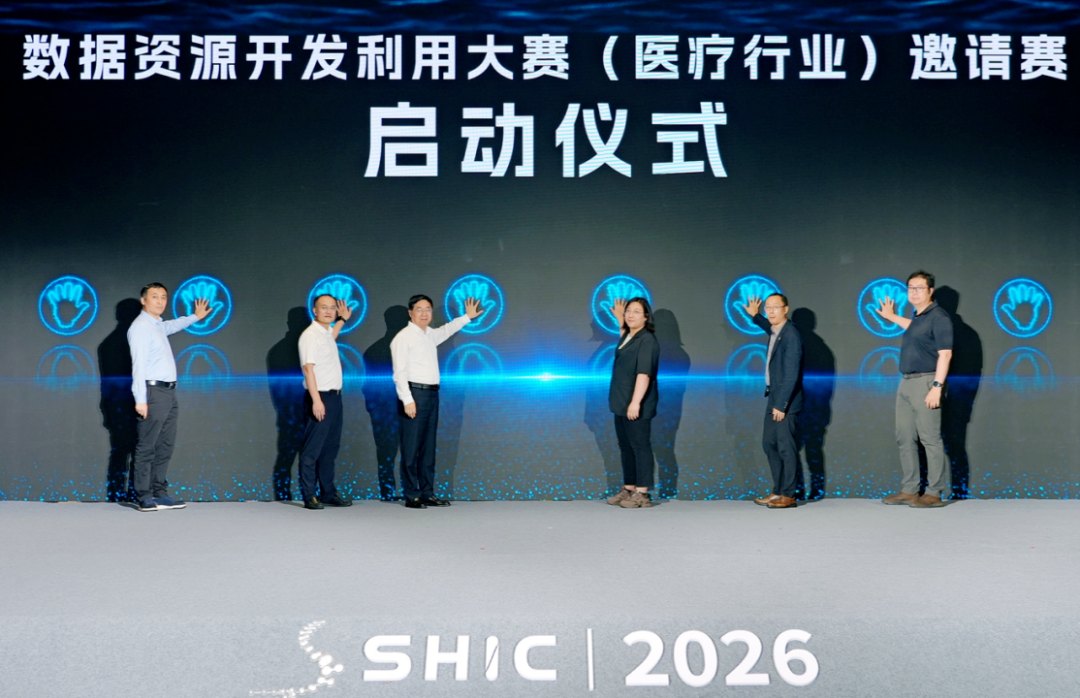
Launch of the Data Resource Development and Utilization Competition (Medical Industry)
The "Data Resource Development and Utilization Competition" aims to build an innovative platform for "Intelligent Economy + Healthcare." Through the philosophy of "promoting applications and construction through competition," it seeks to select a batch of implementable and replicable demonstration projects and products for health data resource development, building data-driven new quality productive forces for the medical industry.
Concurrently, at the closing ceremony, the Network Innovation and Development Alliance (NIDA) officially released two standards for the healthcare industry:
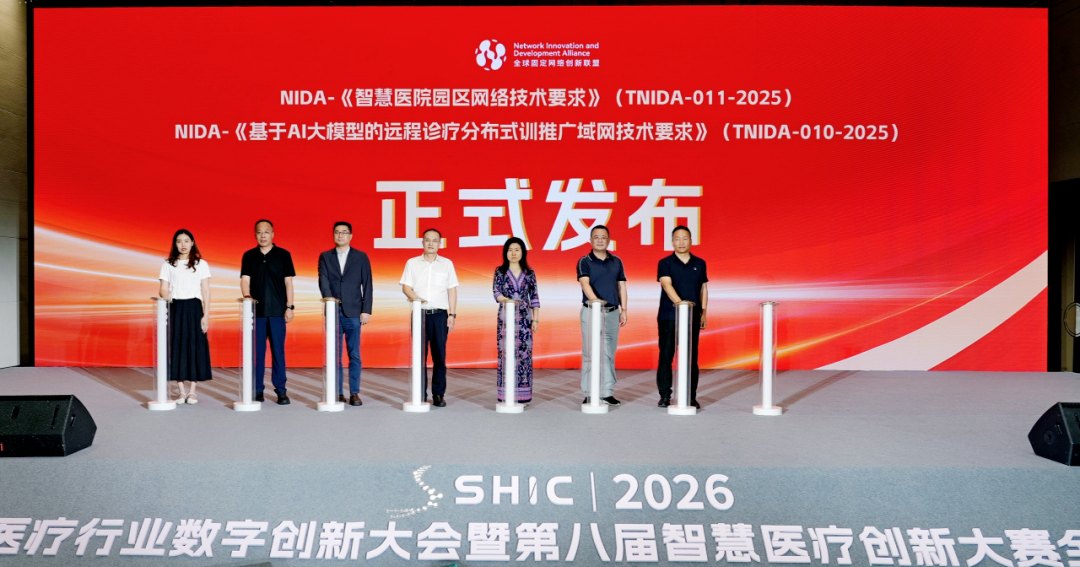
Official Release of NIDA Medical Industry Standards
The two network construction standards are: *Technical Requirements for Smart Hospital Campus Networks* and *Technical Requirements for Telemedicine Distributed Training and Inference Wide Area Networks Based on AI Large Models*. The release of these standards will help drive continuous improvements in network construction standards across the healthcare sector.
The successful hosting of this conference has built an important exchange platform for the digital transformation of the medical industry. As a co-host of the event, NIDA will continue to leverage its technological advantages in the network domain, working in full cooperation with medical industry partners to jointly advance standard formulation and technological innovation, contributing strength to the construction of a smarter and more efficient healthcare service system.