Exploring the 2030 Evolution Path of Intelligent Data Communications: Network Innovation and Development Summit 2026 Successfully Held
[Shenzhen, China, October 22, 2026] The Network Innovation and Development Summit 2026 was grandly held at the Futian Convention and Exhibition Center in Shenzhen. Organized by the Network Innovation and Development Alliance (NIDA) under the theme "AI Ignites Application Innovation, Network Empowers Industry Evolution," the conference featured in-depth discussions on "Trends in the Evolution of Intelligent Data Communication Networks toward 2030." It brought together global academicians, experts, and industry leaders to discuss network evolution in the AI era, and showcased a series of industry research reports and major ecosystem cooperation achievements.
Industry Trends: In the AI Era, Networks Are Moving from "Connecting People" to "Connecting Intelligence" and from "Passive Forwarding" to "Autonomous Decision-Making," Empowering the Intelligent Transformation of Industries
At the opening ceremony, three distinguished guests delivered speeches, painting a new picture of network innovation and industry upgrading in the AI era.
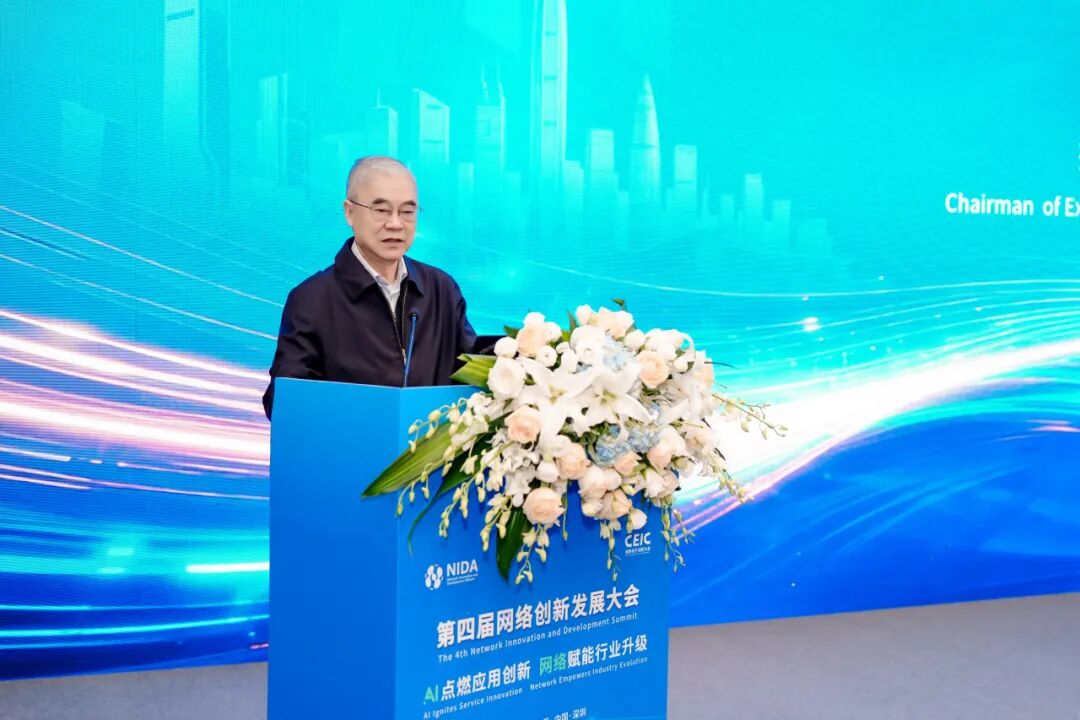
Wu Hequan, Chairman of the Expert Committee for Advancing IPv6 Scale Deployment and Application, stated that toward 2030, next-generation networks will evolve toward intelligent data communication networks. With 6G immersive communications, computing power networks, and the Agent Internet as the three core driving scenarios, networks will move from "connecting people" to "connecting intelligence."
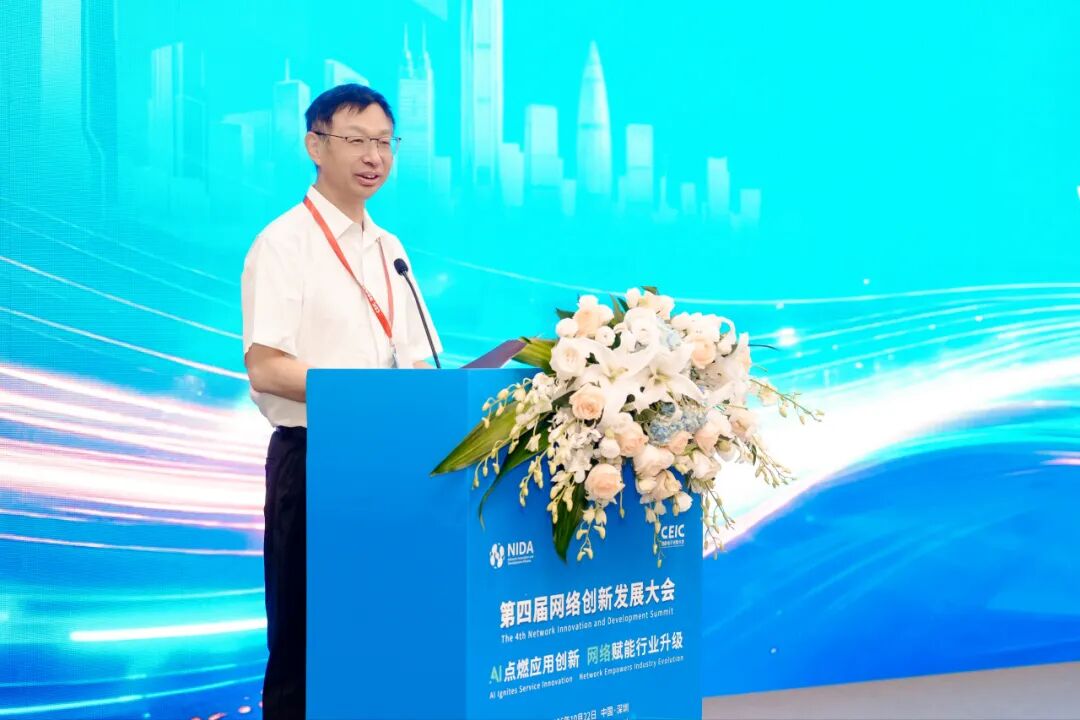
Zeng Dehua, Vice President of the China Association for Educational Technology, focused on vertical industry empowerment. He said the education sector urgently hopes to join hands with industry to build networks with intelligent perception and proactive defense capabilities, creating a new generation of self-intelligent, self-healing education networks to support the global digital-intelligent upgrading of education.
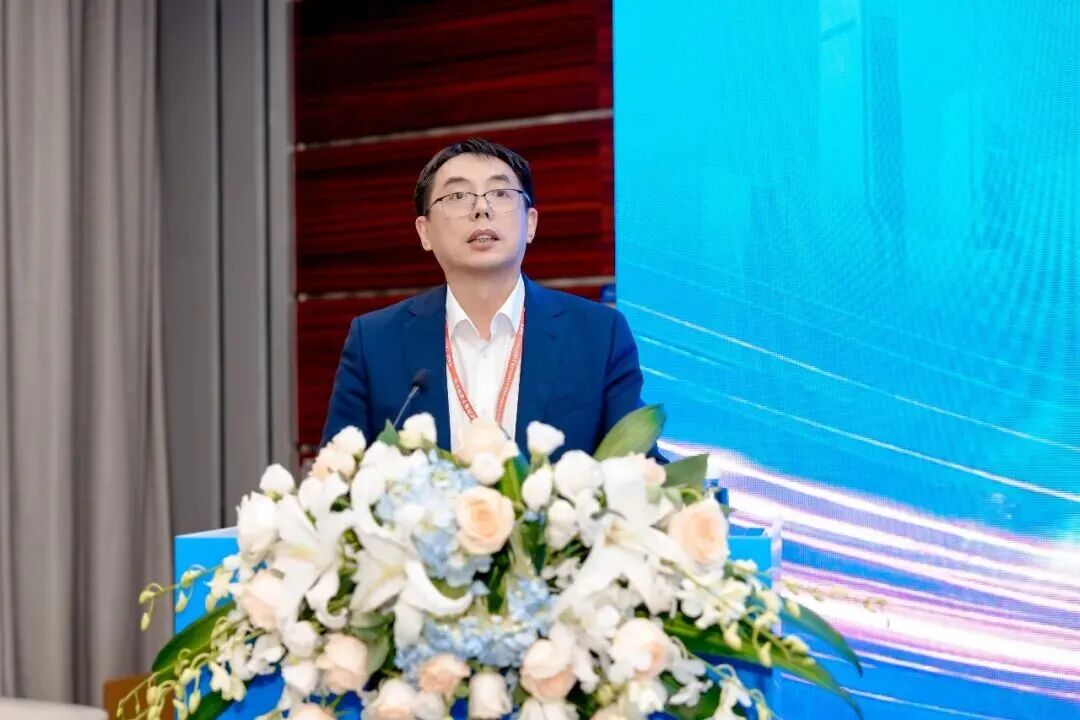
Jing Tao, Chairman of the NIDA, emphasized that fixed networks are simultaneously advancing toward "Network 2030." The future will focus on next-generation architecture reconstruction, building a new network system featuring native intelligence, deterministic transmission, and endogenous security, achieving the shift from "passive forwarding" to "autonomous decision-making."
Evolution Path: "Research on the Evolution of Intelligent Data Communication Networks toward IMT-2030" Defines Three Major Scenarios and Six Core Technologies
On the core topic of "the network evolution path toward 2030," the conference staged both thought-provoking exchanges and top-level design presentations.
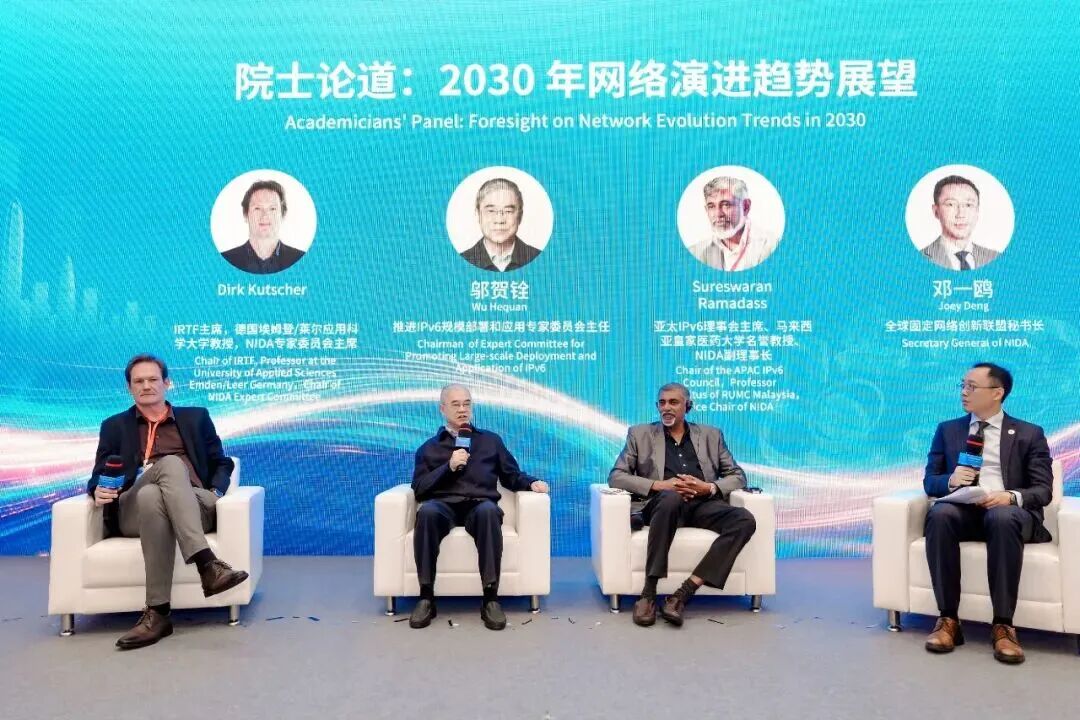
In the "Academicians' Dialogue" session moderated by Deng Yiou, Secretary-General of NIDA, Academician Wu Hequan, Sureswaran Ramadass, Chairman of the Asia-Pacific IPv6 Forum, and Dirk Kutscher, Chair of the IRTF, shared the stage. The experts agreed that key future network scenarios will center on 6G converged communications, intelligent computing networks, and the Agent Internet, while ultra-broadband, AI-native design, deterministic experience, security and resilience, network self-intelligence, and lossless high throughput will become the most critical technological features.
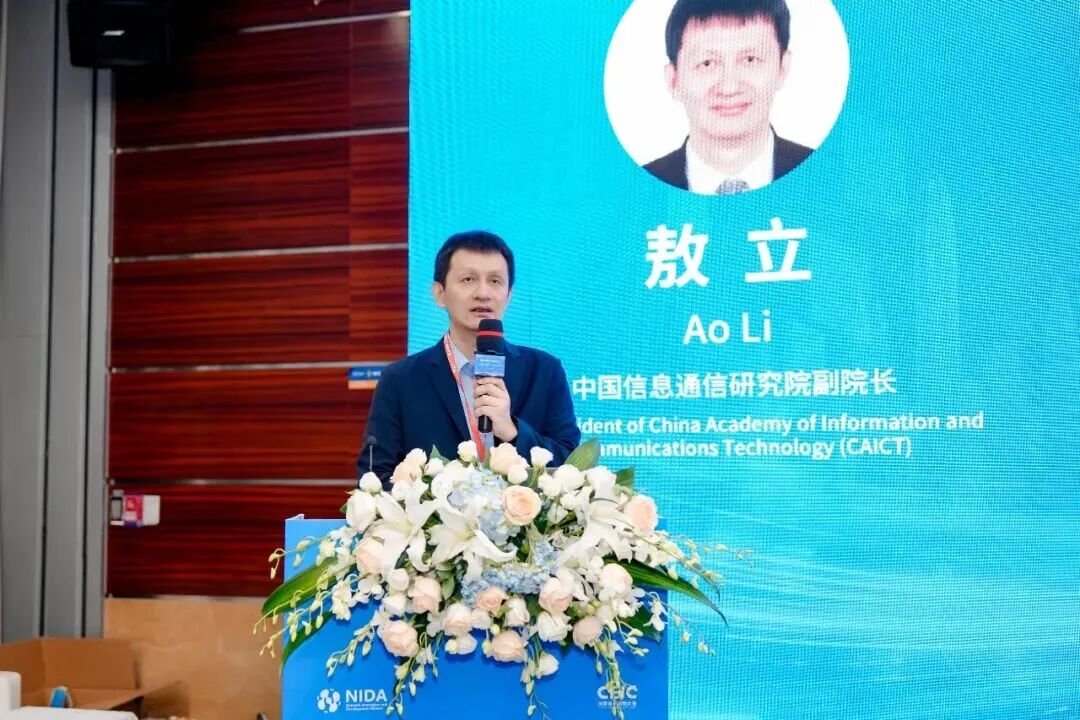
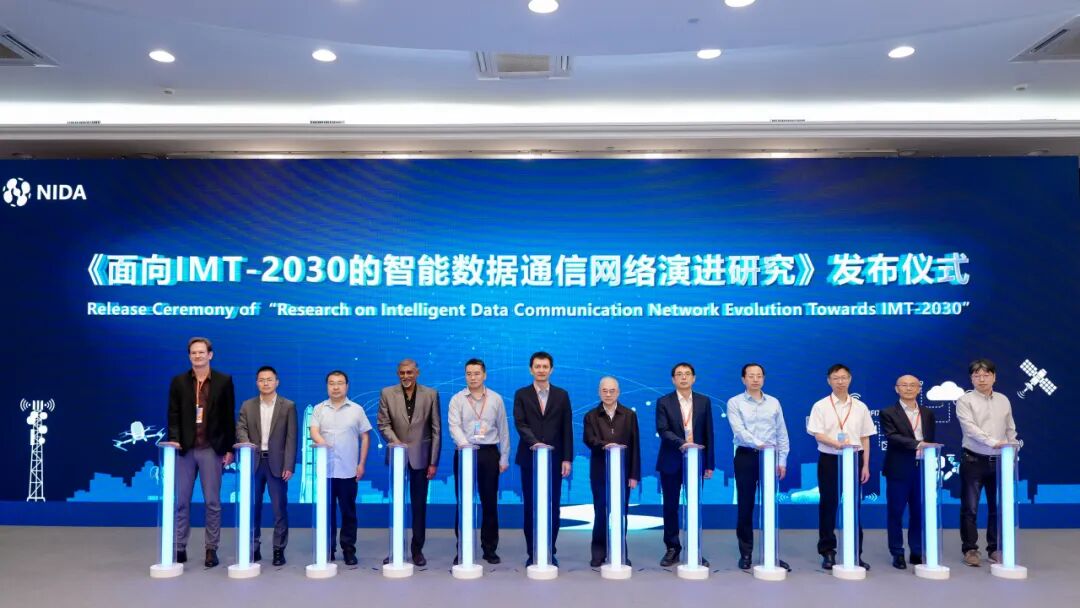
Ao Li, Vice President of the China Academy of Information and Communications Technology (CAICT), provided an in-depth interpretation of the *Research on the Evolution of Intelligent Data Communication Networks toward IMT-2030*, systematically outlining the vision of a new generation of IP networks centered on network agents. A launch ceremony for the report was also held at the conference, providing a solid theoretical foundation for industry evolution.
Evolution in Practice: The Three Major Operators Share Thoughts and Explorations on Industry Upgrading
In the "Pioneering Ideas" session, experts from basic telecom operators shared concrete approaches to network evolution.
Gong Xia, Director of the Converged Metro Technology Research Center, Internet Technology Research Institute, China Telecom, interpreted the *White Paper on Metropolitan Area Network Evolution for Agent Communication*. Zhang Dechao, Deputy Director, Institute of Fundamental Network Technology, China Mobile Research Institute, interpreted the *Research Report on 6G-Oriented Al Transport Network Protocol*. Cao Chang, Chief Expert of Network Communications, China Unicom, shared his thoughts and practice on AI-Defined Networking (AIDN), exploring the upgrade path from "selling traffic" to "selling tokens." In addition, Zhang Xiaoping, Research Fellow, Department of Computer Science, Tsinghua University, gave a special presentation on the new challenges facing education networks in the AI era.
Together, these achievements — spanning metro networks, 6G bearer networks, and AI-native networks — outline a complete picture of network capability upgrades.
Setting Sail: Multiple Innovation Initiatives Launched for Network 2030
The conference was not only a platform for exchanging ideas but also a beacon for industry practice, with a series of major projects aimed at driving industry upgrading launched in succession.
The MSA for 6G-Oriented Al Transport Network Protocol and the MSA for Agent-Networked Infrastructure (ANI) were officially established, committed to building the foundation of an agent interconnection network. The launch of the Enterprise Autonomous Network Operations & Maintenance Agent Evaluation Platform also marked the gradual shift of AI-empowered networks from standards to practice. The I² Link Network industrial cooperation initiative was launched simultaneously, aiming to promote joint development of standards for industrial intelligent networks.
Industry Collaboration: Joint Ecosystem and Standards Development, Multiple Alliance Achievements Released
The conference also bore witness to industry-wide collaboration and implementation. In the achievements release session, multiple alliance standards and practical outcomes were published.
The China Cybersecurity Industry Alliance (CCIA) jointly with NIDA launched Standardized Evaluation for AI Security Products, signaling the move of AI security products into industrial practice. The *Research Report on WLAN Intelligent Sensing Technology* represents an important practice in upgrading networks from connection pipelines to sensing intelligence. The series of standards for high-level autonomic networks for enterprises marks a standards upgrade for AI-empowered vertical industry networks: network operations agents can dramatically improve network O&M efficiency and reduce costs, enabling minute-level fault localization.
Internationalization: The Pioneer Program Reaches more countries
NIDA is committed to building global industry consensus, fostering an international ecosystem integrating industry, academia, research, and application, advancing fixed network technology innovation, and promoting the sustainable development of the fixed network industry. Its standards have gradually been adopted in Asian countries including Malaysia, Indonesia, Kazakhstan, and Uzbekistan.
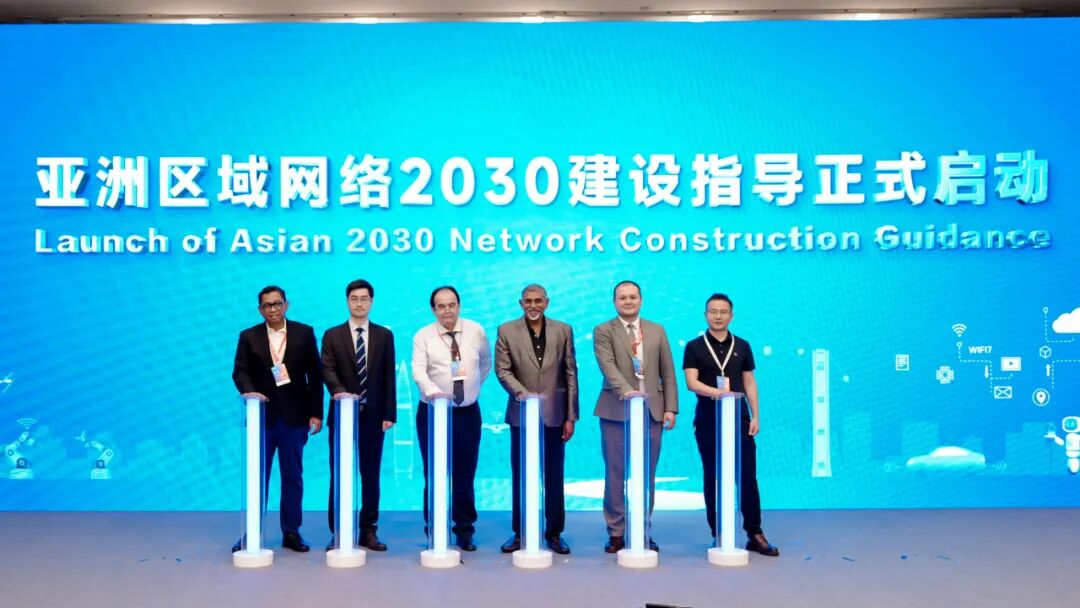
The Asia Regional Network 2030 Construction Guidance initiative was officially launched at the conference.
Taking "AI Ignites Application Innovation" as its starting point and "Network Empowers Industry Upgrading" as its destination, the conference concluded on a high note. NIDA will continue to work hand in hand with global industry partners — driving standards with consensus and driving practice with standards — to jointly build a solid foundation for intelligent data communication networks toward 2030. The Research on the Evolution of Intelligent Data Communication Networks toward IMT-2030 released at the conference will serve as an important reference for network construction in relevant Asian countries.