Industry Self-Intelligent Network Enters the New L4 Era --Road to Industry AN L4 Forum Successfully Held
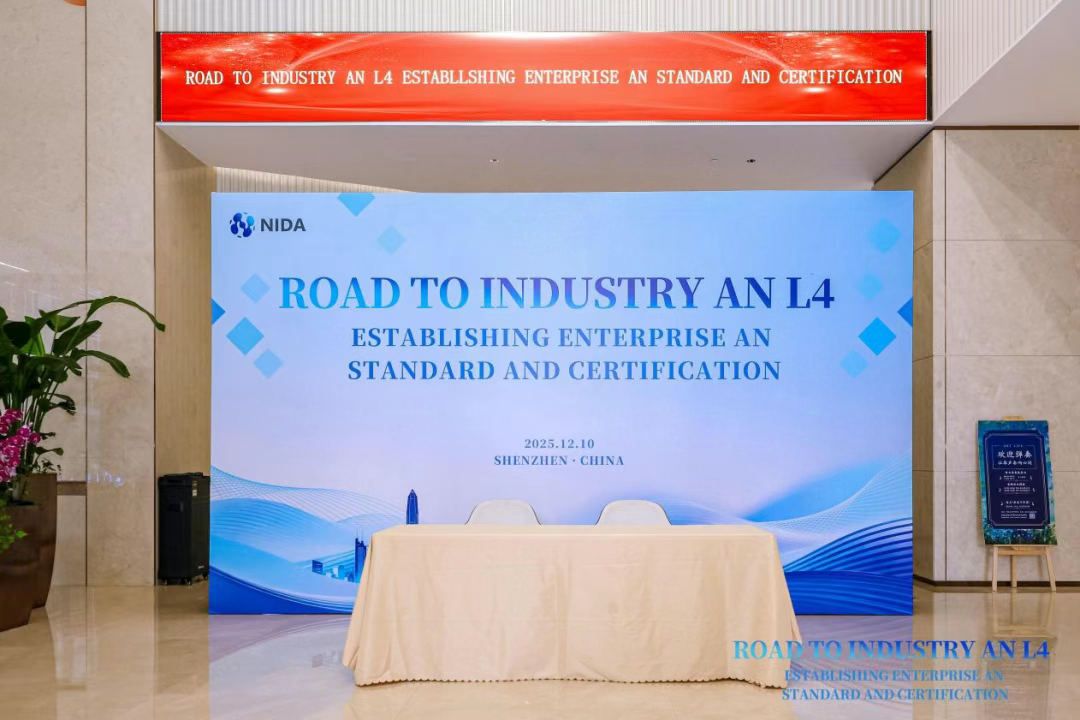
[Shenzhen, December 10, 2025] " Road to Industry AN L4 Forum " hosted by Network Innovation and Development Alliance (NIDA) was successfully held in Shenzhen-Hong Kong International Science Park. Focusing on the core challenges and development paths of network automation and intelligence in the AI era, the forum brought together experts from standards organizations, research institutes, leading enterprises, and authoritative evaluation organizations to discuss the complete ecosystem construction of self-intelligent networks (Autonomous Networking, AN )) from technical standards, industry practices, and quality certification. It marks a key step for the industry AN network to move towards L4 high-level self-intelligence.
AI Drives Network Transformation, and Industry AN Upgrades Are Necessary
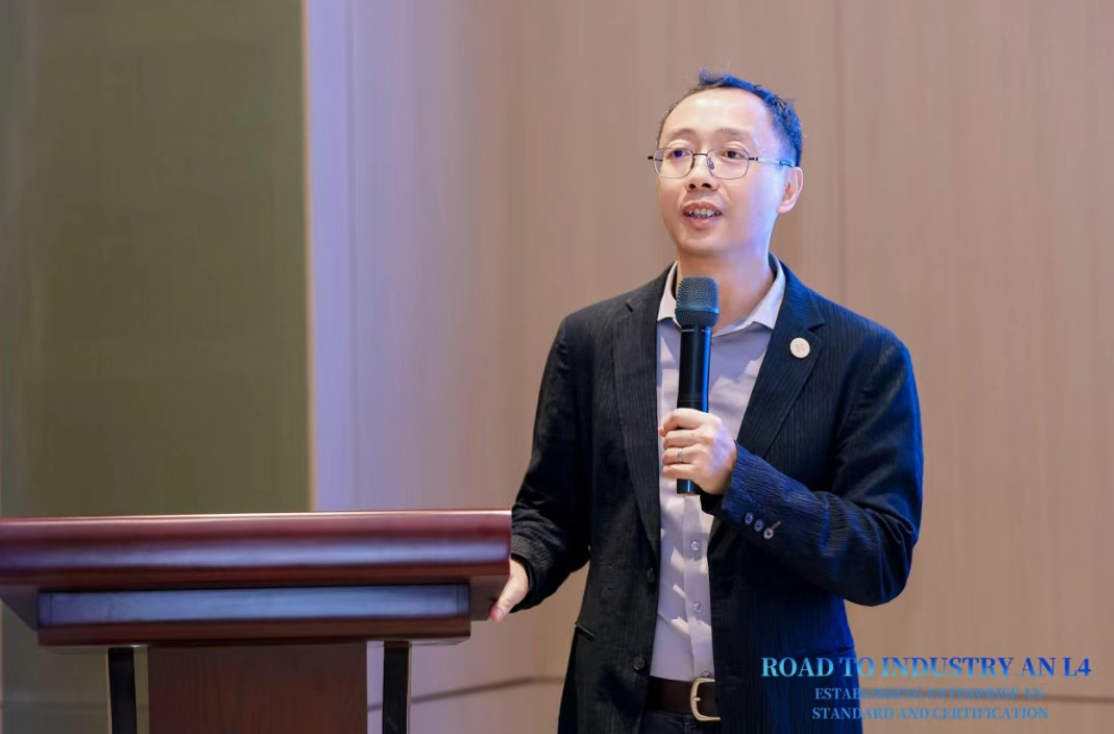
Deng Yiou, Secretary-General of Network Innovation and Development Alliance (NIDA), pointed out in his opening speech that as AI and Agent technologies penetrate all industries, the application layer is accelerating automation iteration, while the network is increasingly becoming "the bulkiest and slowest link". Especially in the industry network, its automation level has lagging behind the application system seriously, may in the intelligent tide from "driver" to "stumbling block". He sheds light on the current predicament through a vivid example: A senior network expert of a top bank cannot retire because the network-wide change depends on his manual review, highlighting the urgency of network automation transformation. Secretary-General Deng stressed that migrating the accumulative AN technologies, experience, and architecture of carriers to industry networks and systematically improving their automation capabilities are the original intention and mission of this forum.
International Vision and Standard Leadership: Drawing an AN roadmap
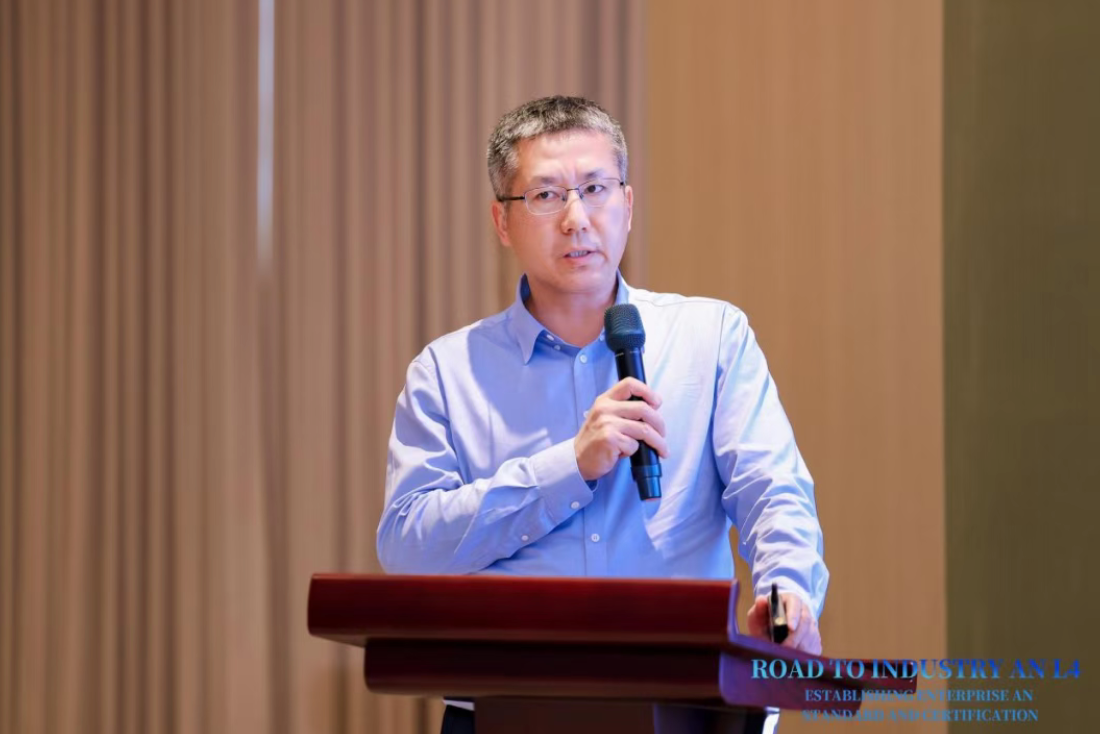
Dirk Kutscher, Professor of Hong Kong University of Science and Technology (Guangzhou) and Chairman of the IRTF, was invited to share the cutting-edge insights of Autonomous Networking for AI Networks. He elaborated on the four key pillars of AI networks, providing a clear international roadmap for AN technology evolution.
Ma Junfeng, deputy chief engineer of the Institute of Technology and Standards of China Academy of Information and Communications and chairman of NIDA's self-intelligence network working group, introduced in detail the latest progress of self-intelligence network standardization in China. He said that the NIDA self-intelligence network working group has brought together more than 30 industry chain partners and has carried out scenario sorting, graded assessment, and standard development in key industries such as finance, education, and healthcare. He shared the layout of the China Communications Standardization Association (CCSA) in building the "general + professional" self-intelligent network standard system, and the latest research on key technologies such as intelligent agents and large network models. Ma Junfeng pointed out that in the future, the differentiated positioning of NIDA, TMF, ETSI ENI, and other international standards organizations should be clarified, and a clear L3 to L4 evolution path should be defined by focusing on high-value industry scenarios.
Industry readiness and large-scale commercial use: L4 Year Opening
Wang Hui, President of Huawei Data Communication NCE, announced in his speech that 2025 has become the first year of commercial use of AN L4. According to his analysis, key AI technologies, such as large model capabilities, reinforcement learning technologies, and inter-agent communication (A2A) protocols, are ready, laying the foundation for the AN system to implement a closed-loop from intent understanding to precise execution. New challenges such as access management of massive AI agents, internal security threats, and traffic mode changes brought by the explosion of intelligent hardware constitute the core driving force for AN L4 development.
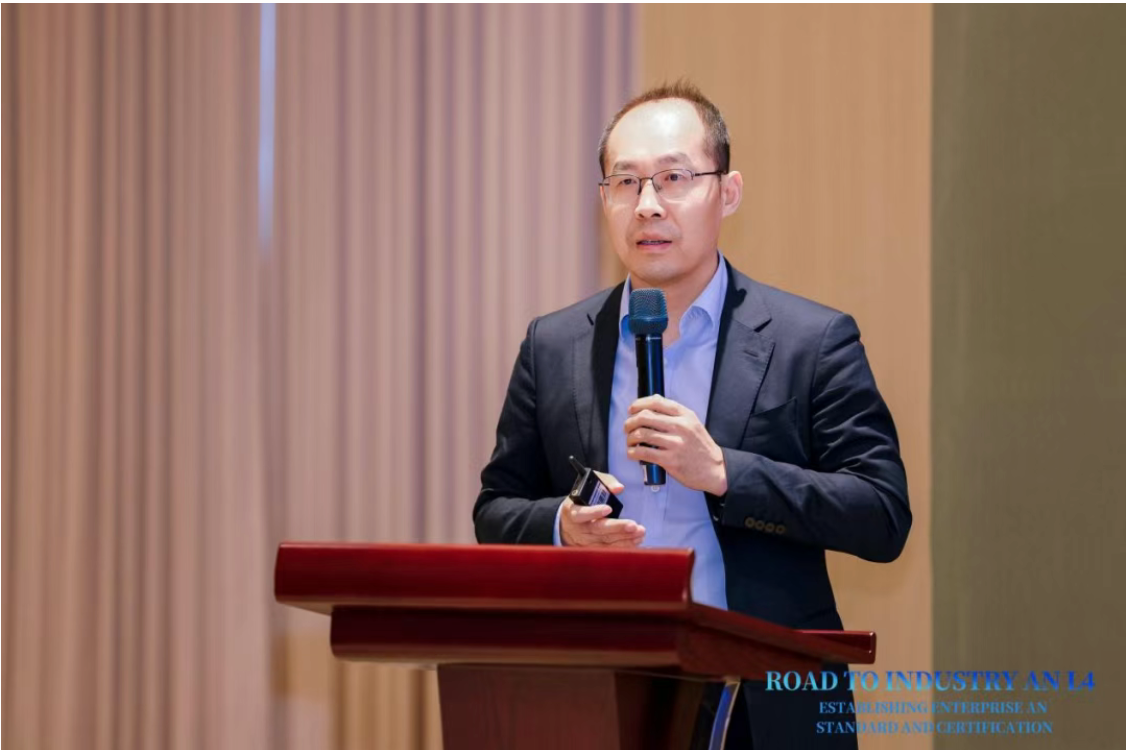
Wang Hui disclosed that more than 30 operators around the world have participated in TM Forum-related projects. It is expected that more than 100 operators will launch AN pilot commercial use next year. In the enterprise market, the finance and education industries will become the focus of the large-scale commercial use of AN next year. The financial industry is facing a tenfold increase in the data center scale, and has an urgent need for "zero interruption" self-driving capabilities. The education industry, however, needs to cope with the complex O&M challenges of multi-campus and high-concurrency access. He predicted that the market space of AN software without hardware has reached tens of billions of RMB. If hardware upgrade is included, the market will be hundreds of billions of dollars.
Quality building and assessment enablement: Building a healthy industry ecosystem
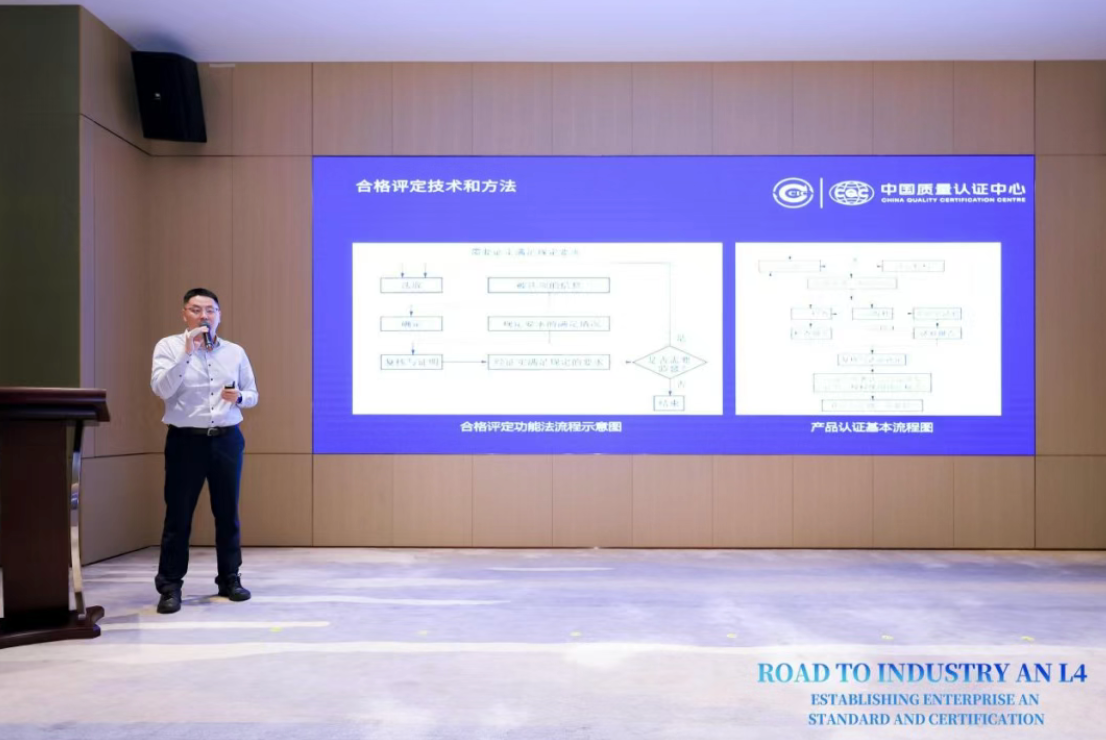
The high-quality development of the industry is inseparable from the rigorous quality certification and evaluation system. Wang Yabin, senior engineer of China Quality Certification Center (CQC), provided a methodology for NIDA to build AN industry certification system from the perspective of national conformity assessment system. He detailed the standardized certification process based on the ISO/CASCO toolbox and suggested that NIDA could refer to the establishment of a hierarchical certification evaluation system covering management practices, general requirements, and technical documents.
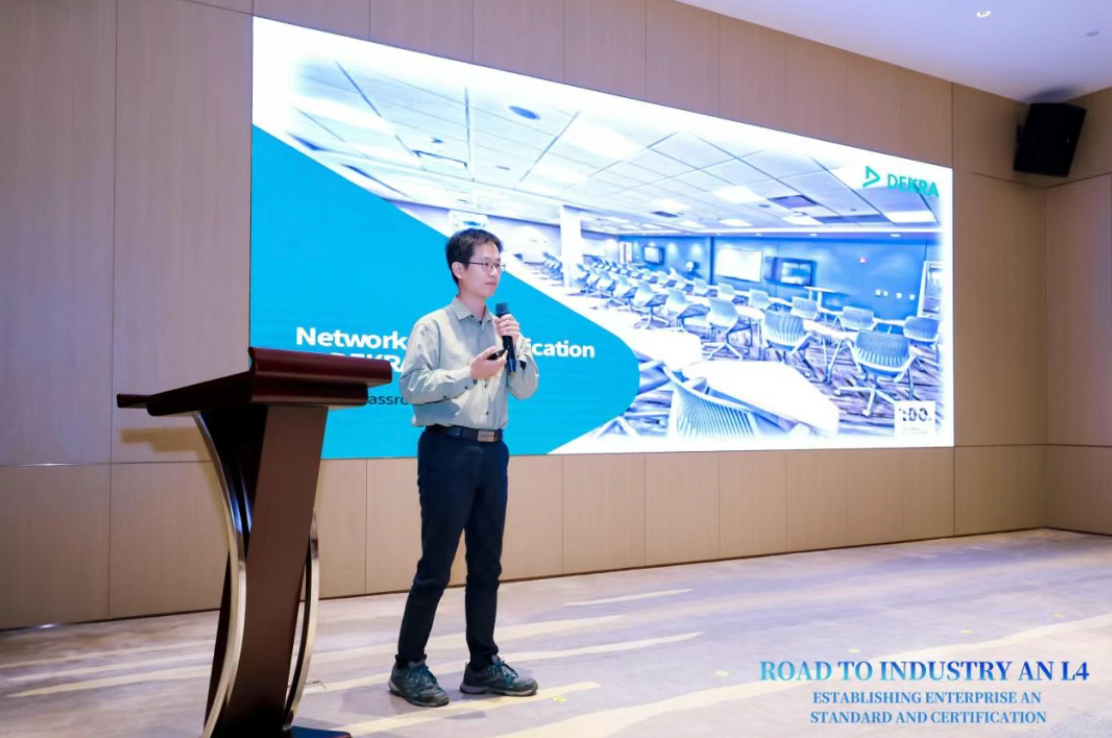
Liang Shi, senior manager of Dekai Quality Certification (Shanghai) Co., Ltd. Guangzhou Branch, shared a successful test case of smart classrooms in Xi'an Jiaotong University based on NIDA standards. Based on his experience in developing tools and scripts in the IoT test field, Dekai transformed NIDA's College Campus Network Evaluation Indicators and Test Methods into an executable and reproducible automatic test scheme, providing a model for the implementation and application of the standard. Liang said Dekai will be committed to helping the NIDA standards and assessment system go global.
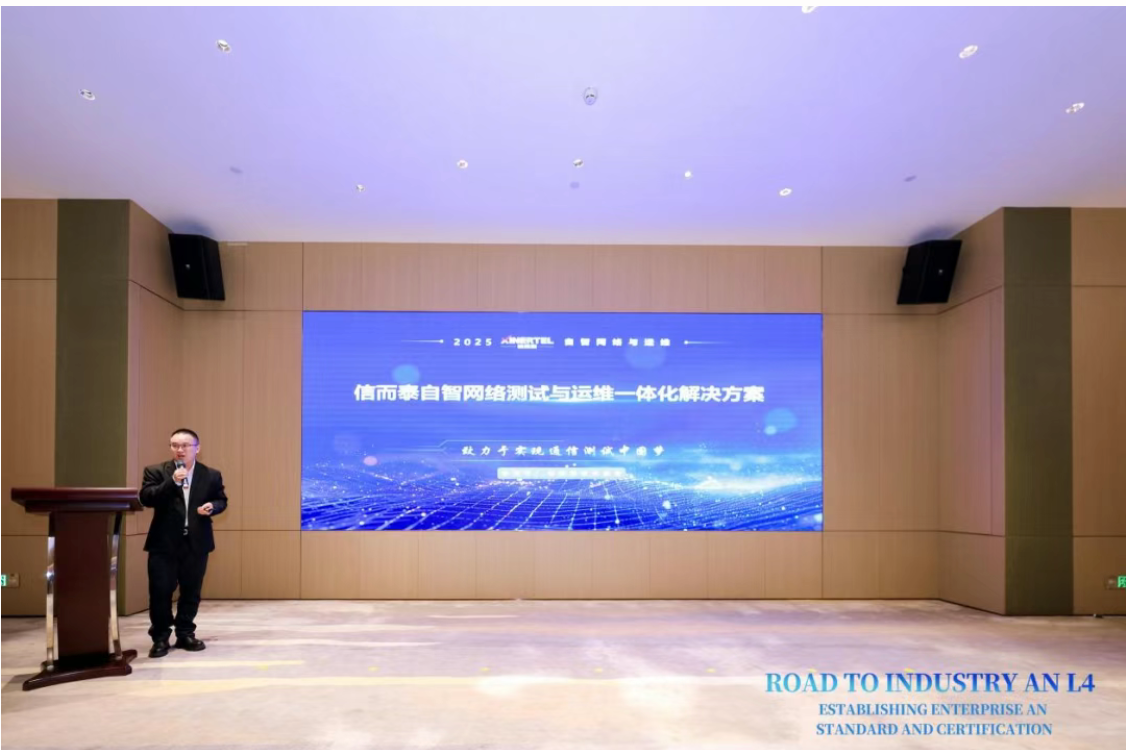
Li Liping, technical director of Beijing Xinertai Technology Co., Ltd., demonstrated how to test a large model platform using tools such as traffic simulation, network impairment simulation, active/passive O&M monitoring, and AI from the perspective of a test solution provider. Provides full-stack test capabilities for R&D, verification, and O&M of self-intelligent networks, enabling industry innovation.
A new chapter: Industry Chain Collaboration Promotes AN Implementation
At the end of the forum, all the speakers took the stage together, symbolizing the joint efforts of all parties in the industry chain and officially opening a new chapter in the collaborative development of industry self-intelligent network standards and certification.
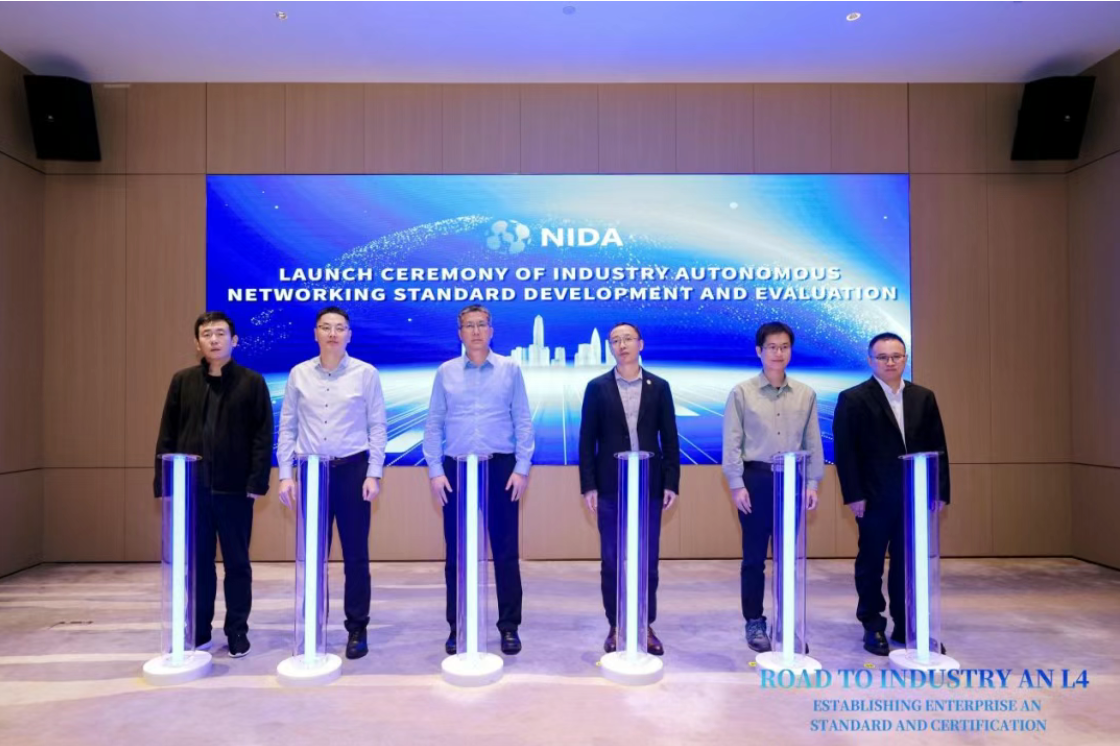
The successful holding of this forum not only clearly outlines the technical path and business blueprint for the evolution of industry networks to L4 self-intelligence in the AI era, but also promotes in-depth dialogue and collaboration among standards organizations, equipment vendors, carriers, evaluation organizations, and vertical industry users. With the maturity of key technologies, the improvement of the standard system, and the deepening of ecosystem cooperation, the self-intelligent network is accelerating from vision to large-scale commercial use, and will become the core infrastructure that drives intelligent upgrade of thousands of industries.