Successful conclusion of the third meeting of the NIDA Technical Committee
[April 23-24, 2026, Beihai, Guangxi] The third meeting of the Technical Committee (TC) of Network Innovation and Development Alliance (NIDA) was successfully held in Beihai, Guangxi. China Institute of Information and Communication, China Institute of Electronic Technology Standardization, Beijing Research Institute of China Telecom, China Mobile Communications Group Co., Ltd., China United Network Communications Co., Ltd., Jiangsu Future Network Innovation Research Institute, Huawei Technologies Co., Ltd., ZTE Corporation, Institute of High Energy Physics, Chinese Academy of Sciences, China Building Northeast Design and Research Institute Co., Ltd., Beijing Xinertai Technology Co., Ltd., China University of Mining and Technology, Shenzhen First Line Communication Co., Ltd., Huazhong Agricultural University, National (Hangzhou) New Internet Exchange Center, Zhuhai Xingyun Zhilian Technology Co., Ltd., Zijinshan Laboratory, etc. Experts and representatives attended the meeting.
The two-day meeting included four agendas and 20 topics. First, we focus on the work tasks of the technical committee, covering three agendas: standard initiation review, work report of the working group, and system update of the technical committee, totaling 14 topics. Then, we started the technical sharing and discussion, and set up six topics for in-depth communication on six hot topics, including network standard technology progress, high-speed SerDes key technologies, data networking standards, intelligent network O&M, WLAN+X intelligent awareness, and IoA network infrastructure.
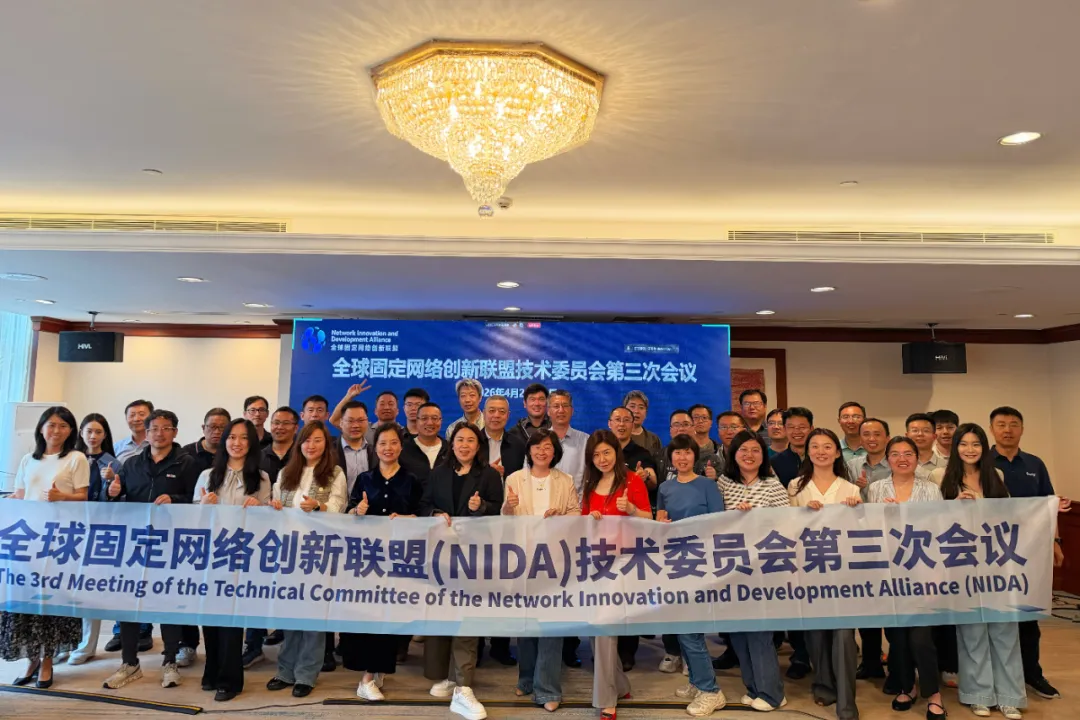
This meeting was chaired by Ma Junfeng, member of NIDA Technical Committee and China Institute of Information and Communication Technology. He first reviewed NIDA's achievements in standard formulation, international connectivity, and industry promotion in 2025, and said that in 2026, the Technical Committee will continue to leverage the advantages of the Alliance's international platform to create greater value in standard formulation and implementation.
The first item on the meeting agenda is the standard project initiation review. In this meeting, eight standards and technical reports were applied for project initiation, covering the work directions of four working groups: network evolution, self-intelligent network, campus network, and cyber security. Experts at the meeting carefully reviewed the project initiation documents and fully discussed the project initiation documents. On-site views exchanged and wisdom collided, which provided important guidance for high-quality project initiation and subsequent development of the documents.
The second item on the agenda is the report on the annual work plan of the working group. The five working groups of network evolution, self-intelligent network, data center network, campus network, and cyber security described their positioning, scope, and work plans for the next one to three years. Through this systematic report, the experts and member units at the meeting have a clearer understanding of the overall layout and work objectives of the Technical Committee, which further stimulated the enthusiasm of participating in the standards work.
The third item on the agenda is the review of the technical committee system update. After nearly two years of practice and exploration, NIDA and the Technical Committee have accumulated valuable experience and identified some work specifications and processes that need to be optimized. At the meeting, the NIDA Secretariat, together with the Technical Committee, updated some contents in the organizational document and process document, detailed the rights of members to participate in the work of the Technical Committee and the Working Group, supplemented the appointment procedure of the Vice-Chairs of the Working Group, updated the definition of the classification of manuscripts, and supplemented the standard work decision-making procedure of the Working Group. Experts at the meeting put forward many constructive suggestions based on their rich experience. After the meeting, the NIDA Secretariat will summarize and sort out the suggestions, update the contents of the system documents, and initiate online review and voting by the Technical Committee.
After all tasks and topics of the technical committee are completed, the meeting enters the technical sharing and discussion phase. Special guest Zhao Huiling systematically reviewed the development trend, evolution and current progress of fixed network technologies and standards with the title of "Information Network Standard Technology Hotspots and Latest Progress", which brought profound inspiration to the experts attending the meeting.
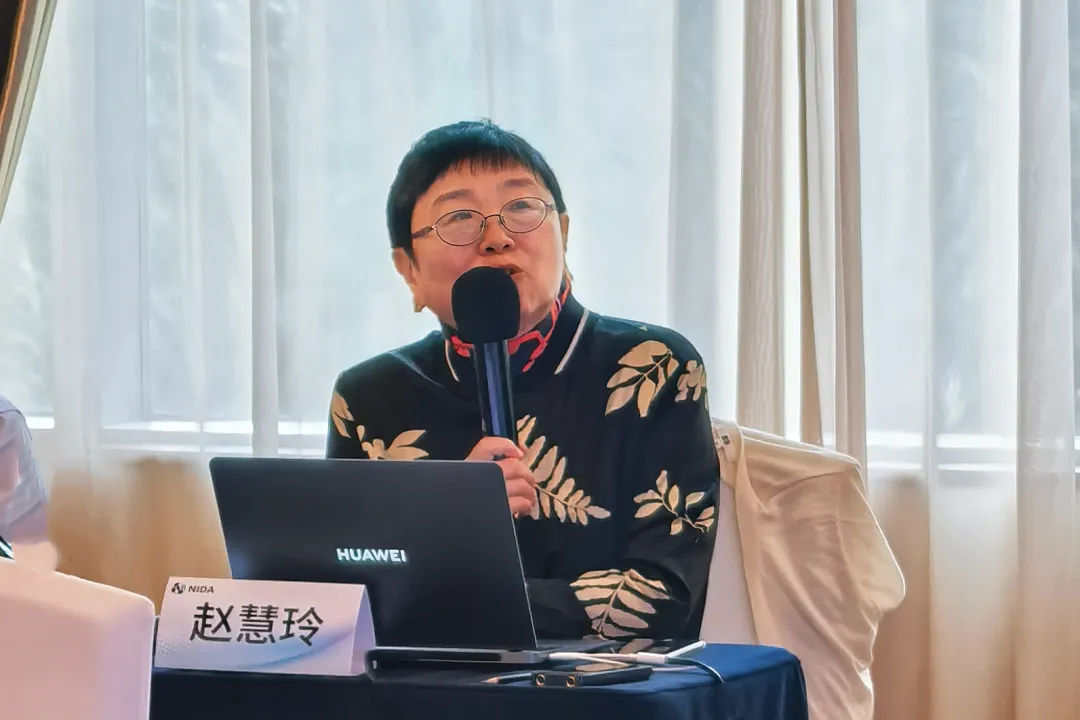
Subsequent technical discussions focused on five hot topics being promoted by NIDA: Hu Runlong, China Mobile Research Institute, introduced the progress of single-channel 400G MSA. Liu Yisha, China's New Internet Exchange Center (Hangzhou), shared the concept of the data networking standard framework. Han Sai, China Unicom Research Institute, interpreted the concept of network intelligent O&M agent technology and standard system. Bo Yang, NIDA Secretariat, explained the WLAN+X wireless intelligent sensing technology solution. Liu Bing, Huawei Technologies Co., Ltd. reported the MSA plan for IoA network infrastructure. Each topic attracted the attention and discussion of the experts attending the meeting. The on-site communication was adequate and the opinions were diverse.
The meeting ended successfully in an efficient and warm atmosphere. Through in-depth exchanges, the experts at the meeting had a comprehensive understanding of the work achievements and future plans of the Technical Committee, and had a deep understanding of the cutting-edge technologies that the Alliance focused on promoting. In the next step, the NIDA Technical Committee will continue to move forward and invite more experts from the industry to jointly promote the innovation, development and application of fixed network technologies.