
NIDA's big release: World's First Single-Channel 400G Ethernet Physical Layer White Paper Unveiled in Beijing
[Beijing, China, on April 15, ] NIDA 400G Per Lane MSA released the world's first White Paper on the Single-Channel 400G Ethernet Physical Layer at the Cloud Network SmartLink Conference 2026. The White Paper systematically proposed the technical framework of the Single-Channel 400G Ethernet physical layer, which is an important breakthrough in China's next-generation high-speed interconnection technology.
The white paper was prepared by the Single Channel 400G Multi-Source Protocol Group (MSA), 400G Per Lane MSA of Network Innovation and Development Alliance (NIDA). It brings together the technical contributions of more than 20 world-leading enterprises and organizations, including China Mobile, Huawei, Mosheng Technology, Alibaba Cloud, Tencent Cloud, Deutsche Tech, and Viacom. Covers key technologies such as single-channel 400G optical interconnection, electrical channel, SerDes, FEC architecture, and modulation format, and fills the gap in the bottom-layer technology system of single-channel 400G Ethernet in the industry.
As AI large model parameters exceed 100 billion, high-speed interconnection requirements between GPUs in the intelligent computing center are rapidly increasing, and higher interconnection bandwidth is urgently required. The bandwidth of a single GPU interconnection port has reached 1.6 Tbit/s. To achieve the bandwidth of a single GPU interconnection port at 3.2 Tbit/s, there are two paths: "Increase the single-channel rate" and "Increase the number of channels". The existing 200 Gbit/s single channel requires 16-channel aggregation, which imposes heavy pressure on ports, heat dissipation, and cabling, and is difficult to implement. A single channel of 400Gbps requires only eight channels of aggregation, which is the only feasible solution. 400 Gbit/s per channel is not a simple doubling of the rate. It is a systematic innovation that breaks the limits of physical transmission. It is facing multiple challenges, such as theory, material, integration, and industry collaboration, and is critical to the dominance of intelligent computing networks in the next decade.
As the first milestone of single-channel 400G MSA, this white paper proposes a single-channel 400G Ethernet physical layer technical framework and systematically describes key technologies such as high-speed optical interconnection, electrical channels, and SerDes. In the aspect of optical interconnection, the technical progress of three mainstream modulator platforms is analyzed, and the supporting path for high-speed optical modules is defined. In the aspect of electrical channel, the influence of different materials and designs on signal integrity is discussed, which provides an important basis for the realization of higher rate electrical channel. In terms of SerDes technology, focus on its architecture optimization and process requirements to meet the core challenges of high-speed electrical interfaces. In addition, the paper systematically compares the performance of the two mainstream modulation formats based on the FEC architecture design, and points out that the final choice will depend on industry advances in passive channel bandwidth.
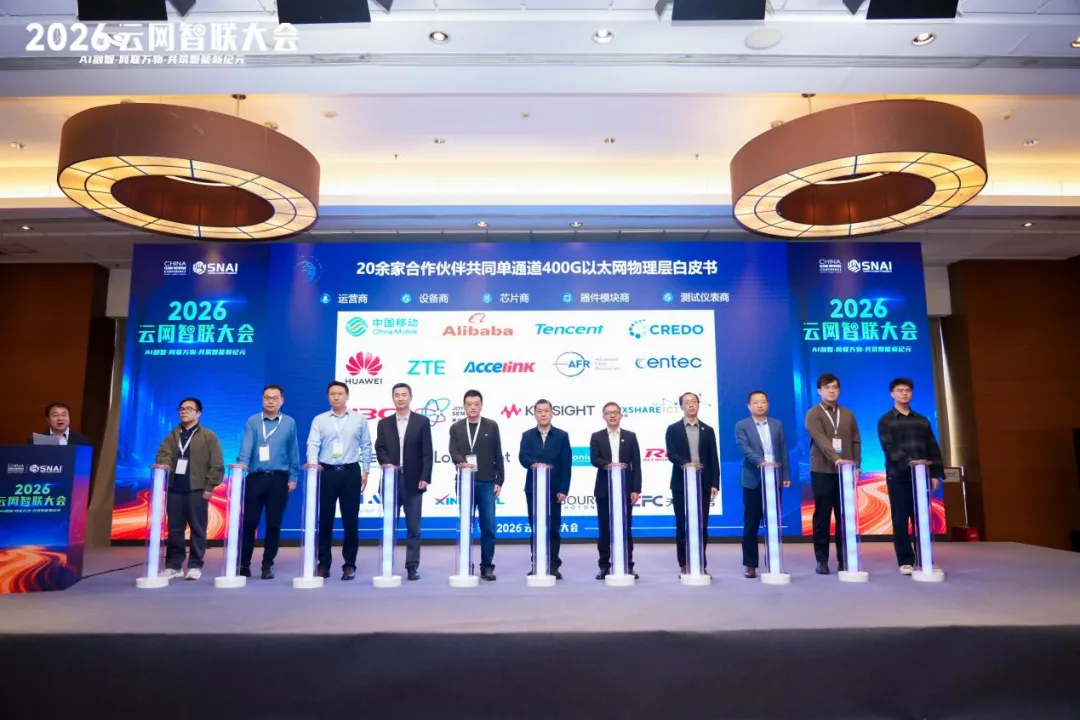
In 2025, NIDA will join hands with more than 20 leading institutions around the world, including China Mobile, Alibaba, and Tencent, to establish a single-channel 400G MSA based on NIDA. The aim is to pool industry efforts and accelerate the development of standards, ecosystem improvement, and large-scale deployment of related technologies. Build a solid technical foundation for the high-quality development of next-generation high-speed Ethernet; Jointly promote the formulation of single-channel 400G technology standards and industry implementation, and build an open and collaborative ultra-high-speed Ethernet technology ecosystem for the next-generation intelligent computing center.
NIDA 400G MSA will organize member units to continuously improve the technical framework, release detailed technical specifications, promote industry consensus and multi-vendor interconnection, and form international standards conducive to the development of China's high-speed interconnection industry and help China's industry gain advantages in the next-generation high-speed interconnection technology upgrade. Support the high-quality development of infrastructure in China's intelligent computing centers.