
The BRICS Sub-Forum on Next-Generation Intelligent Network Successfully Concludes
[Shenzhen, China, 16 June 2026] Against the backdrop of the rapid development of the global digital economy and to support collaborative innovation in digital industries of BRICS countries, the 2026 BRICS Forum on Future Networks Innovation was successfully held at Shenzhen Wuzhou Guest House from June 16 to 17. As a key component of this series of forums, the sub-forum titled Next-Generation Intelligent Network——Intelligent Network Lighting the Digital Future, hosted by the Network Innovation and Development Alliance (NIDA), was successfully held on the 16th.This forum gathered numerous distinguished guests from BRICS countries and partner countries, representing government departments, international industrial organizations, top research institutes, leading technology enterprises, and other relevant organizations. Over a hundred experts and representatives from the Industry and Information Technology Bureau of Shenzhen Municipality, the Ministry of AI and Digital Development of the Republic of Kazakhstan, the China Academy of Information and Communications Technology, the China Unicom Research Institute and Xiamen University Malaysia attended the conference. They conducted in-depth discussions around cutting-edge trends and transnational cooperation of Next-Generation Intelligent Networks, fully demonstrating the broad prospects of "Next-Generation Intelligent Network" under the BRICS framework.
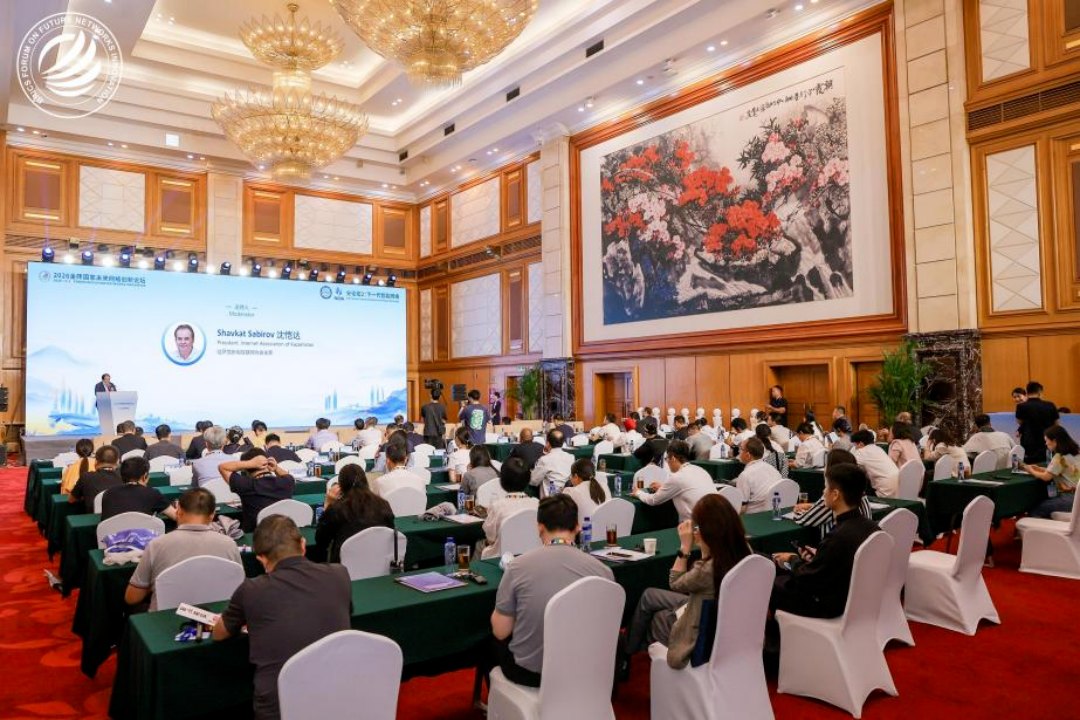
Sub-forum: "Next-Generation Intelligent Network——Intelligent Network Lighting the Digital Future"
The conference was chaired by Shavkat Sabirov, President, Internet Association of Kazakhstan. The forums featured three core agenda items, nine thematic presentations, and one panel discussion. Representatives from Shenzhen Municipal Bureau of Industry and Information Technology and Kaiyrbayev Amanbek, Head of the Smart Cities Project Coordination Division, Department of Smart Region, the Ministry of AI and Digital Development of the Republic of Kazakhstan, delivered opening remarks successively. From domestic and international perspectives respectively, the two speakers fully presented the current development status and fruitful achievements of intelligent networks, and elaborated on the cornerstone role of "Next-Generation Intelligent Network" in the digital economy. Both sides stressed the significance of boosting technological innovation and standard interoperability under the BRICS framework, and proposed four cooperation initiatives for BRICS countries: deepening interconnection of network infrastructure, strengthening joint research and innovation on cutting-edge technologies, advancing co-construction and sharing of technical standards, and expanding industrial applications and pragmatic economic and trade cooperation. These initiatives draw an ambitious blueprint for cross-border coordinated development of "Next-Generation Intelligent Network" and chart a clear course for the industry’s future technological evolution.
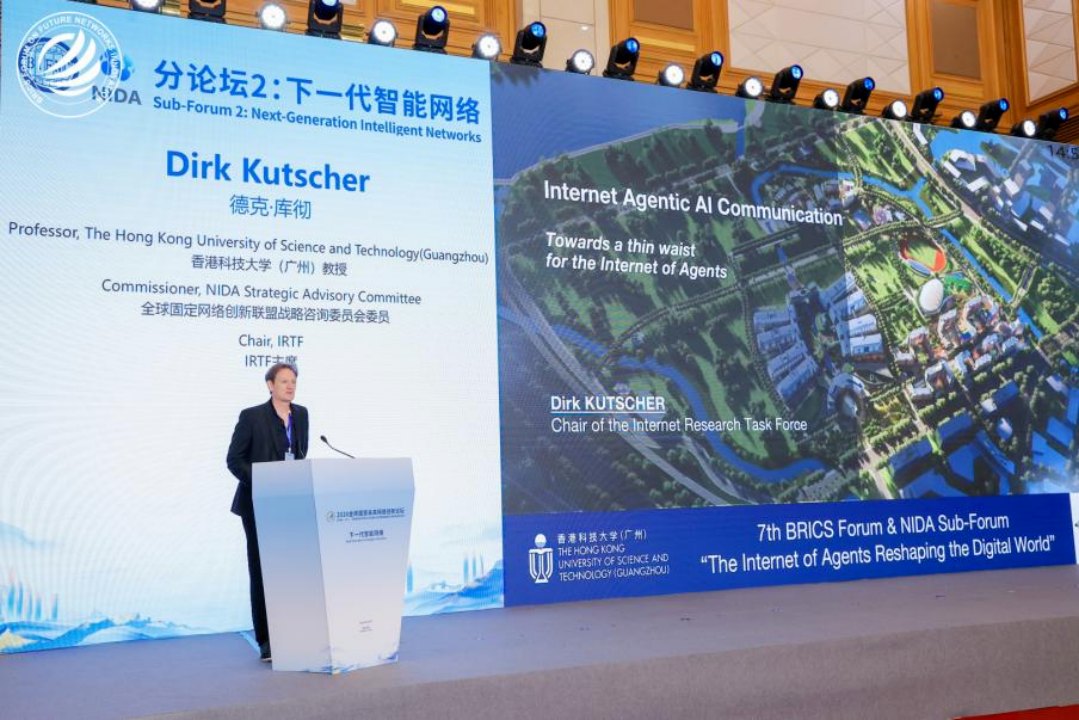
Professor, The Hong Kong University of Science and Technology(Guangzhou); Chair, NIDA Expert Committee; Chair, IRTF Dirk Kutscher
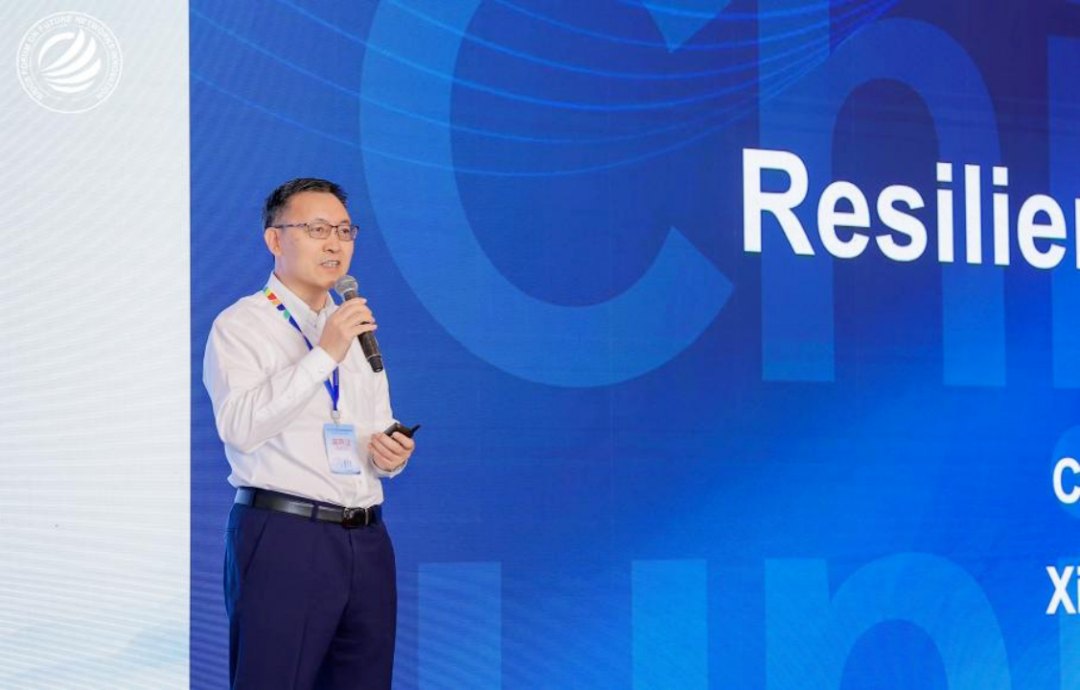
Vice President, China Unicom Research Institute; Vice Chair, NIDA Tang Xiongyan
The industrial trend session brought together a lineup of distinguished experts. Dirk Kutscher, Professor, The Hong Kong University of Science and Technology(Guangzhou); Chair, NIDA Expert Committee; Chair, IRTF, systematically elaborated on the transformation of network architecture in the agent era. The Agent Internet needs to adopt a streamlined protocol architecture analogous to the "hourglass waist" of the Internet to achieve cross-system interoperability. The core challenge lies in establishing trust mechanisms between agents, covering universal naming, identity authentication, local trust anchoring, authorization chains and deep delegation mechanisms. Tang Xiongyan, Vice President, China Unicom Research Institute; Vice Chair, NIDA, defined resilient networks as systems with four core capabilities: intelligent sensing, proactive defense, fast recovery and continuous self-adaptation, which ensure uninterrupted service operation under faults, cyberattacks and extreme conditions. A comprehensive framework is built covering five dimensions: architecture, protocols, network management & control, endogenous security and network intelligence. Meanwhile, China Unicom, alongside partners including China Academy of Information and Communications Technology and Huawei, jointly unveiled the Resilient Network White Paper.
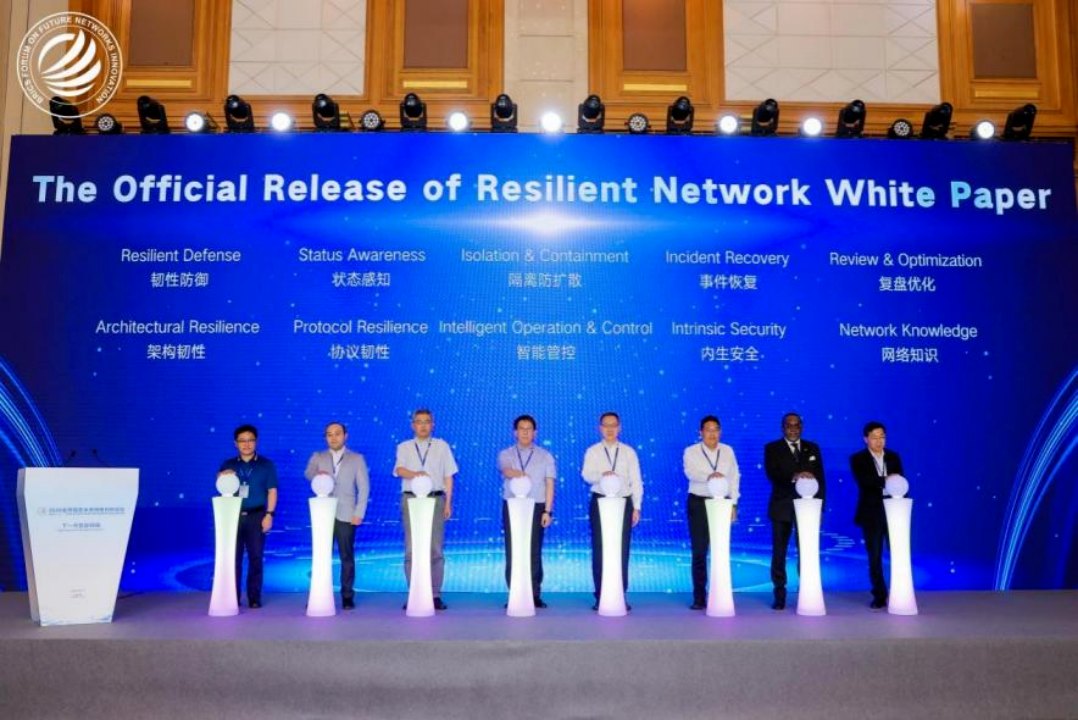
Release Ceremony of Resilient Network White Paper
CTO, China Information Technology Designing & Consulting Institute (CITC) Zhong Zhigang shared the latest progress on direct mobile phone-to-satellite communication and terrestrial networking. Satellite Internet requires in-depth collaboration between terrestrial network operators and satellite manufacturers. Terrestrial bearer networks deploy technologies such as IPv6, SRv6 and SDN to construct end-to-end integrated bearing networks. Deputy Chief Engineer, Institute of Technology and Standards, China Academy of Information and Communications Technology (CAICT); Chair of the NIDA Autonomous Network Working Group Ma Junfeng elaborated on the evolution logic of autonomous networks oriented to the agent era. In the agent era, the service objects of networks shift from "humans" to "humans + agents". Conventional manual operation and maintenance can no longer meet the demands, making autonomous networks an inevitable choice. The industry has formed a four-level autonomous network framework. At present, the industry focuses on closed-loop capabilities for single-domain scenarios, and cross-domain collaborative autonomy of multiple agents will be achieved from 2028 to 2030.
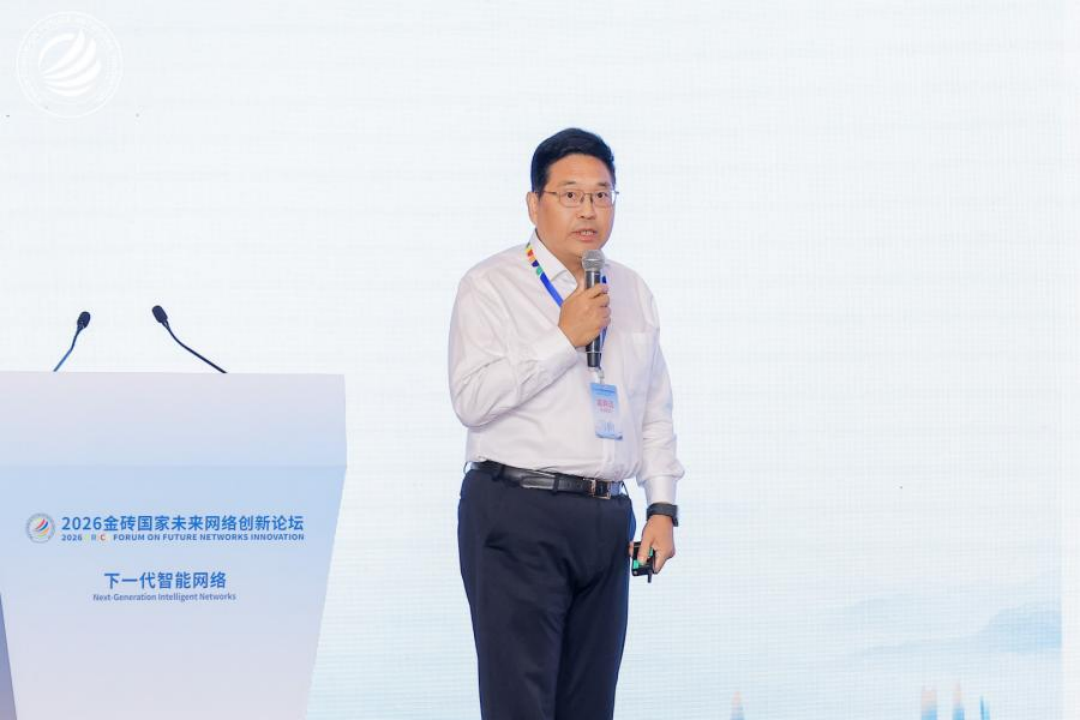
CTO, China Information Technology Designing & Consulting Institute (CITC)Zhong Zhigang
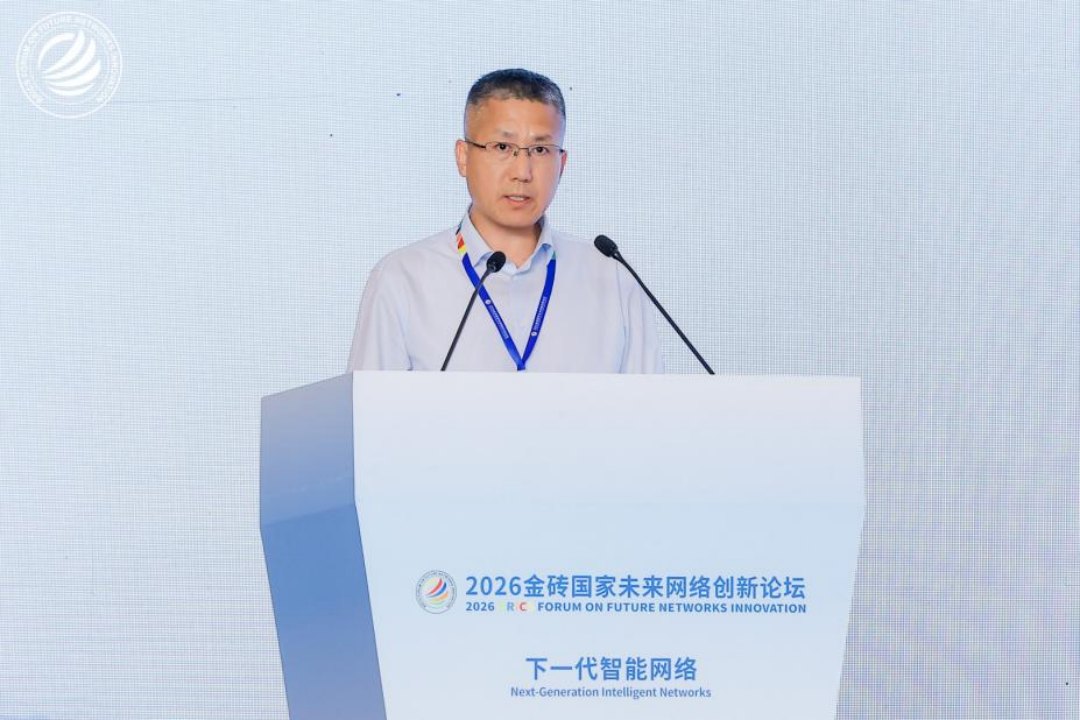
Deputy Chief Engineer, Institute of Technology and Standards, China Academy ofInformation and Communications Technology (CAICT); Chair of the NIDA Autonomous Network Working Group Ma Junfeng
Head of the CEIC Organizing Committee He Ming interpreted the new trends of consumer electronics from an international cooperation perspective. Positioned as a flagship technology exhibition in the Asia-Pacific region, CEIC Consumer Electronics Innovation Conference aims to embrace the intelligent era and jointly define future industrial trends and technical standards. Scheduled to be held in Shenzhen from October 22 to 24, 2026, the event serves as a platform for new product launches, achievement demonstrations and industrial docking as well as international cooperation.
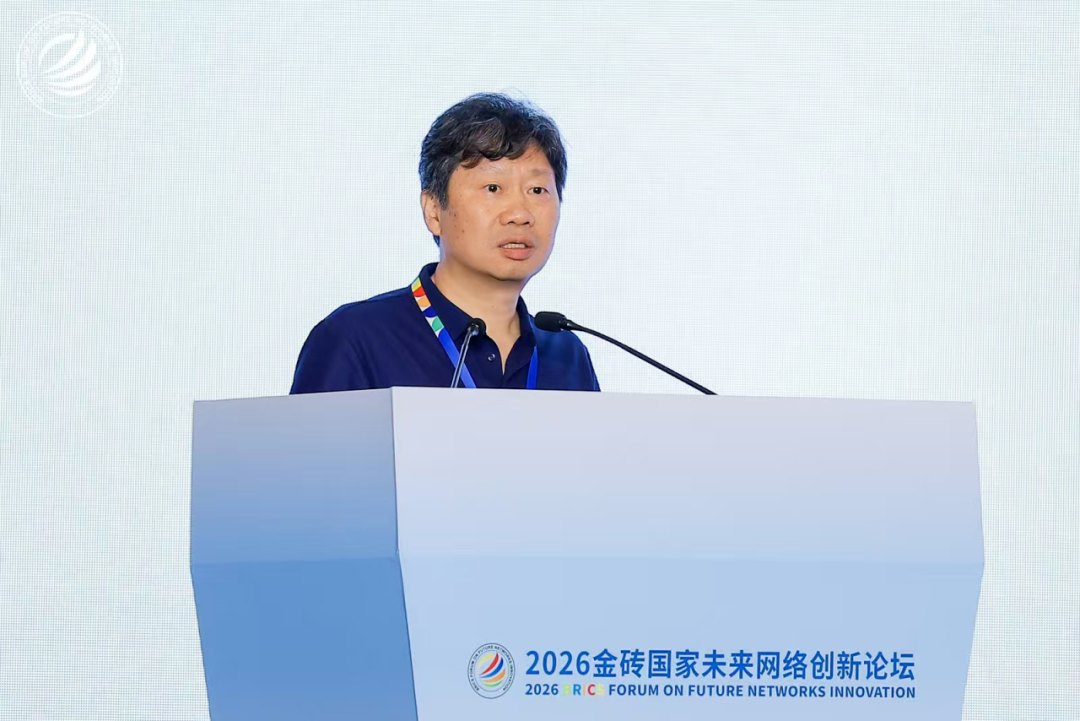
Head of the CEIC Organizing Committee He Ming
During the panel discussion session, participating guests focused on the theme and conducted in-depth exchanges and discussions on the innovative practices of Next-Generation Networks among BRICS countries. In view of the unbalanced network development status of BRICS countries, experts unanimously agreed that it is necessary to establish a standardized interoperability framework and carry out targeted pilot demonstrations in light of local conditions. CEO & Board Member, SAMENA Telecommunications Council; Chair, IAGDI-CRO, International Telecommunication Union (ITU) Bocar A. BA emphasized that BRICS countries should fully understand the underlying logic of China’s successful digital transformation. By strengthening talent exchanges and launching pilot demonstration projects, countries can share practical experience in computing center construction and automated operation adapted to local conditions. Chair, APAC IPv6 Council Sureswaran Ramadass stated that open and collaborative platforms are crucial for developing countries. Malaysia is learning from China’s experience to develop sovereign cloud technologies, and he called on BRICS countries to pool wisdom and achieve complementary advantages in technical standards and industrial ecosystems. President, Internet Association of Kazakhstan Shavkat Sabirov shared international industrial cooperation experience. He stressed that collaborative platforms including NIDA have created valuable opportunities for Central Asian countries in terms of standardization advancement, technology introduction and experience sharing, effectively supporting the realization of Eurasian network interconnection and interworking. Deputy President of Jiangsu Future Networks Innovation Institute Tan Hang pointed out that China has built the world’s largest information and communication infrastructure. The China Experimental Network Infrastructure (CENI) has been officially put into operation and opened for cooperative innovation and experiments to all BRICS countries, providing solid support for network technological innovation.
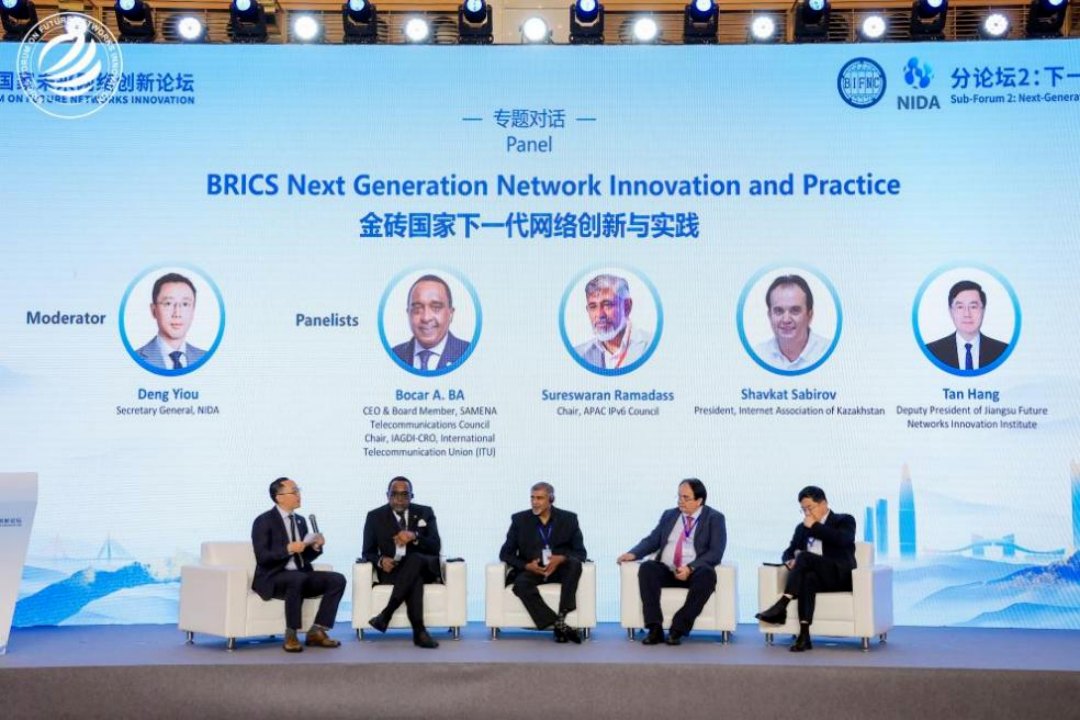
Panel: BRICS Next Generation Network Innovationand Practice
The third agenda session featured “Pioneer Case”. Centering on industrial implementation and practical applications, this session showcased cutting-edge industry practices and scalable deployment experiences. Vice President of Campus Network Domain, Huawei Data Communication Product Line Hou Fangming systematically introduced the WLAN+X smart campus spatial solutions and field practices. The core WLAN+X concept upgrades traditional general WLAN from human-oriented connectivity to an all-scenario IoT integration foundation that supports device connection and environmental perception. The solution has been deployed in ten typical scenarios, including asset inventory, electronic price tags, building energy conservation, medical vital sign monitoring, and hotel privacy protection. Meanwhile, a wireless intelligent sensing industry ecosystem working group has been established together with industrial partners. CEO, Xi'an Wenyuan Software Technology Co., Ltd. Zhao Yuping shared the construction experience of the IOC Smart Space Operation Center at Xi’an Jiaotong University. Powered by Huawei’s Wi-Fi 7 integrated communication and sensing technology, the platform realizes non-intrusive IoT perception in private spaces such as student dormitories, enabling refined power safety supervision and energy-saving management. He pointed out that the core challenge of IoT industrial implementation lies in the upgrade from "functional availability" to "data credibility". The authenticity and reliability of underlying data directly determine the performance of AI models and end-user satisfaction. During the panel discussion, participating guests focused on the theme and conducted in-depth exchanges on innovative practices of Next-Generation Networks across BRICS countries. Given the uneven network development among BRICS nations, experts agreed on the need to build a standardized interoperability framework and carry out tailored pilot demonstrations suited to local conditions.
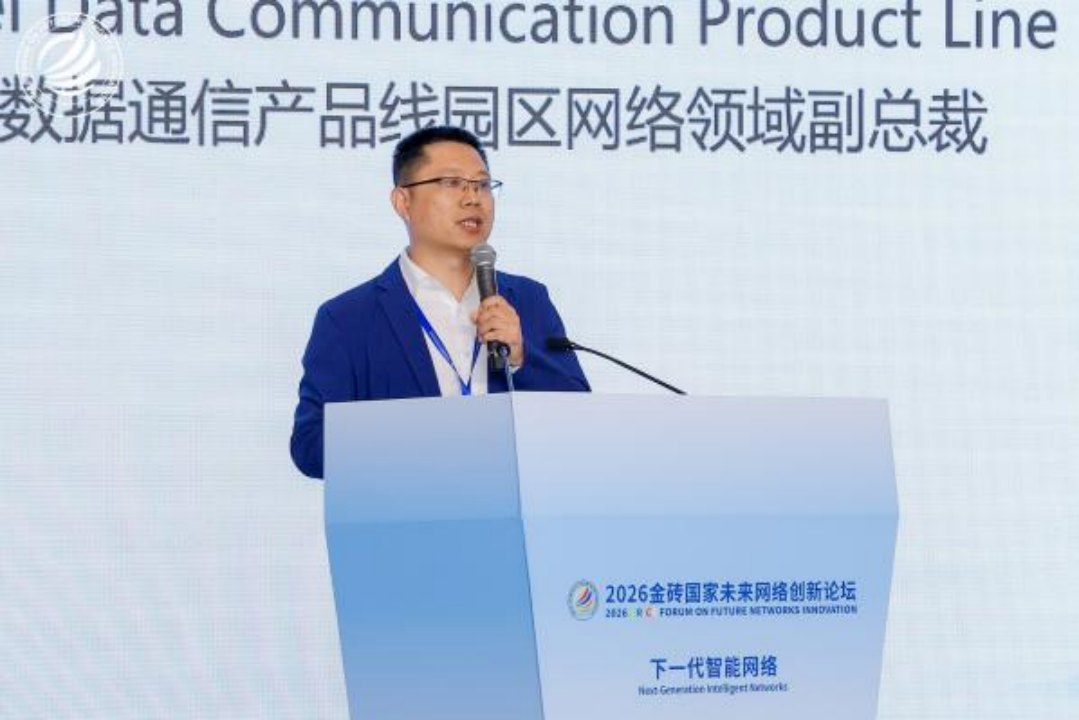
Vice President of Campus Network Domain, Huawei Data Communication Product Line Hou Fangming
CEO, Xi'an Wenyuan Software Technology Co., Ltd. Zhao Yuping
Chair, APAC IPv6 Council; Vice Chair, NIDA; Professor Emeritus, RUMC Malaysia Sureswaran Ramadass shared innovative WLAN+X intelligent sensing cases in the healthcare sector. Malaysia’s SENA Specialist Hospital Segamat has built an integrated intelligent medical platform based on WLAN+X, enabling real-time maternal and infant monitoring, as well as millimeter-wave radar vital sign sensing at hospital beds. AI-powered intelligent sensing covers 60 to 70 percent of medical services, greatly reducing manpower pressure on medical staff and enabling early warning of patient emergencies. Chief Information Officer Xiamen University Malaysia Chen Xiaochou explored the evolution path of campus networks from digitalization to intelligence empowered by the same technology. As campus networks have evolved into productive infrastructure, uninterrupted service continuity has become a core requirement. Traditional manual operation and maintenance with minute-level response can no longer meet operational demands, calling for second-level fault recovery capabilities. The development of intelligent networks is driven by two key factors: O&M requirements for faster response and application requirements for dynamic resource scheduling. In the future, network agents will gradually evolve from external plug-ins to embedded modules within the network control plane.
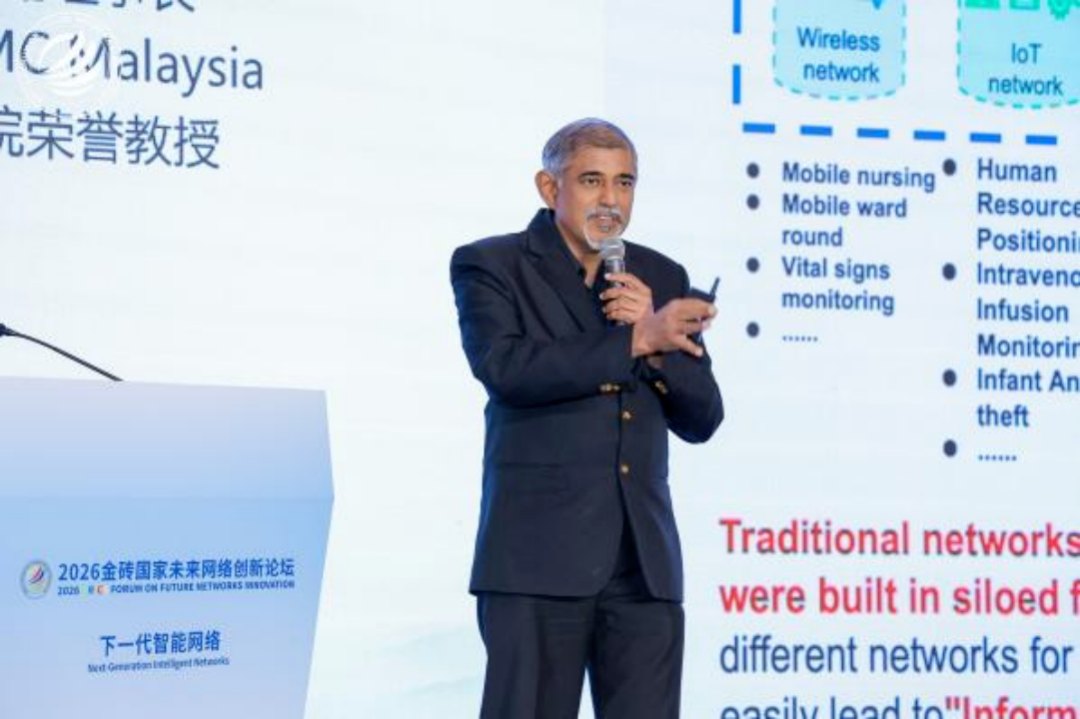
Chair, APAC IPv6 Council; Vice Chair, NIDA; Professor Emeritus, RUMC Malaysia Sureswaran Ramadass
Chief Information Officer Xiamen University Malaysia Chen Xiaochou
As a major highlight of the conference, the Official Launch of NIDA Autonomous Network Agent Industry Evaluation Platform was held on-site, marking a solid step forward by NIDA in advancing the standardization and industrialization of Next-Generation Intelligent Network technologies. Co-developed by NIDA, authoritative third-party evaluation institutions and industrial partners, the platform serves as the first industrial evaluation track for enterprise network agent outcomes, built through industry-university-research collaboration to respond to the national "AI+" initiative.
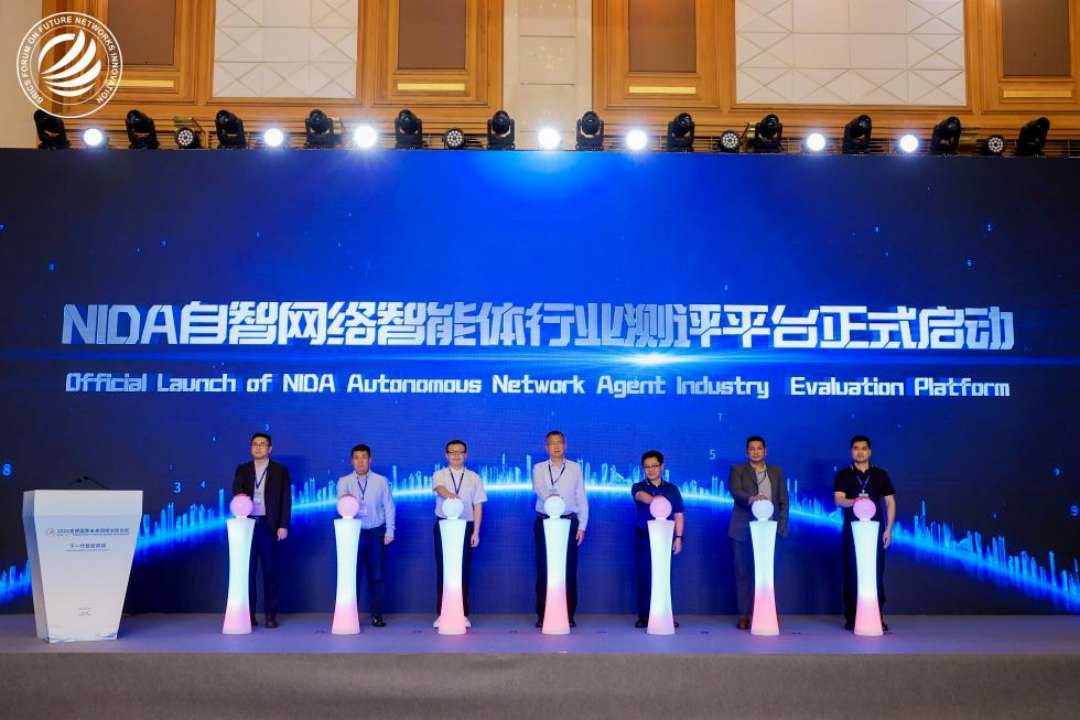
Official Launch of NIDA Autonomous Network Agent Industry Evaluation Platform
Centered on the theme of “Intelligent Network Lighting the Digital Future”, the Next-Generation Intelligent Network Sub-forum outlined a clear road map for the evolution of intelligent network technologies from conceptual verification to large-scale industrial deployment. In-depth dialogues focusing on resilient internet, autonomous networks, space communication and WLAN+X, along with the launch of a series of cutting-edge standard achievements, mark a new phase of BRICS cooperation in network infrastructure development featured with standard-led innovation and construction advancement driven by professional evaluation. Moving forward, all parties will continue to jointly cultivate New Generation Productive forces in the network industry and accelerate the building of an open, mutually beneficial global digital ecosystem.