
Education Intelligent Network Technology Forum Successfully Held in Yinchuan
To actively respond to the national "AI + Education" strategy, seize the opportunities at the start of the 15th Five-Year Plan, and accelerate the intelligent upgrade of campus information infrastructure, the "Education Intelligent Network Technology Forum" was held in Yinchuan, Ningxia on July 31. The forum was guided by the China Association for Educational Technology (CAET), co-hosted by the CAET Education Intelligent Network Technology Professional Committee (In Preparation) and the Network Innovation and Development Alliance (NIDA), and co-organized by Tsinghua University, Xi'an Jiaotong University, Harbin Institute of Technology, Southeast University, Xiamen University, and the University of Electronic Science and Technology of China.
More than 100 participants attended the forum, including Zeng Dehua, Vice President of CAET; Zhang Tao, Vice President of Lanzhou Jiaotong University; heads of network and information centers from the six co-organizing universities; as well as heads of informatics from over 70 universities nationwide, experts and scholars in education, and enterprise representatives. The attending guests focused on the deep integration of "AI Empowerment" and "Communication Networks" to discuss the evolution trends of education intelligent network technology and share experiences in campus intelligent network construction.
In his speech, Zeng Dehua, Vice President of CAET, noted that educational digitalization and intelligence serve as the core engine for high-quality educational development, and communication networks—acting as the "central nervous system" of campus digitalization—make intelligent construction particularly critical. He proposed that the committee in preparation will focus on the deep integration of AI and networking to build a self-architecting and self-healing next-generation education network equipped with intelligent perception, dynamic scheduling, and active defense capabilities; while simultaneously advancing the construction of collaboration platforms, formulation of industry standards, talent cultivation, and cutting-edge technology research. He also introduced that CAET's "AI + Education" Innovative Application Skills Competition has established an Intelligent Network Operation and Maintenance (O&M) Track, open for registration to teachers and students nationwide.
 中国教育技术协会副会长 曾德华
The work meeting section was chaired by Suo Zhihai, Nominated Vice Chairman of the CAET Education Intelligent Network Technology Professional Committee (In Preparation) and Director of the Network and Information Center at Xi'an Jiaotong University.
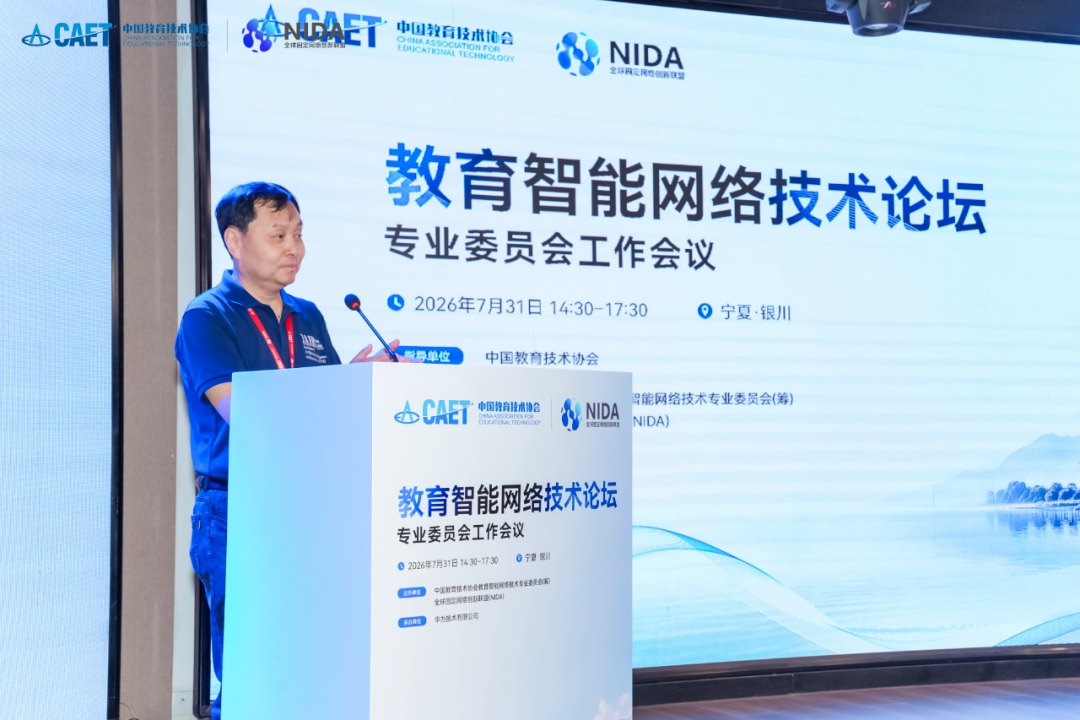
Suo Zhihai, Nominated Vice Chairman of the CAET Education Intelligent Network Technology Professional Committee (In Preparation) and Director of the Network and Information Center at Xi'an Jiaotong University
Zhang Xiaoping, Nominated Chairman of the CAET Education Intelligent Network Technology Professional Committee (In Preparation) and Director of the Informatics Office at Tsinghua University, presented the overall blueprint for the committee. He stated that the comprehensive integration of artificial intelligence into diverse campus scenarios continues to drive campus networks toward intelligent upgrades. The committee plans to advance work across seven main directions: topic research, practice exchanges, standards formulation, talent cultivation, research publications, collaborative innovation, and international cooperation. By linking the collaborative chain of industry, academia, research, and application, the committee aims to facilitate the transformation of education networks from "connectivity-driven" to "intelligence-driven," providing practical support and reference frameworks for smart campus implementations.
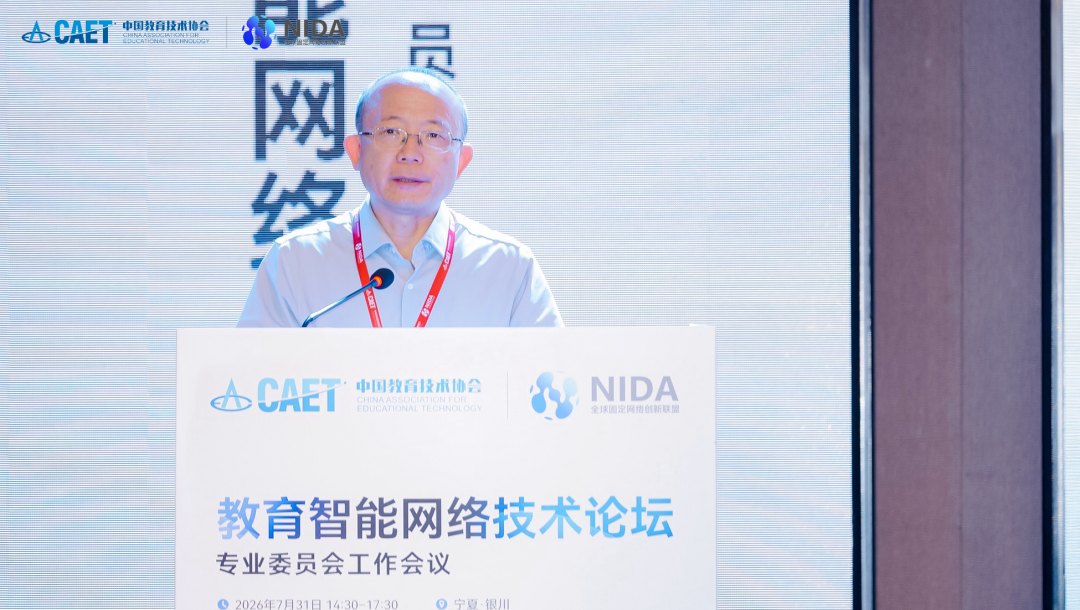
Zhang Xiaoping, Chairman of the CAET Education Intelligent Network Technology Professional Committee (In Preparation) and Director of the Informatics Office at Tsinghua University
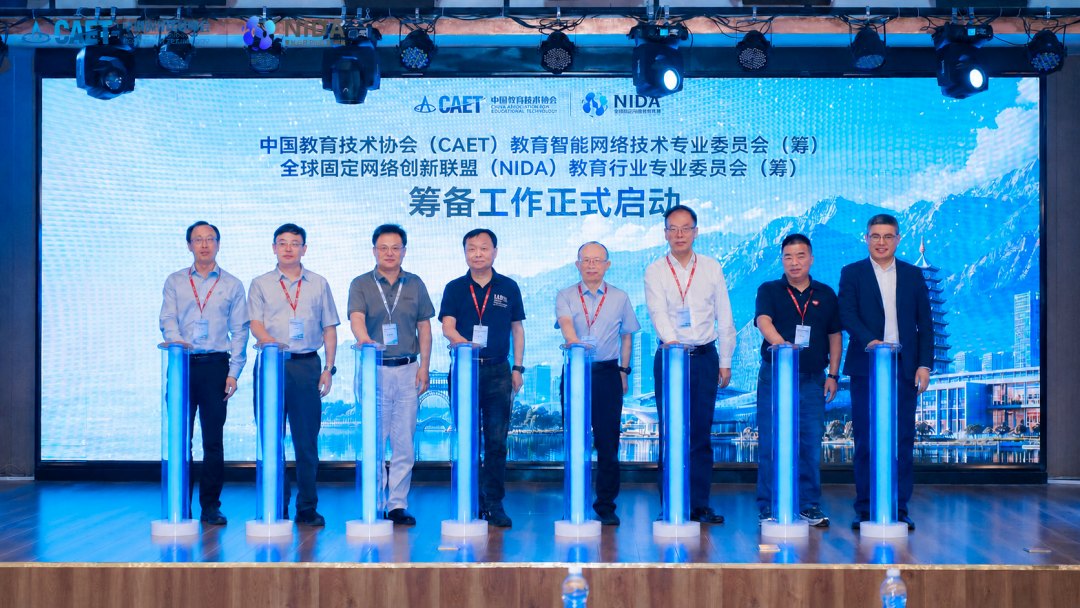
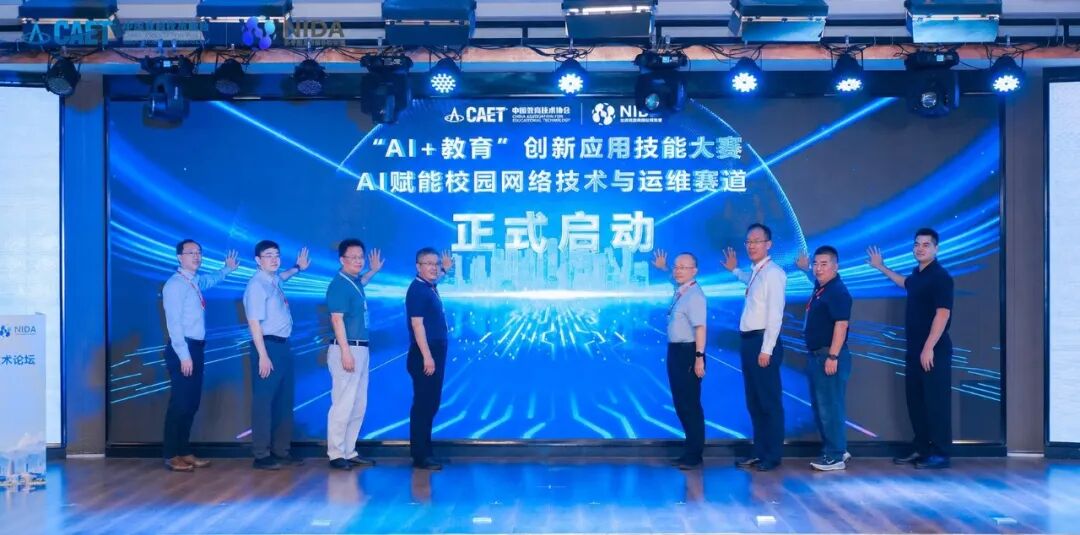
A series of launching ceremonies took place at the forum. Main leaders from CAET and the committee (in preparation) jointly launched the committee's preparatory work and the "AI + Education" Innovative Application Skills Competition—Higher Education AI-Empowered Campus Network Technology and O&M Track, marking the official launch of all operations of the committee.
The keynote sharing session was chaired by Xu Zhuobin, Nominated Supervisor of the CAET Education Intelligent Network Technology Professional Committee (In Preparation) and Director of the Information and Network Center at Xiamen University. Representatives from Harbin Institute of Technology, Peking University, Huawei Technologies Co., Ltd., and Southeast University successively shared their practical achievements in campus intelligent network construction.
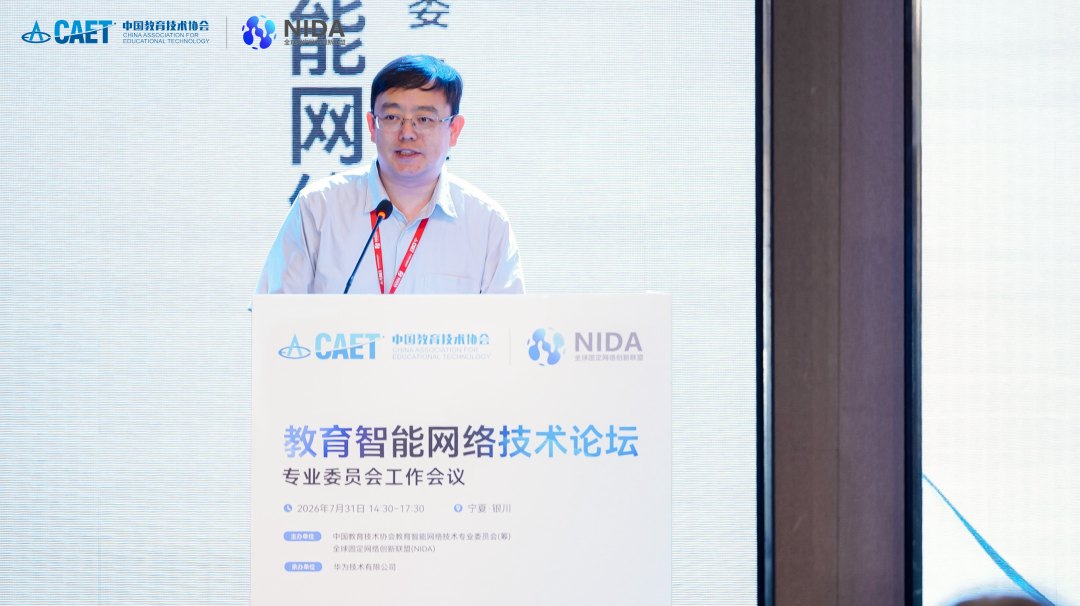
Xu Zhuobin, Supervisor of the CAET Education Intelligent Network Technology Professional Committee (In Preparation) and Director of the Information and Network Center at Xiamen University
Yu You, Executive Deputy Director of the Cybersecurity and Informatics Office at Harbin Institute of Technology, shared innovative practices in building new-quality campus networks. Aligned with the university's "one university, three campuses, and multi-regional research institutes" layout, Harbin Institute of Technology coordinated the construction of a high-speed interconnected dedicated network, enabling secure intercommunication across all campuses and regional research institutes. To meet the demands of educational digitalization and intelligence, the university has advanced network intelligent perception and AI autonomous O&M, deploying a campus network operation and management AI hub along with integrated sensing-and-communication solutions to achieve visual situational awareness, proactive fault identification, and closed-loop resolution, while actively exploring the application of agent networking in university scenarios.
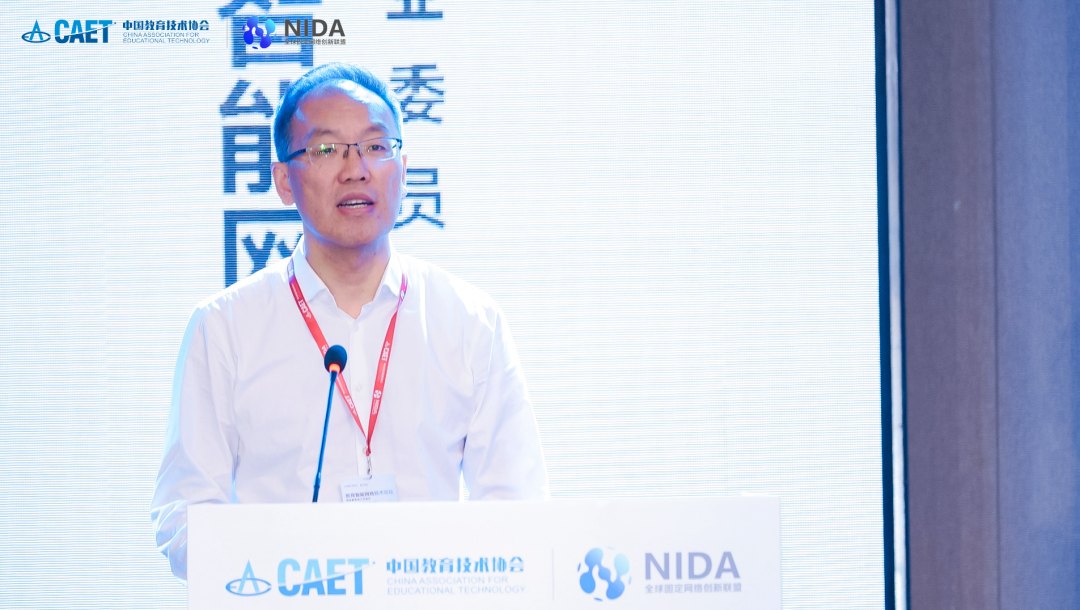
Yu You, Executive Deputy Director of the Cybersecurity and Informatics Office at Harbin Institute of Technology
Shang Qun, Assistant to the Director of the Computing Center and Director of the Infrastructure O&M Department at Peking University, shared practices in AI-empowered campus "macro-O&M." Addressing the O&M pressure brought by campus network expansion in the AI era, Peking University adopted a "+AI" engineering approach to construct an AIOps intelligent O&M platform. By integrating traditional O&M systems with large-model capabilities, the platform achieves proactive fault pre-warning, auxiliary localization of complex issues, and end-to-end O&M across multiple network domains, driving the transformation and upgrade of campus network O&M models.
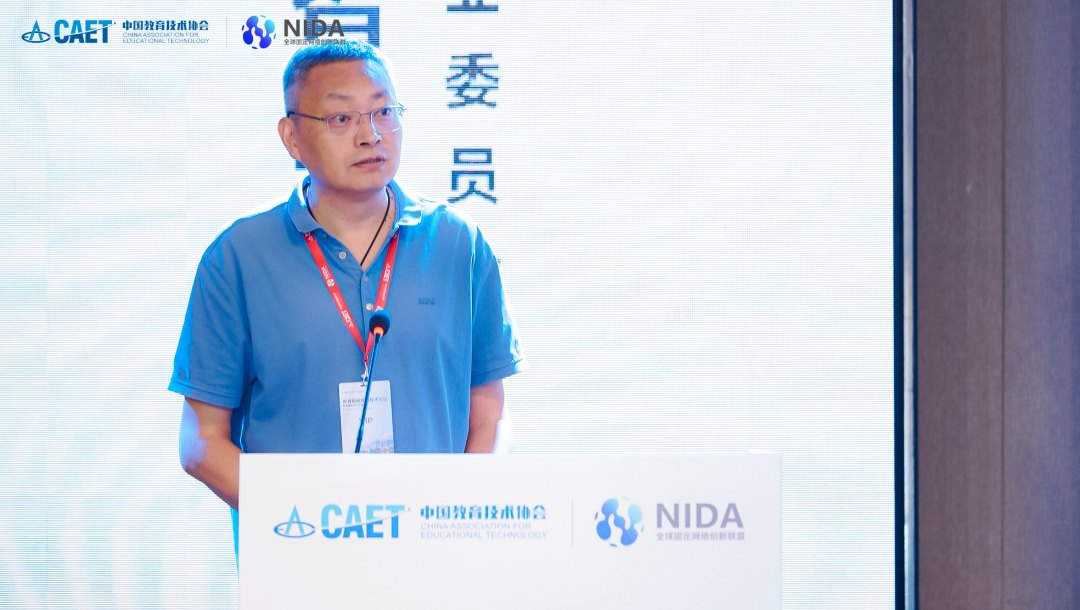
Shang Qun, Assistant to the Director of the Computing Center and Director of the Infrastructure O&M Department at Peking University
Yang Jiayuan, President of the Enterprise Domain for Huawei's Data Communication Product Line, expressed that artificial intelligence is accelerating the reshaping of the education industry and giving rise to numerous new scenarios and applications. Huawei has fully upgraded its Xinghe AI High-Quality Campus Network Solution, refining solution capabilities across four key dimensions—teaching, research, management, and services—to support educational digitalization and intelligence transformation in the AI era. Looking ahead, Huawei will drive intelligent network technology toward super-intelligence, beyond connectivity, and sustainable development, continuously injecting new momentum into educational digital and intelligent construction.
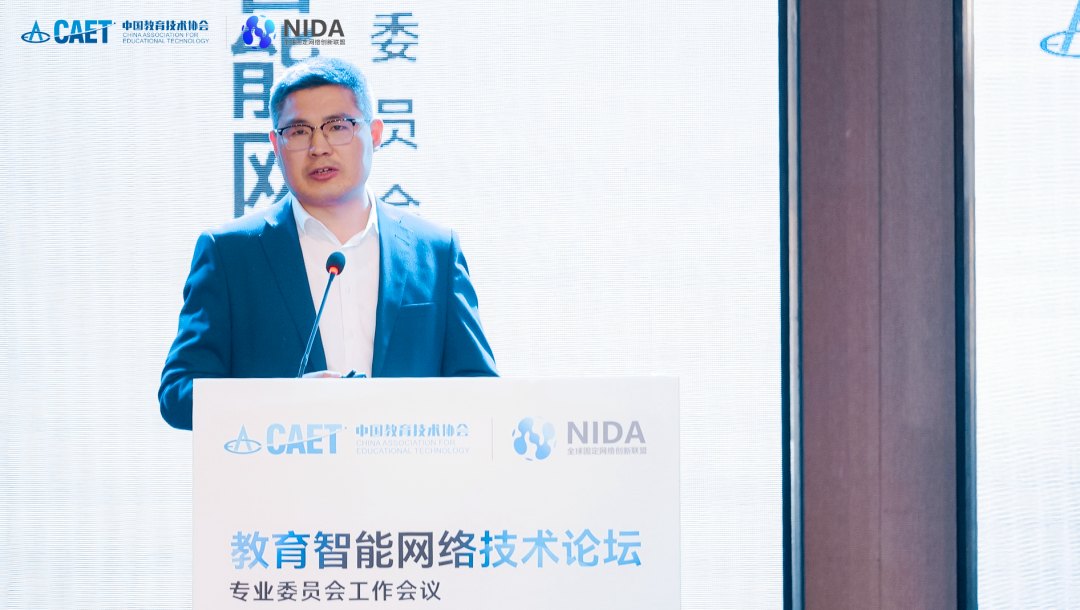
Yang Jiayuan, President of the Enterprise Domain for Huawei's Data Communication Product Line
Zhao Liye, Director of the Network and Information Center at Southeast University, shared experience in building "Digital & Intelligent Southeast." ICT infrastructure serves as the core foundation for "Digital & Intelligent Southeast." Relying on "One Network, One Platform," Southeast University ensures the smooth operation of university-wide services and leverages intelligent network technology to continuously elevate campus intelligence, incubating multiple innovative smart campus applications. The university will continue to practice the construction philosophy of "strengthening the foundation with networks, governing education with data, unifying cloud, network, and security O&M, and pursuing ultimate intelligence," outputting a Southeast University benchmark model for digital and intelligent campus upgrades.
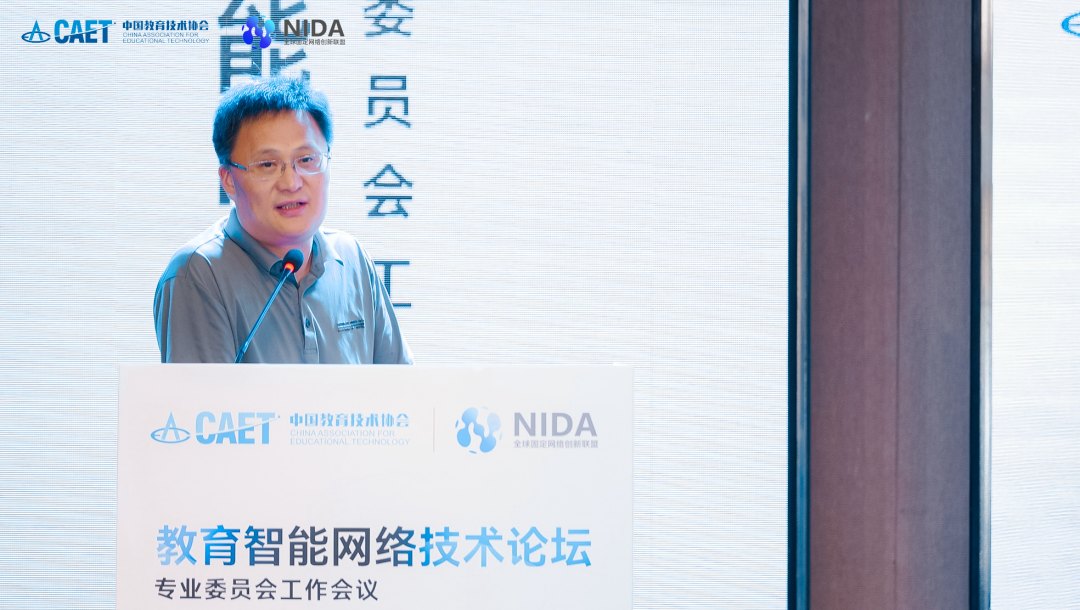
Zhao Liye, Director of the Network and Information Center at Southeast University
This forum built a high-level exchange platform for intelligent network technologies in the education sector, fostered consensus among industry, academia, research, and application, and laid a solid foundation for propelling campus networks from a "connectivity-driven" to an "intelligence-driven" strategic evolution, thereby supporting the high-quality development of educational digitalization and intelligence.