Network Innovation Forum Asia 2026 in Bali: AI-Era Network Evolution & Asia Standard Synergy
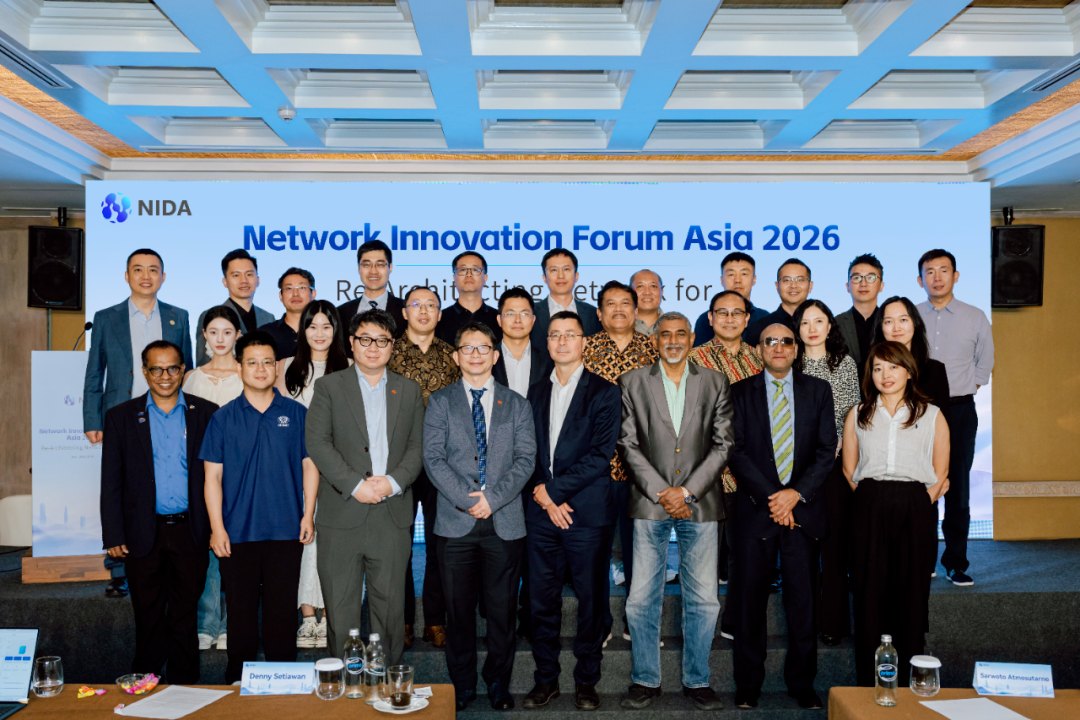
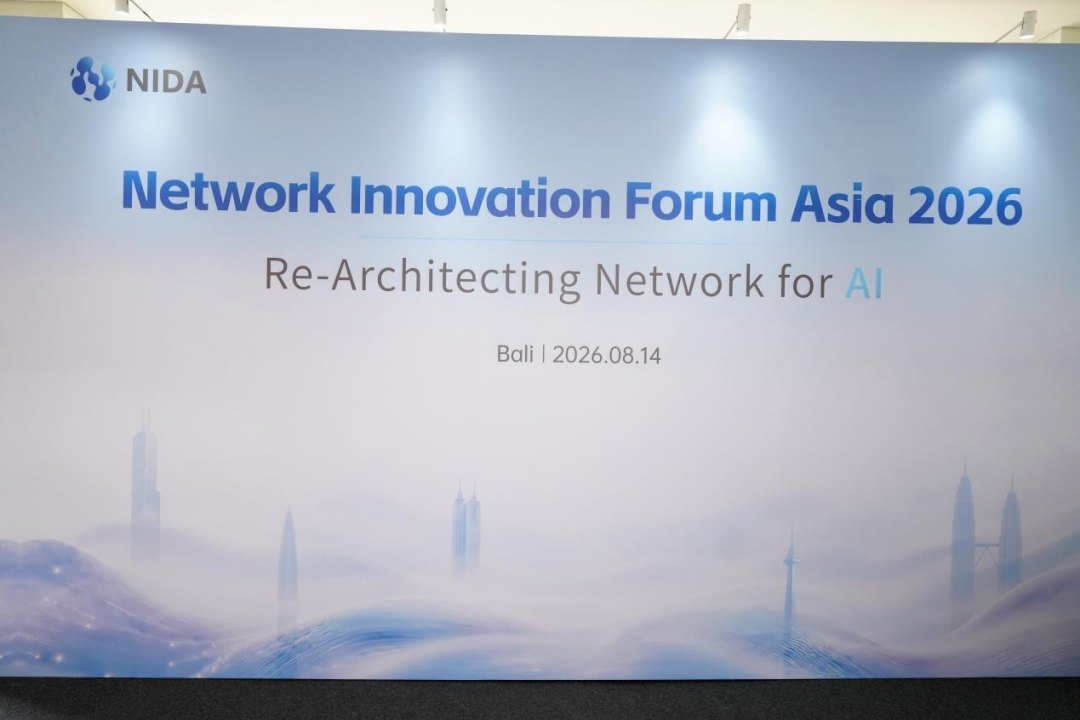
[Bali, Indonesia, August 14, 2026] Network Innovation Forum Asia 2026, hosted by Network Innovation and Development Alliance (NIDA), was successfully convened on August 14. Under the theme Re-Architecting Network for AI, the forum brought together representatives from Asia-Pacific communications industry associations, telecommunications operators, equipment manufacturers, universities and research institutions for in-depth discussions on AI-driven next-generation network evolution, development of the Internet of Agents (IoA), single-channel 400G high-speed interconnection, IPv6 network security, AI-native networks, and cross-regional industrial standard synergy. The forum also witnessed important deliverables, including the release of the White Paper on Autonomous Networks for the Education Sector and the signing of Industrial Cooperation Memorandums of Understanding (MOU).
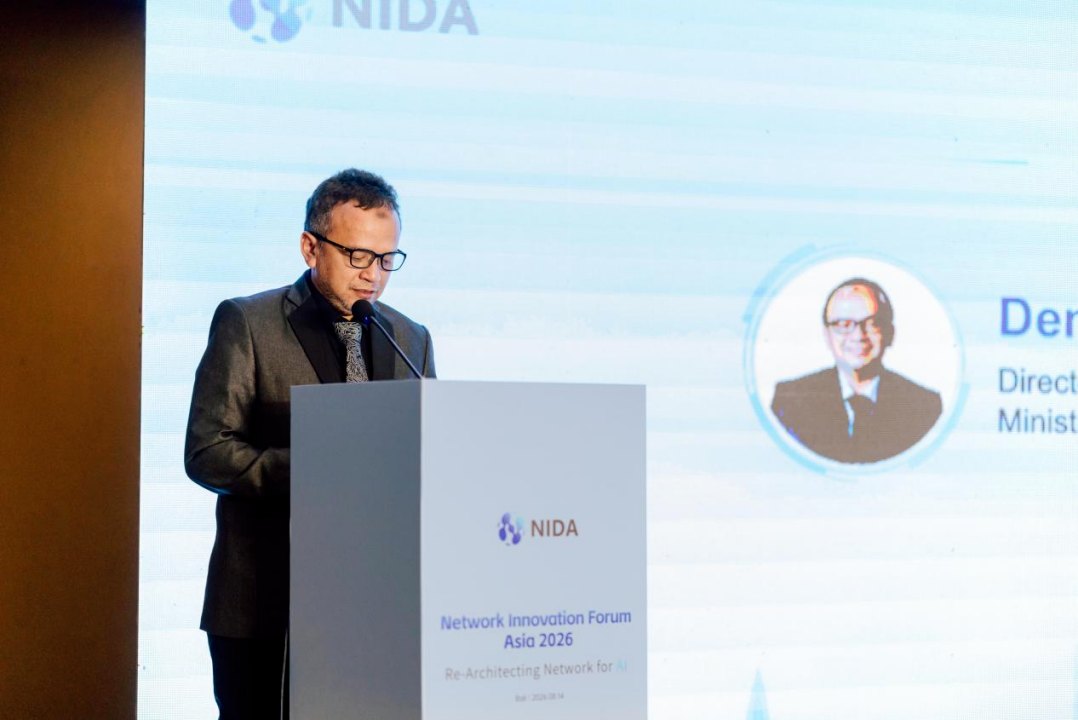
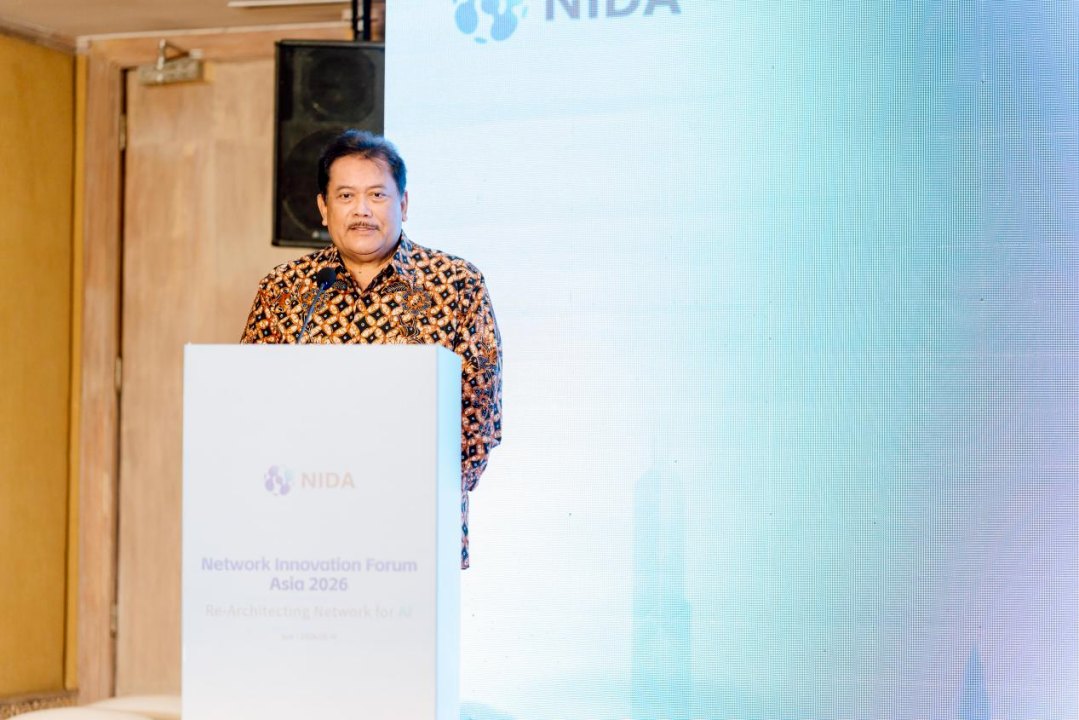
Denny Setiawan, Director of Digital Infrastructure Policy and Strategy, Ministry of Communications and Digital of the Republic of Indonesia, delivered the opening address. He stated that Indonesia regards digital infrastructure as the core underpinning for realizing Indonesia Digital Vision 2045. The country has issued the Indonesia Digital Infrastructure Development Roadmap 2026–2030, setting two core development goals: gigabit broadband and nationwide intelligent networks. Next-generation technologies including Wi-Fi 7, AI security architecture, IPv6 and high-performance data center networks serve as the foundational support for industrial parks, smart enterprises and national computing infrastructure. They can well accommodate the market’s growing demand for low latency, high reliability and ultra-high-concurrency services. The Indonesian government continues to encourage cross-stakeholder industrial collaboration. It warmly welcomes global technology enterprises and industry associations to deepen local presence, jointly achieve phased targets set out in the roadmap, and steadily advance the long-term digital vision for 2045.
Sarwoto Atmosutarno, Chair of MASTEL, pointed out in his address that the AI wave brings new stringent requirements for network bandwidth, latency and reliability, creating an urgent need for Indonesia to comprehensively restructure its intelligent network system. MASTEL is tackling industry challenges via industry standard development and international cooperation. Tangible progress has been made in the joint financial data center network standardization project with NIDA. The two organizations have established an in-depth collaborative partnership since 2024: they jointly released the NET5.5G Industry Initiative, signed a strategic cooperation memorandum of understanding in 2025, and jointly implemented multiple standards R&D projects in 2026. Going forward, both sides will continue to join forces to build world-class digital infrastructure and support Indonesia in realizing the Golden Indonesia Vision 2045.
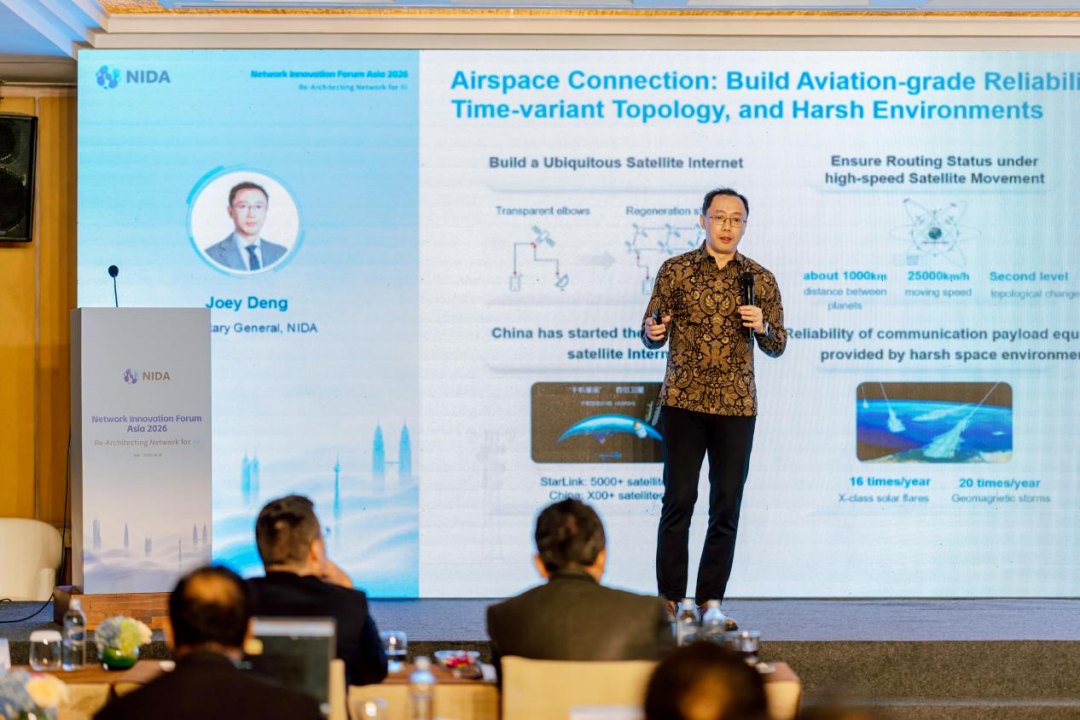
During the keynote session, Joey Deng, Secretary General of NIDA, took the stage first. He systematically analyzed the transformative driving force of AI for Next-Generation Networks and sorted out the core context of the industry’s long-term evolution. He noted that empowered by AI, application systems are evolving at an accelerating pace, posing severe challenges to network infrastructure. However, infrastructure development requires a lengthy cycle, resulting in network development failing to keep up with the evolution of applications. This challenge will become even more acute as AI applications gain deeper traction. To better underpin development in the AI era, we must proactively plan and build network infrastructure tailored to future scenarios and requirements. In addition, he shared achievements of NIDA’s co-construction of pioneer urban networks across the Asia-Pacific Region and officially launched “Campus Autonomous Network Technical Whitepaper”, delivering comprehensive network construction solutions and practical references for digital education scenarios.
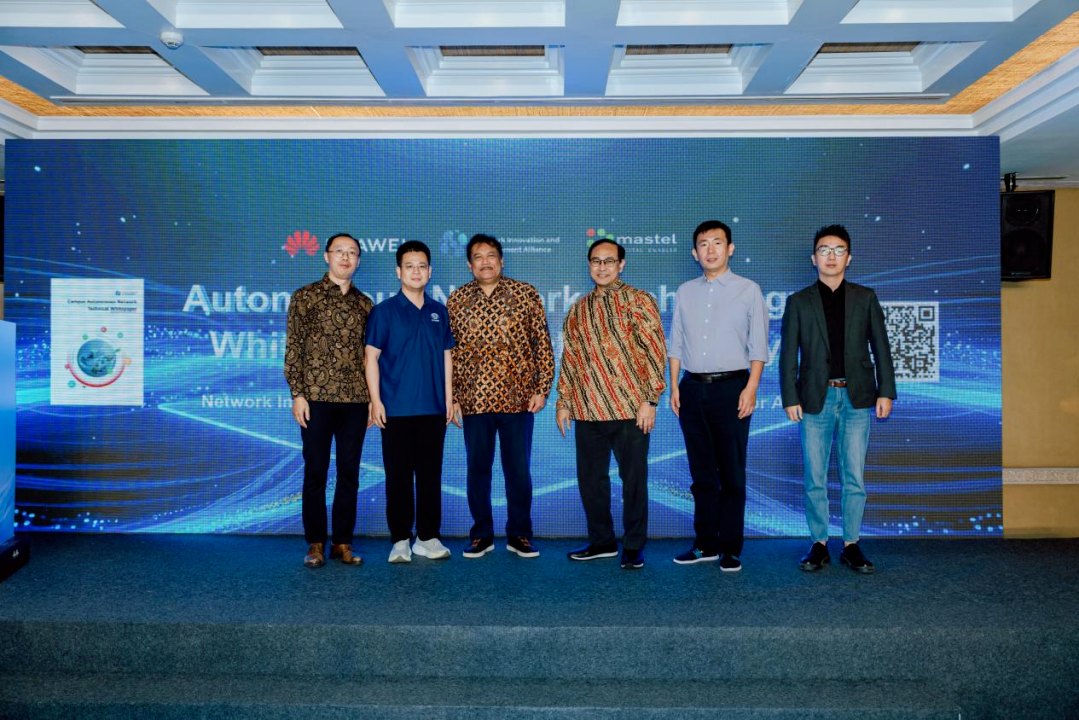
Sarwoto Atmosutarno (Chair of MASTEL), Teguh Prasetya (Chairman, MASTEL IoT, AI & Big Data Chapter), Lei Sun (Director of the Smart Infrastructure Center, Information Construction and Management Office, China University of Mining and Technology), Junjun Chen (Senior Engineer, Computer Center, Peking University), Jinsuo Gao (Director, Education Industry, Data Communication Product Line, Huawei) jointly attended the white paper launch ceremony.
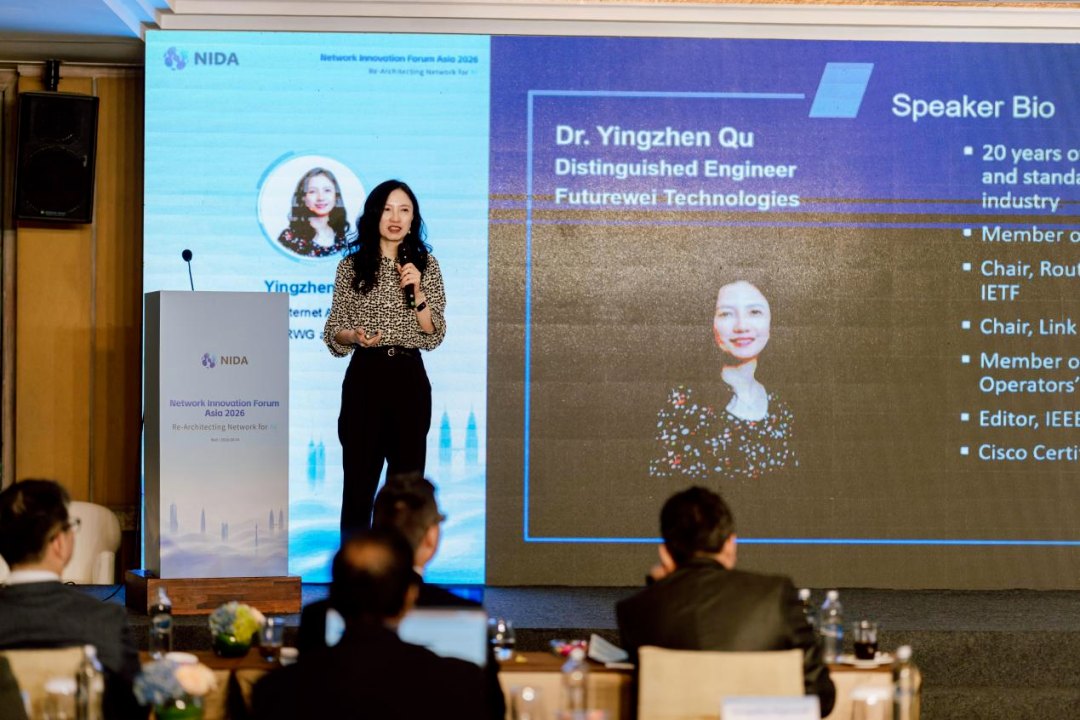
Yingzhen Qu, Member of the Internet Architecture Board, Co-chair of IETF LSRWG and RTGWG, delivered a keynote presentation on the Internet of Agents (IoA). She pointed out that AI and networks are forming a mutually deep enabling relationship. First, AI empowers traditional networks to realize predictive operations and maintenance, intent-driven automation, network self-healing, and AI-native security protection. Second, networks in turn support AI services, which require lossless GPU interconnection, dedicated communication protocols for intelligent agents, and refined AI-aware telemetry capabilities. The Internet is evolving from the traditional paradigm connecting humans and end devices into an Agent-based Internet supporting billions of intelligent agents. Communication interaction patterns are being upgraded from linear human-machine request-response models to exponential interaction models featuring autonomous collaboration and continuously iterative inference among massive intelligent agents. Established mature IETF standards including SRv6, IOAM, QUIC and BGP, together with ongoing working groups such as MASQUE, RATS, FANN and WebBotAuth, have laid a solid technical foundation for network architectures in the AI era. They cover full-chain core capabilities including programmable forwarding paths, real-time traffic telemetry, secure transmission, trusted identity and automated configuration.
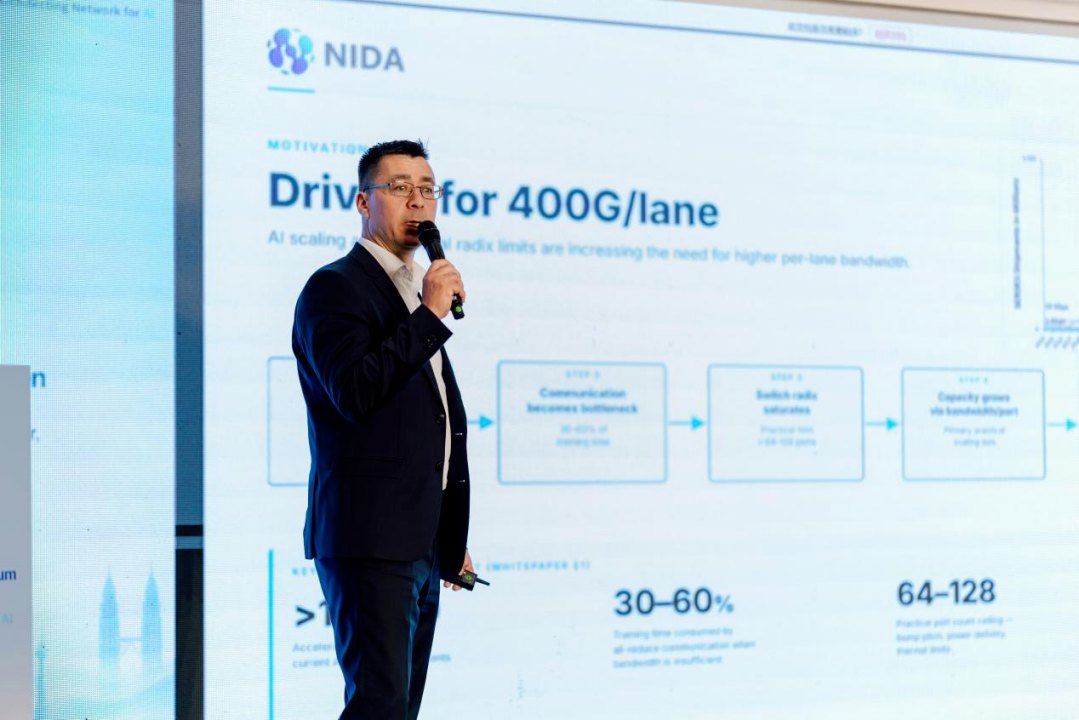
Jannik Hammel Nielsen, IEEE 802.3cg / Ethernet-APL Industry Representative; Co-Chair, NIDA 400G per Lane MSA, interpreted the latest progress of 400G per Lane technology. He stated that the massive bandwidth demand driven by large-scale AI deployment and high-scale networking constitutes the core driver for Ethernet to evolve from 200G per lane to 400G per lane. 400G per Lane represents a systematic project requiring integrated and coupled design across electrical channels, optical modules, modulation schemes (PAM4/PAM6), forward error correction algorithms and physical layer architectures. At present, passive electrical channels including packages, PCBs and connectors remain the biggest bottleneck hindering industrial adoption. The choice between PAM4 and PAM6 technology routes essentially boils down to system-wide performance trade-offs. PAM4 can leverage the existing industrial ecosystem yet requires channel bandwidth at the 112 GHz level. PAM6 eases channel bandwidth pressure, but introduces challenges such as signal-to-noise ratio degradation, higher FEC overhead and increased hardware implementation complexity. While the optical transmission sector generally favors the PAM4 solution, electrical layer link technologies are still undergoing convergence among multiple stakeholders.
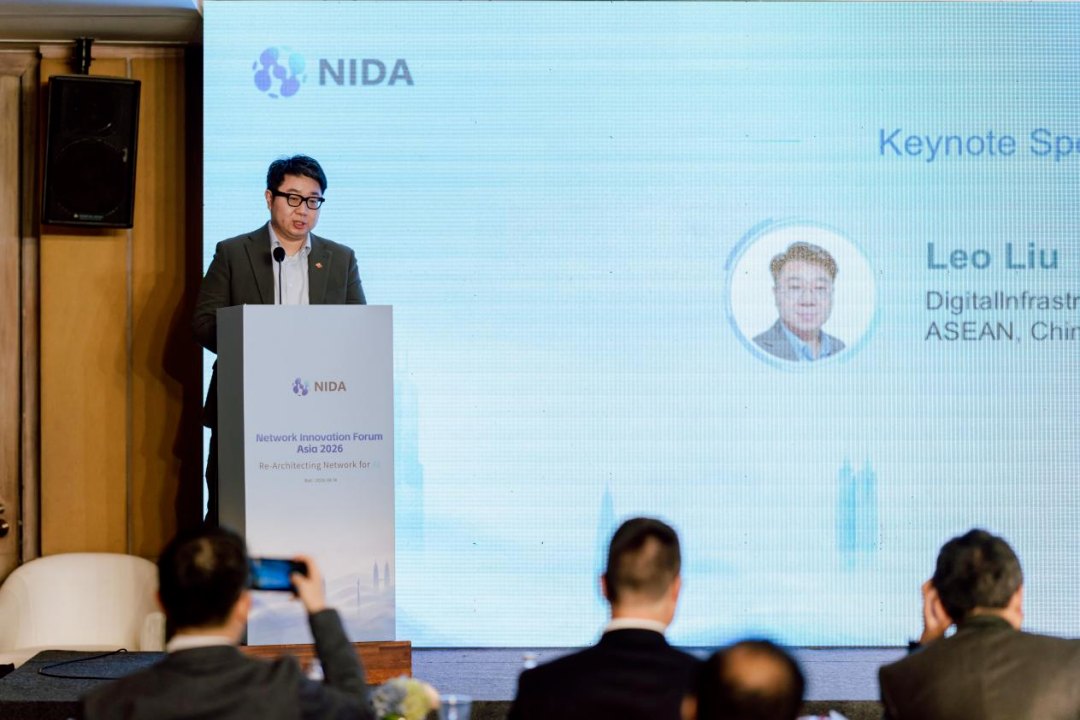
Leo Liu, Digital Infrastructure and Innovation Director, ASEAN, China Unicom, pointed out that the AI industry has shifted from a training-dominated era to an inference-dominated era, and Token consumption will emerge as a new core billing metric. According to institutional estimates, inference computing power will account for 66% of the world’s total AI computing power in 2026, and demand for intelligent agent-driven Tokens will surge 24 times over the next four years. The core value of operators will also transition from merely owning computing assets to delivering intelligent integrated services. China Unicom has defined its core strategy of transforming from a connectivity service provider to an integrated AI service provider. Built upon the foundational connectivity base, the operator layers four components: cloud platforms, GPU/AI computing pools, industry models and APIs, and Token billing, forming a four-dimensional value system of “Connectivity × Computing Power × Token × Industrial Ecosystem”. Leveraging the unified service portal of the Xingluo International Computing Platform, China Unicom aggregates more than 45 industry large models, over ten computing power suppliers and diverse heterogeneous computing resources. Through three cooperation models — bundled product offerings, local computing supply, and joint co-innovation for vertical industries, China Unicom works with local partners in Indonesia and Southeast Asia to explore the regional AI service market.
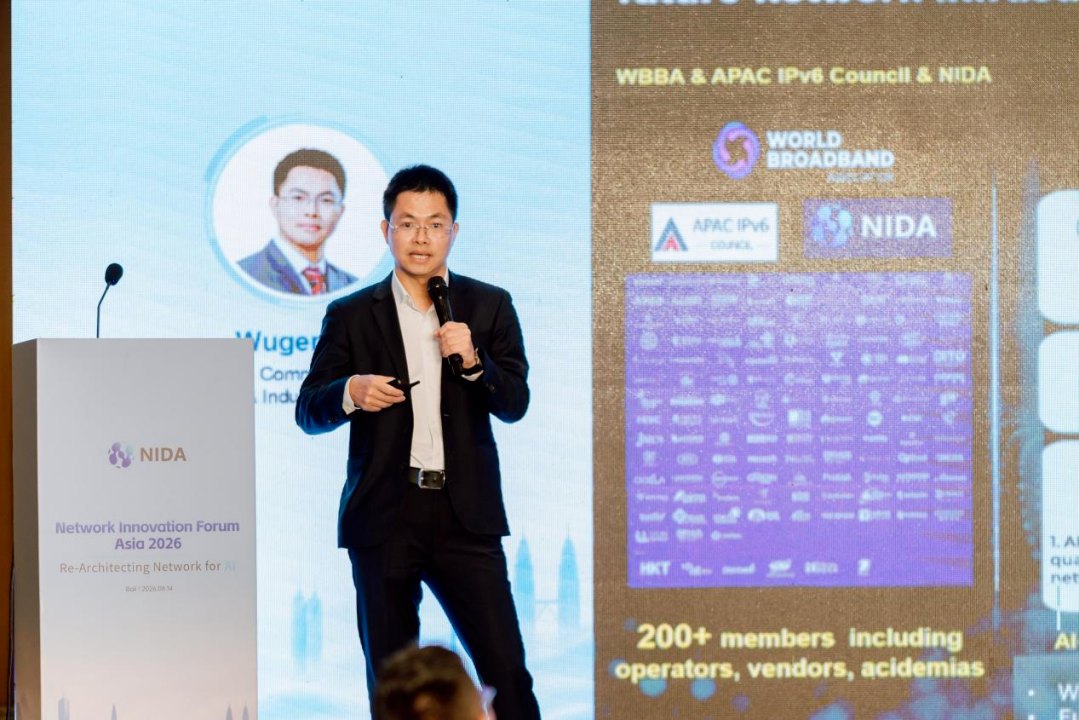
Wuger Xue, VP, Huawei Data Communication Product Line (Strategy & Industry Development), delivered a keynote speech titled “AI-Net: Building Network Infrastructure for AI Era”. He shared Huawei’s innovative practices and industry insights on network technologies in the AI era. AI applications are gaining traction at an annual compound growth rate exceeding 50%. Large-scale deployment of scenarios including personalized education, precision healthcare and intelligent manufacturing imposes stricter requirements on underlying networks for high concurrency, low latency and automated operations and maintenance. Aligned with the industry consensus on AI-Net, Huawei advances comprehensive reconstruction of network architectures across three key scenarios: campus, wide area and data center. Campus networks evolve from basic wireless access to intelligent connectivity; wide area networks prioritize deterministic experience and security resilience; data center networks overcome computing power bottlenecks for large models through compute-storage-network synergy, establishing a high-throughput, highly reliable computing foundation. Huawei calls for deeper collaboration with governments, industry partners, research institutes and universities in regional countries to jointly build end-to-end ubiquitous, secure and efficient intelligent connectivity, unlock the potential of the digital economy, and support the delivery of national AI industry development objectives.
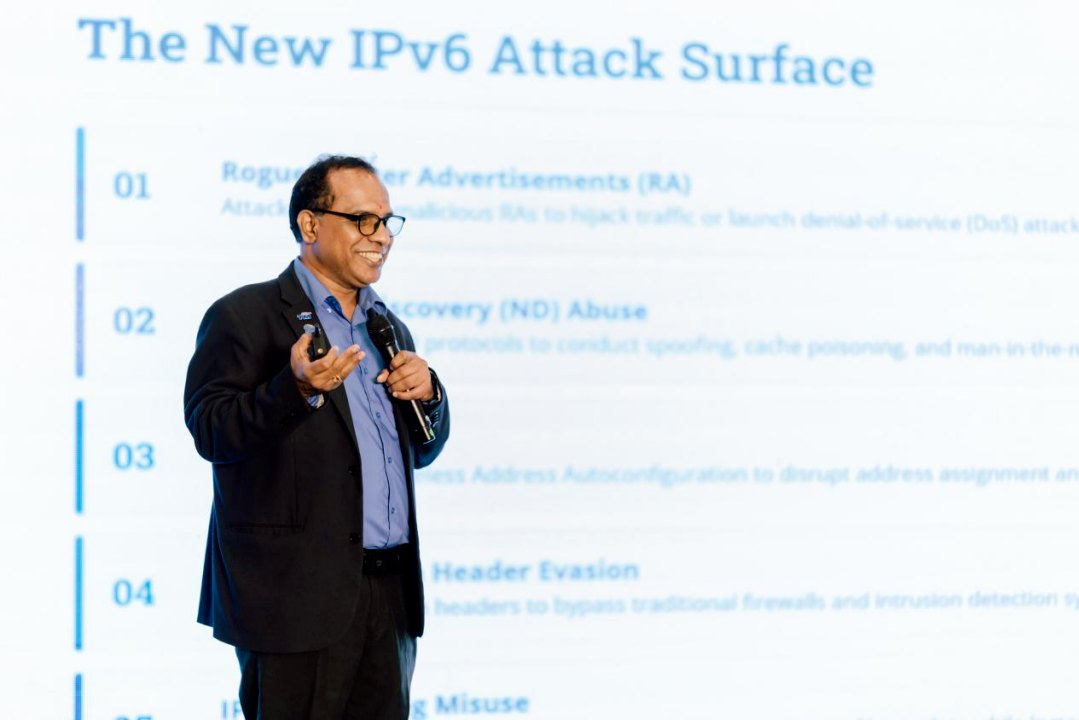
Navaneethan C Arjuman, Vice Chair, Numbering and Electronic Addressing Working Group, MTSFB; Chair of APAN IPv6 and 5G WG, shared the status of IPv6 industrial development. Globally, IPv6 traffic now accounts for 45%–50% of total traffic, and industries are accelerating the migration from dual-stack network architectures toward IPv6-first and even IPv6-only networks. Nevertheless, supporting security monitoring and defence systems still adopt outdated approaches inherited from the IPv4 era, resulting in widespread blind spots in network visibility. Full migration to IPv6-only networks will give rise to four emerging security risks: unregulated hidden IPv6 subnets, incomplete migration of firewall policies, large-scale DDoS attacks launched by IPv6 IoT botnets, and advanced persistent threats (APT) covertly establishing command-and-control channels over IPv6. Multi-dimensional coordinated measures are required to address these challenges: deploying AI-driven anomaly detection and machine learning-based threat prediction systems, building a zero-trust security framework compatible with Stateless Address Autoconfiguration (SLAAC), and integrating post-quantum cryptography. Efforts should also be made to fill skill gaps among operation and maintenance personnel, upgrade legacy security hardware, and promote the implementation of unified IPv6 security standards across the industry.
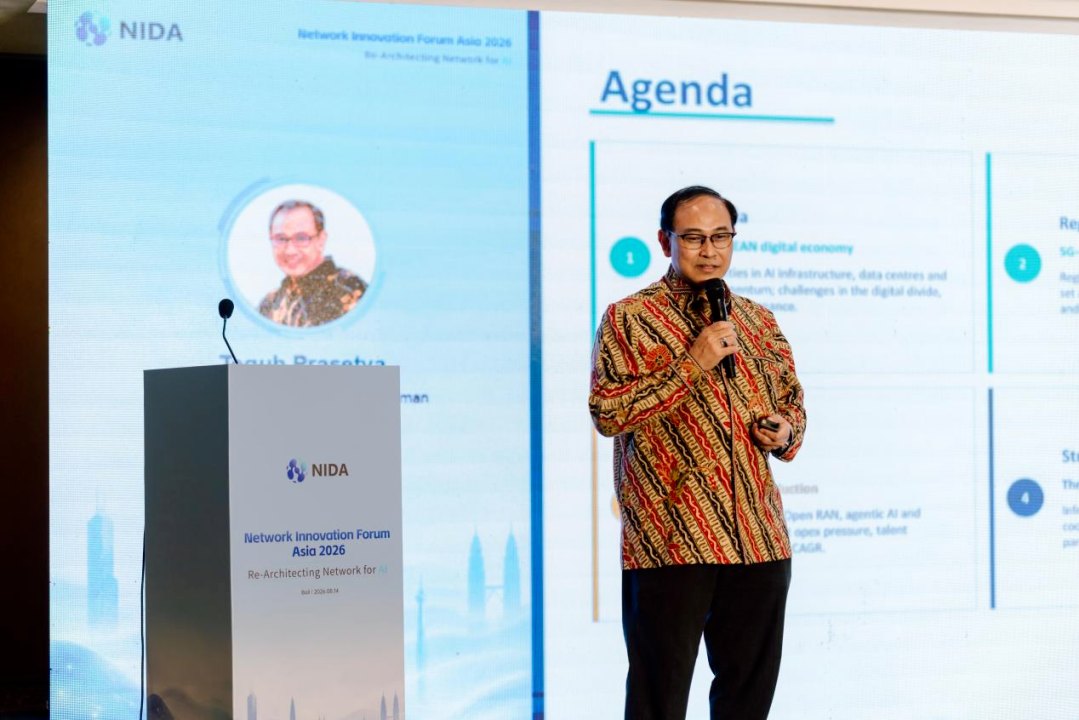
Teguh Prasetya, Chairman, MASTEL IoT, AI & Big Data Chapter, delivered an in-depth analysis of development opportunities and practical challenges for Indonesia’s digital infrastructure. He pointed out that Indonesia boasts ASEAN’s largest and fastest-growing digital market, with its digital economy valued at approximately USD 100 billion in 2025. The country plans to expand its national total data center computing power to 1.65 GW by the end of 2026. Nevertheless, four major challenges severely restrict industrial implementation: uneven regional infrastructure caused by its archipelagic geography, a shortage of 3.97 million digital talents, fragmented spectrum resource management, and constrained power supply. Looking at ASEAN and the broader Asia-Pacific region, the deep integration of 5G and AI, large-scale expansion of data centers, and regional integration under the ASEAN Digital Economy Framework Agreement (DEFA) have unlocked broad development prospects. However, development is constrained by inconsistent spectrum standards among nations, regional power supply bottlenecks and low uptake of digital services. Insufficient regional coordination significantly weakens the overall industrial growth potential. Globally, AI-native networks and Open Radio Access Network (Open RAN) are gradually moving from pilots to commercial deployment. Even so, the telecommunications industry faces headwinds including an annual growth rate below 3%, persistently high operating costs and a global shortage of senior communications professionals, putting pressure on industrial investment willingness. Only by advancing three parallel strategies — full-scale deployment of high-density computing infrastructure, coordinated cross-ASEAN policy planning, and multi-level digital talent cultivation — can Indonesia fully unlock the long-term value dividends of network development in the AI era.
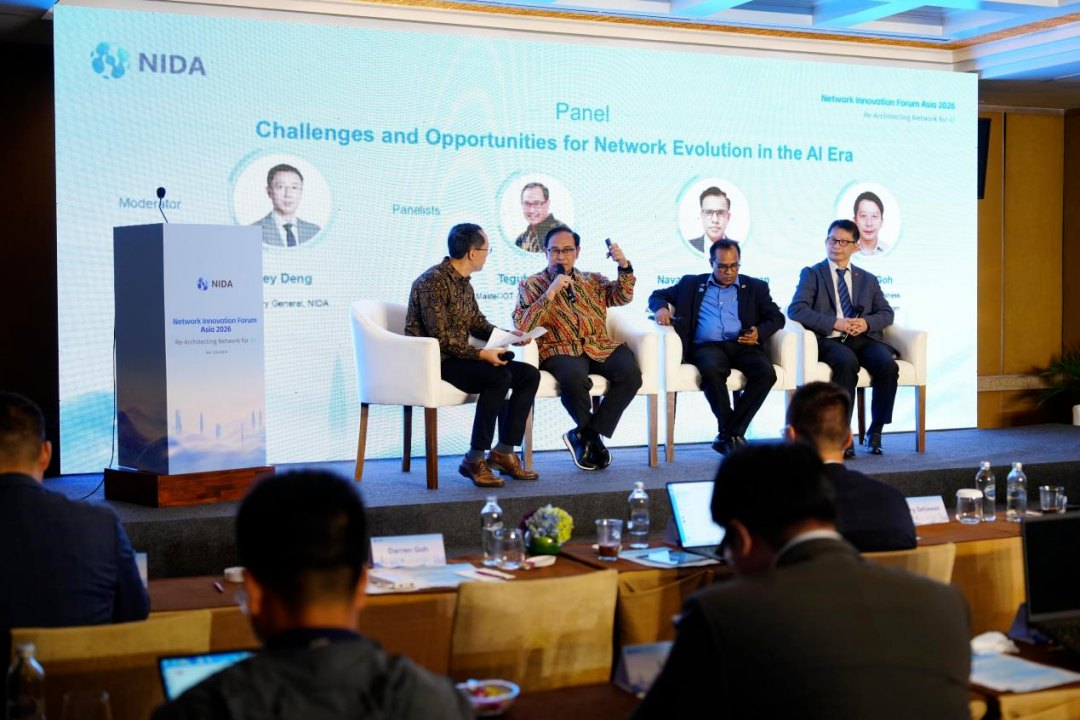
The forum Panel session was moderated by Joey Deng (Secretary General of NIDA). Panel participants included Teguh Prasetya (Chairman, MASTEL IoT, AI & Big Data Chapter), Navaneethan C Arjuman (Vice Chair, Numbering and Electronic Addressing Working Group, MTSFB; Chair of APAN IPv6 and 5G WG), Darren Goh (GM of Carrier Business, ASEAN, China Unicom). The panel held extensive exchanges on existing pain points of the network industry in the AI era, core challenges requiring priority resolution, and the enabling value of international industrial collaboration. The panelists reached a consensus: notable disparities exist in network development levels across countries, stemming from multiple factors including geographical conditions, historical industrial foundations and local talent pools. Cross-border industrial collaboration enables effective learning from proven practices in mature markets. Leveraging unified industry standards can avoid redundant trials and errors, establish regular channels for talent exchange and learning, and collectively accelerate the overall development of digital infrastructure across the Asia-Pacific region.
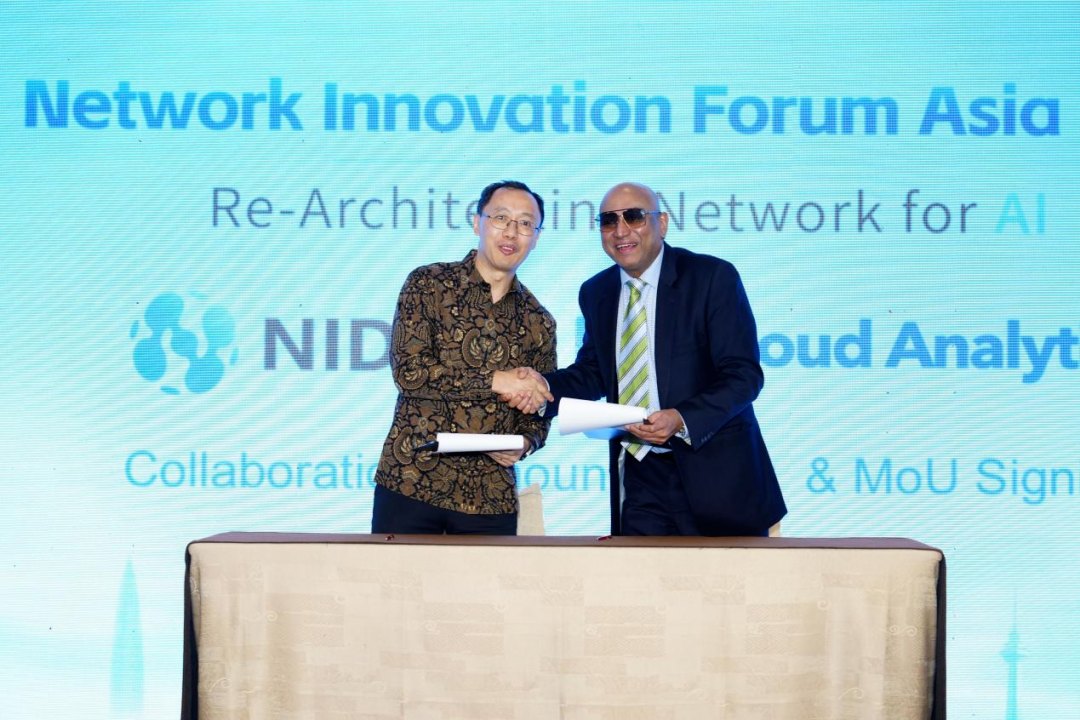
Another key outcome of the forum was the signing for international industrial cooperation. As NIDA accelerates its global footprint, the alliance keeps expanding cross-industry and cross-regional industrial partners. Onsite, Ganapathy Sirgunavel, CEO of CLOUD ANALYTICS SDN. BHD., and Joey Deng, Secretary General of NIDA, signed a Memorandum of Understanding (MoU) on behalf of their respective organizations. Going forward, the two parties will jointly deepen efforts in the co-development of global communication network industry standards.
This is the first industry forum hosted by NIDA in the Asia-Pacific region. The event received strong support from organizations including MASTEL of Indonesia, the APAC IPv6 Council and Malaysia MTSFB. As an international organization, NIDA has long been committed to advancing the development of global network infrastructure through strengthened international cooperation, enabling broader public access to the benefits brought by the digital and AI era.