
Physical AI Becomes Reality: Integrated Sensing and Communication Technology and System Seminar Successfully Concludes
Official English Translation [Chengdu, China, September 12] The Integrated Sensing and Communication (ISAC) Technology and System Seminar was successfully held at the Chengdu Europe Center. Jointly organized by the International Society of Smart Sensing Technology (ISST) and the Network Innovation and Development Alliance (NIDA), the seminar was themed "Overcoming Industrial Barriers to ISAC Deployment and Serving Industry Applications." Attending academicians, university researchers, and industry chain practitioners focused on real-world issues such as technical bottlenecks, standards synergy, business models, and ecosystem co-construction, with a dedicated focus on driving ISAC technology from laboratories toward large-scale industrial applications.
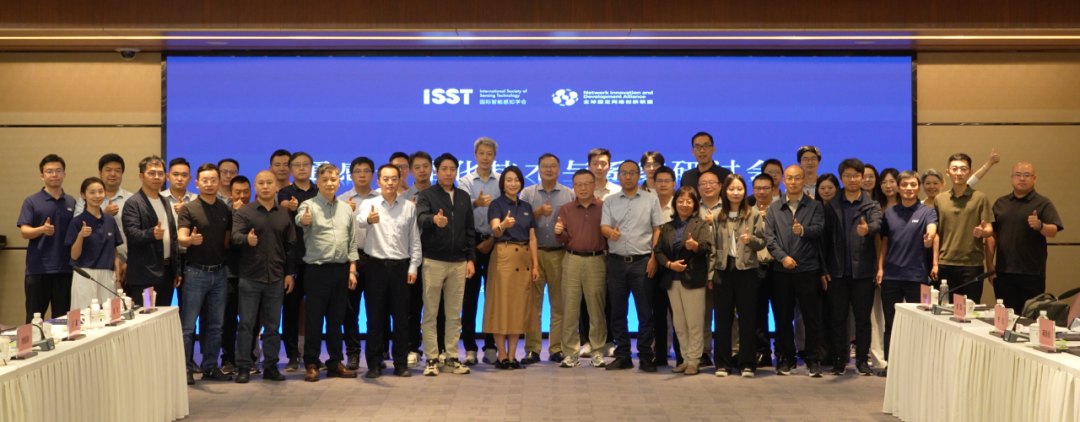
Above: Group photo of all seminar participants
Academician Wu Ke delivered a keynote speech titled Wireless Intelligence and Physical AI. The report outlined the evolution of wireless technologies and interpreted the upgrade logic from software AI to physical AI. It systematically introduced hardware iterations for ISAC, software-hardware co-design, and various intelligent agent application frameworks, while sharing long-term forward-looking research outcomes from the research team—noting that several early-stage layout technologies have now become industry hotspots. Based on the evolutionary patterns of radio frequency (RF) technology, Academician Wu proposed a visionary framework for the grand unification of future wireless technologies, while reminding the industry to evaluate technology maturity objectively and rationally.
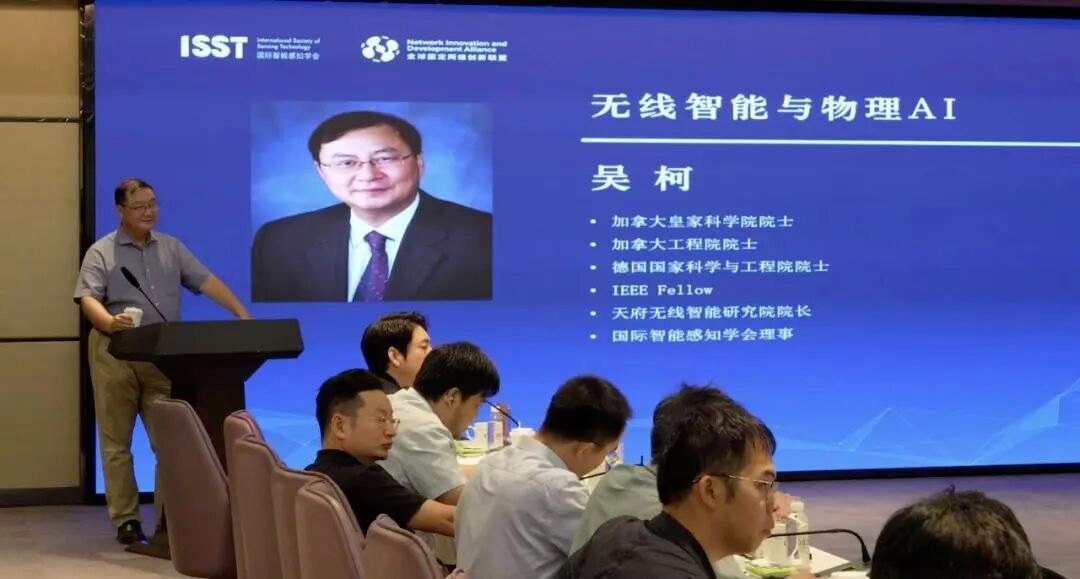
Above: Photo of Academician Wu Ke delivering his speech
Academician Sun Lining delivered a report titled Sensing Technology for Embodied Intelligent Robots. Aligning with national strategic policies such as the 15th Five-Year Plan and MEMS major projects, the report clarified the crucial industrial value of micro-nano sensing technology. It introduced the architecture of intelligent robot systems and explained the core principles of using micro-nano sensing to build embodied sensing neurons. The report defined the mainstream trends of sensing technology iterating toward miniaturization, integration, and intelligence across multiple robot sensing directions. Drawing on real-world cases such as surgical robots and dextrous hands, Academician Sun analyzed current technical shortcomings and deployment bottlenecks in the intelligent sensing field.
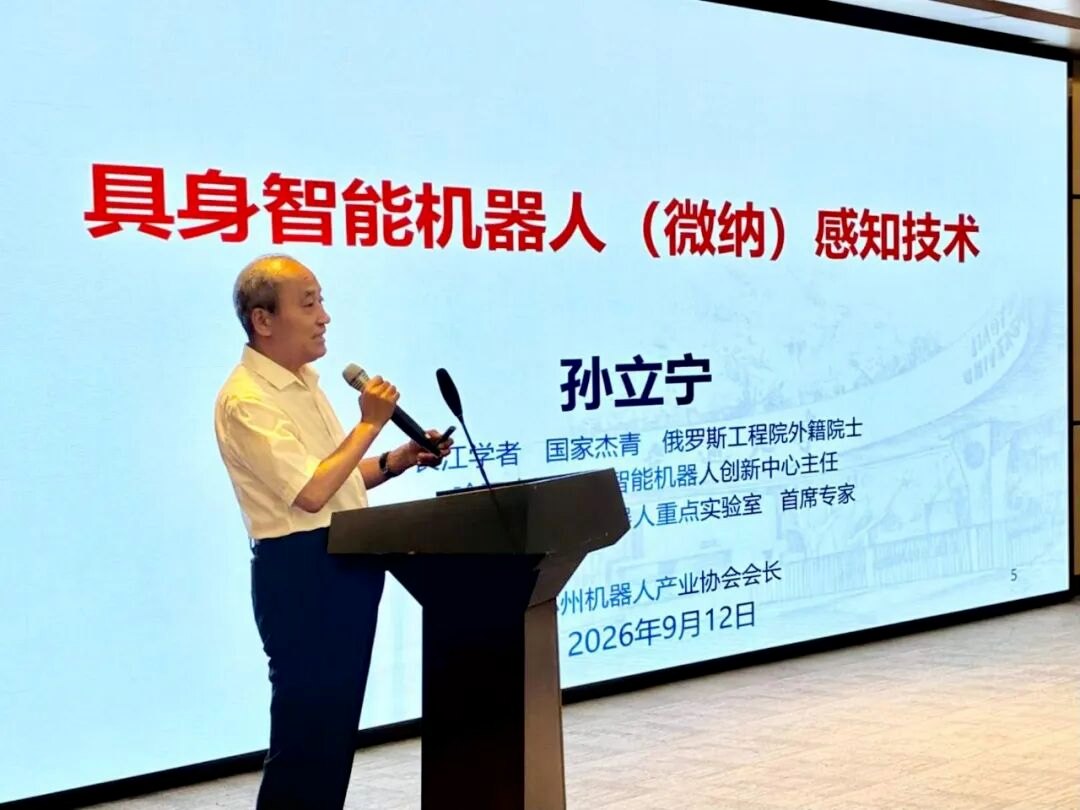
Above: Photo of Academician Sun Lining delivering his speech
Li Guangpeng from the Network Innovation and Development Alliance delivered a report titled Enabling Industrial Intelligence—Introduction to Zhiyao Network Technology and Industry Ecosystem Development. The report pointed out that core pain points in physical AI deployment stem from missing industrial interfaces and insufficient industry domain data. It detailed the core technical architecture of Zhiyao Network's integrated transmission and power supply capabilities alongside its multi-scenario adaptability. Leveraging innovation cases of Zhiyao Network in the petroleum and petrochemical industries, the report validated the technology's empowering effect on industrial data collection and industrial intelligence, while highlighting the efforts of NIDA and its Zhiyao Network Professional Committee in advancing standards co-construction, ecosystem cultivation, and the construction of localized industrial network systems.
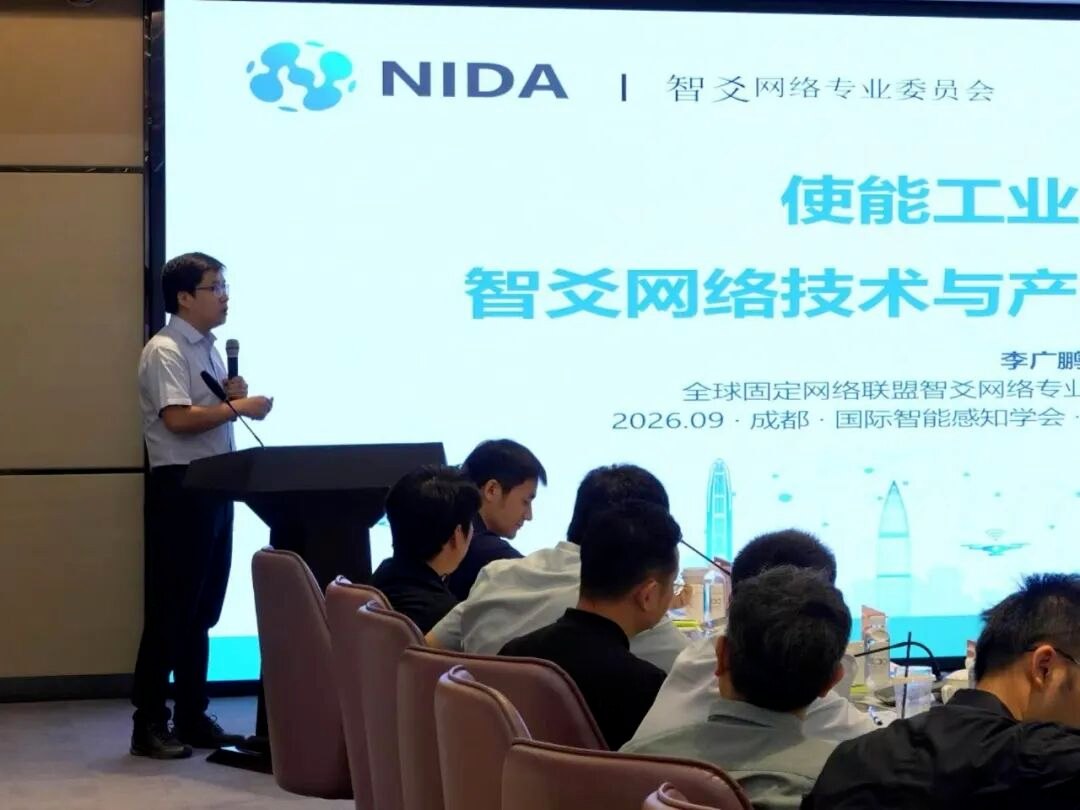
Above: Photo of Li Guangpeng, Expert of NIDA Zhiyao Network Professional Committee, delivering his speech
Bai Xiaofei from Huawei presented a report titled Huawei Data Communication WLAN+X ISAC Exploration. The report explained the overall technical philosophy of WLAN+X sensing convergence, constructing a multi-dimensional short-range wireless application framework. Comparing differences among mainstream sensing technical routes, it showcased multiple mature commercial deployment projects. It candidly outlined real-world engineering challenges such as signal interference, recognition errors, device design, and cost control. Furthermore, it proposed industry-univ-research collaborative breakthroughs to overcome technical deployment barriers and accelerate the large-scale industrial development of ISAC.
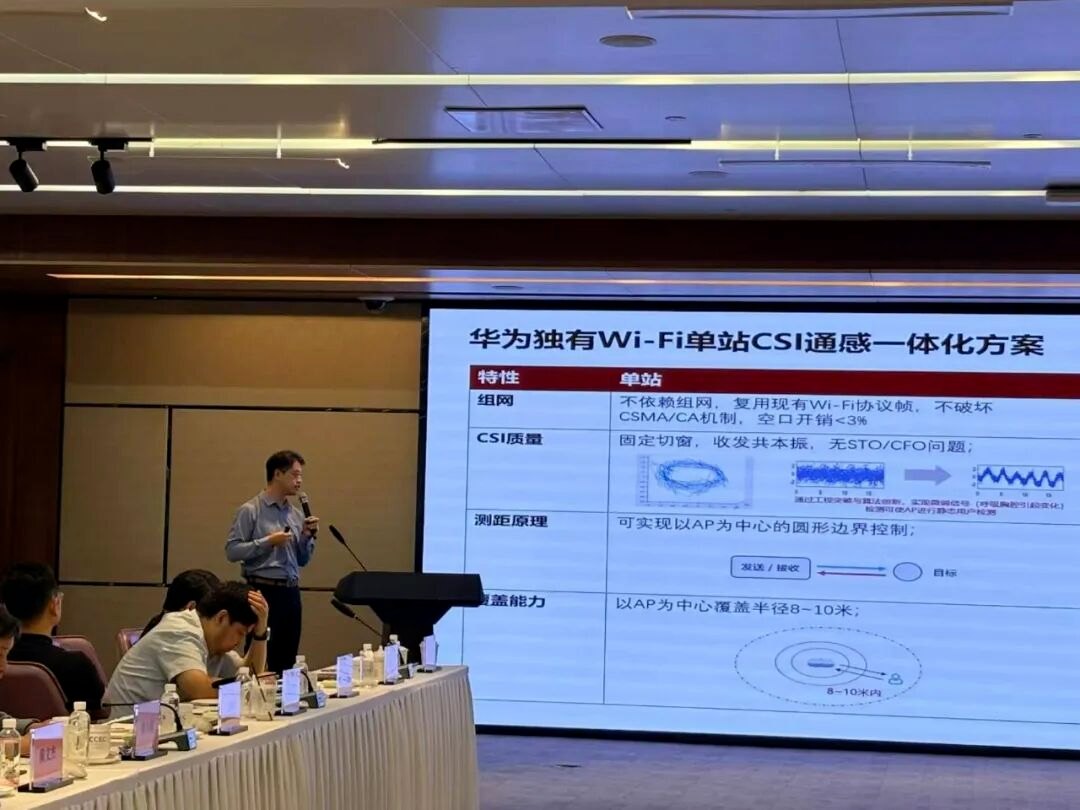
Above: Photo of Bai Xiaofei, WLAN Domain Expert at Huawei, delivering his speech
At noon, organized by the Chengdu Association for Science and Technology, representatives from ISST, NIDA, Qingyang District, China Mobile Chengdu Research Institute, and relevant enterprises held a targeted discussion on the industrial deployment of ISAC and Zhiyao Network in Chengdu, planning to initiate concrete demand research as the next step.
From 14:00 to 17:00 in the afternoon, during the open discussion session, experts from industry and academia engaged in deep, pragmatic exchanges with the two academicians regarding technical deployment bottlenecks, standards co-construction, business models, and industrial ecosystems. Addressing various industry pain points raised on-site, Academician Wu Ke and Academician Sun Lining consistently grounded their guidance in practical issues, offering professional direction and constructive insights across ISAC concept definitions, industry talent gaps, and enterprise transformation pathways, deeply tapping the potential for industry-univ-research collaboration.
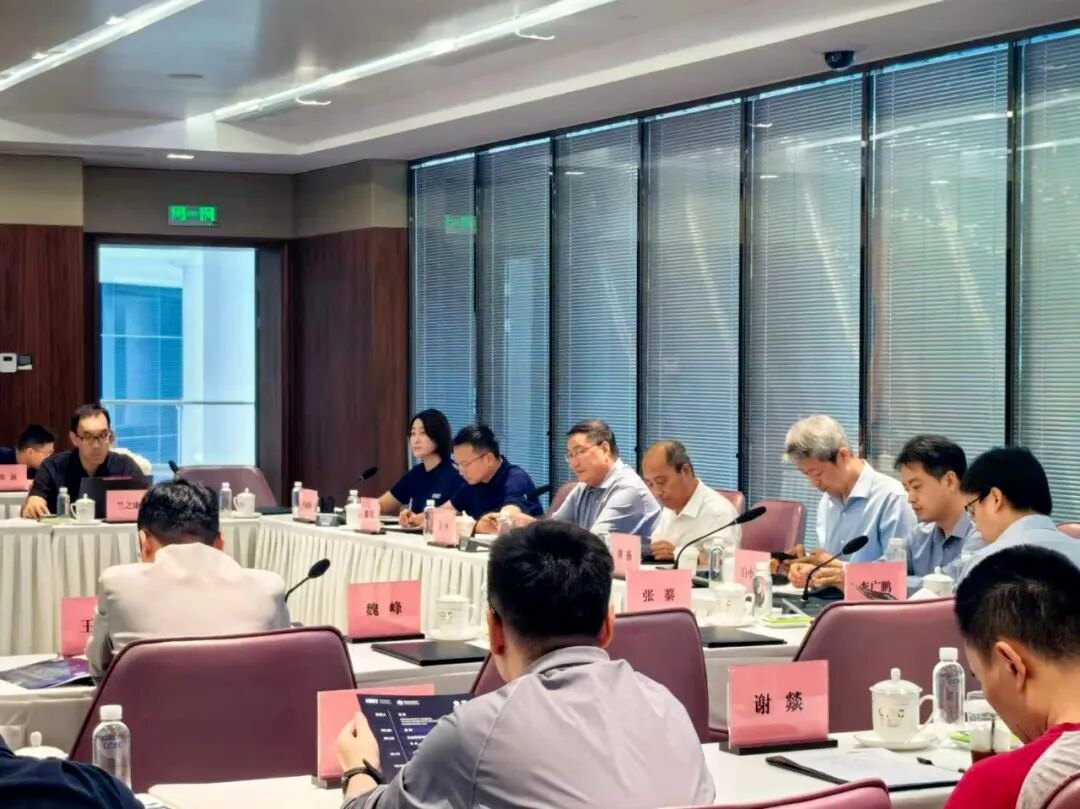
This seminar was compact and pragmatic. The two academicians presented comprehensive outlooks on academic development trends related to the two hot industries of ISAC and embodied robotics. Subsequently, two industry experts invited by NIDA elaborated on the concrete deployment progress in these two directions and reported on the establishment of the Wireless Intelligence Sensing and Industry Alliance (WISIA) and the Zhiyao Network Professional Committee under NIDA.
During the seminar, attending experts and enterprise representatives expressed an urgent desire for practical innovation cases in technology deployment! Moving forward, NIDA will focus on the two technology and industry development directions from this seminar, prioritizing efforts to drive industry partners to focus on the landing of innovative cases. Based on new demands emerging from the innovation process, these insights will be fed back to relevant industry-univ-research units within ISST, thereby achieving iterative technical innovation and fostering the spiral growth and expansion of the industry!
Once again, sincere thanks to Shan Huimin, Secretary-General of the International Society of Smart Sensing Technology, for the meticulous organization, as well as to the two academicians and all experts for their valuable insights!