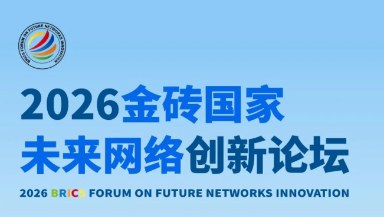
Guided by the Ministry of Industry and Information Technology (MIIT) of the People's Republic of China, the BRICS Future Network Innovation Forum 2026 will grandly convene at the Wuzhou Guest House in Shenzhen from June 16 to 17, 2026. The forum is co-hosted by the Shenzhen Municipal Bureau of Industry and Information Technology, the China Academy of Information and Communications Technology (CAICT), and the BRICS Institute of Future Networks (China·Shenzhen). It is also highly supported by the International Telecommunication Union (ITU) Regional Acceleration Center for Digital Transformation, the United Nations Economic and Social Commission for Asia and the Pacific (UNESCAP), and the Network Innovation and Development Alliance (NIDA). At that time, government officials, top experts, scholars, and industry leaders from BRICS countries and global emerging markets will gather in Shenzhen to celebrate this grand event of the network industry.Since its inception in 2019, the BRICS Future Network Innovation Forum series has been successfully held for six consecutive editions. Under the theme of "Next-Generation Intelligent Networks," the Network Sub-Forum will focus on the industrial trends of next-generation intelligent network evolution and the practical integration of cutting-edge technologies. The forum will facilitate in-depth exchanges and mutual learning in fields such as resilient networks, space communications, autonomous networks, and WLAN+X. Concurrently, a series of cutting-edge technology white papers and standardization achievements will be released, injecting brand-new momentum into deepening practical cooperation among BRICS nations in the fields of information communications and artificial intelligence.The BRICS Future Network Innovation Forum 2026 series is about to grandly open. We cordially invite our industry colleagues to join us at the event to jointly explore the evolution paths and outstanding practices of next-generation intelligent networks, and work together to map out a splendid blueprint for BRICS digital cooperation!
2026-06-08
235
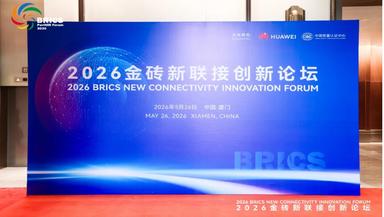
[Xiamen, China, May 26] The 2026 BRICS New Connectivity Innovation Forum, co-hosted by four international alliances — the World WLAN Application Alliance (WAA), the International SparkLink Alliance (iSLA), the Network Innovation and Development Alliance (NIDA), and the Global Intelligent IoT Alliance (GIIC) — successfully concluded at the Xiamen International Conference Center. Under the core theme “AI-Driven New Connectivity, Co-Creating a New Future for BRICS Cooperation,” the forum brought together government representatives, telecom operators, industry leaders, and technical experts from BRICS countries and partner nations including China, Egypt, Indonesia, Kenya, Tajikistan, Nigeria, and Ethiopia. Participants jointly explored cutting-edge trends in the digital industry, shared practical experience in advanced technologies, and worked together to shape a new future for digital cooperation among BRICS countries.Li Kun, Deputy Director of the Industrial Development Department of NIDA, attended the forum and delivered a speech titled “The Intelligent Era Urges the Evolution to Next-Gen Network.” He stated that the intelligent era is driving next-generation networks to evolve toward the characteristics of “four connections and four domains.” NIDA is committed to collaborating with global standards organizations to advance technological innovation and promote the implementation of network innovations across industries. NIDA has released 12 standards covering sectors such as telecom operators, healthcare, education, and finance, three of which have been adopted by BRICS countries including Indonesia and Kazakhstan. NIDA currently has more than 100 global members, over 30% of which are international members, with the vast majority coming from BRICS countries. He concluded by emphasizing that NIDA will continue to drive innovation in network technologies and industry applications, helping to build AIready nextgeneration network infrastructure.Through the successful organization of the 2026 BRICS New Connectivity Innovation Forum, NIDA has further expanded its industrial ecosystem linkages and international influence among BRICS countries. NIDA will continue to promote the evolution of global network innovation technologies and the development of crossindustry ecosystems, working hand in hand with BRICS partners to inject lasting momentum into digital cooperation in the AI era.
2026-05-28
90
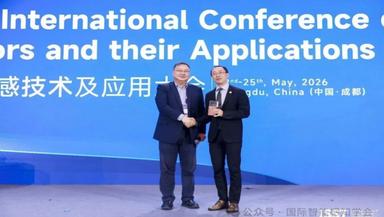
[Chengdu, China, May 24] May 22-24, co-sponsored by the International Society for Intelligent Sensing (ISST), the Chinese Institute of Instrumentation and Instrumentation, and the Royal Institute of Measurement and Control. The Inaugural Conference of the International Intelligent Sensing Society and the 2026 International Sensing Technology and Application Conference jointly organized by the University of Electronic Science and Technology, Xi'an Jiaotong University, Huazhong University of Science and Technology, and Limerick University, Ireland were successfully held in Chengdu Century City International Convention Center. Deng Yiou, Secretary-General of Network Innovation and Development Alliance (NIDA), was invited to attend the conference and delivered the keynote report Evolution to the Next Generation Network.The International Society of Intelligent Sensing is the first international scientific and technological organization based in the western region of China. The conference brought together nearly 500 experts and scholars from 14 countries and regions. The International Society of Intelligent Sensing is a national-level society, co-sponsored by the Chinese Institute of Instrumentation and Instrumentation and the Royal Society of Special Measurement and Control, approved by the Chinese Association of Science and Technology, and registered with the Ministry of Civil Affairs of China.In his speech, Deng Yiou, Secretary-General of NIDA, first pointed out that the network is the key infrastructure to cope with AI challenges and seize AI opportunities in the AI era. It is very different from the "best-effort" Internet service access and bearer. Service access and bearer in the AI era imposes higher requirements on network infrastructure performance, security, and trustworthiness, accelerating the formation and evolution of next-generation network construction standards. Secondly, Synaesthesia (ISAC ( Integrated Sensing & Communication )) is a new and efficient wireless infrastructure technology of intelligent sensing. It is an interdisciplinary subject of intelligent sensing and network. Artificial intelligence agent is the main enabler for sensing data,so synaesthesia will become the key technology for further development of artificial intelligence in the future. At the same time, the report also introduces the research progress of NIDA's campus WLAN-based synaesthesia integrated ISAC and the promotion of the wireless intelligent sensing industry ecosystem.In the future, NIDA will cooperate with the International Intelligent Sensing Society in the field of synaesthesia to jointly promote the development of the WLAN+X ecosystem.
2026-05-27
86
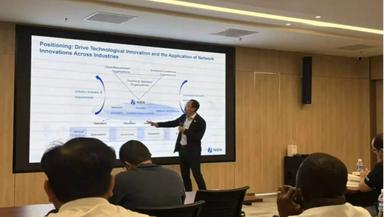
[Beijing, China, May 21] The "International Technical Standard Setting Capacity Building Training Course" organized by the China Internet Information Center was held from May 15-29. NIDA is one of the important associations of China's network industry going to sea. Deng Yiou, Secretary-General, on behalf of NIDA, gave a wonderful lecture for this training course, explaining NIDA's initiatives in the field of China's information and communication industry going to sea. It also focuses on the evolution direction of networks, AI, security, and related industries, as well as some important scientific and technological achievements.In particular, when explaining the security of data exchange between AI computing centers, many trainees actively asked questions, hoping to learn more about China's advanced experience.Another hot spot is the technological innovation and industrial implementation of campus networks in the fields of education, healthcare, and agriculture in local countries, especially in ASEAN countries. The backbone network infrastructure such as backbone networks and MANs have been basically developed, especially in economically developed capitals. However, with the deepening of cooperation with China, the network and information infrastructure of enterprise campuses have become the focus of extension construction. The wireless intelligent sensing industry and self-intelligent network developed by NIDA have become the focus of the trainees' attention. Synaesthesia and self-driving networks have become the consensus of campus network construction.The training course, sponsored by the Ministry of Science and Technology and guided by the Ministry of Industry and Information Technology, aims to help developing countries train technical talents, develop scientific and technological capabilities, enhance independent innovation capabilities, and serve local economic and social development. A number of communications officials and enterprise representatives from Malaysia, Indonesia, Bangladesh and other ASEAN countries participated in the training. NIDA will work with CNNIC and other domestic authoritative scientific research institutions and public efforts to contribute to the development of ICT and industry in developing countries.
2026-05-25
56
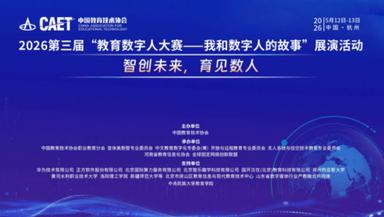
[Hangzhou, China, May 12-May 13] The 3rd "Education Digital People Contest - The Story of Me and Digital People" exhibition event hosted by the China Educational Technology Association and with the significant participation of the Network Innovation and Development Alliance (NIDA) and others. The curtain came to a successful conclusion in Hangzhou. As an important participant in the competition, NIDA actively helped organize the competition. Together with universities and the Education Technology Association, NIDA witnessed the dynamic power of digital transformation in AI-enabled education.With the theme of "Creating the Future Smartly and Cultivating Several People", the contest aims to promote the large-scale implementation of AI in student, teaching, and management scenarios through practical cases of "real, co-creation, and growth". NIDA fully leverages its function as an education hub, focuses on integration, intelligence, and international development paths, and is committed to linking key enterprise technologies, application scenarios, and association organizations to build an intelligent education ecosystem that integrates production, learning, research, and application, and accelerates R&D breakthroughs and practice transformation of AI technologies.Reviewing the selection process of the competition, the preliminary competition of "Campus Network Agent Application Group" was successfully held in Beijing, attracting dozens of outstanding works to compete on the same stage. In order to strictly control the quality of the works and ensure the scientific and fair selection process, the preliminary competition adopts the dual evaluation mechanism of "AI judges + expert judges". Based on the multi-dimensional scoring criteria such as educational value and scenario fit, technology integration and intelligence level, co-creation mechanism and growth effect, depth of reflection and presentation specification, the jury evaluated and screened the technical realization, application value and innovation highlights of the entries from multiple dimensions. In the end, the best among the best is selected, and representative innovation achievements are selected to advance to the final.Teams from more than 100 colleges and universities including China University of Mining and Technology, Xi'an Jiaotong University, Chinese People's Liberation Army Air Force Military Medical University, Shenzhen Vocational and Technical University, Shanghai Jiaotong University and Shandong University gathered in Hangzhou. There is a wonderful competition around the true narrative of education digital people and the innovation of technology enablement. Participants deeply integrated AI agents into core scenarios such as self-intelligence networks, science and technology education, and green energy, and demonstrated a new form of smart education featuring self-intelligence and AI technology enablement. Among them, the track of "Campus Network Agent Application Group" with NIDA's important participation has emerged a number of excellent achievements with advanced agent technology, practical functions and promotion value. These works provide a practical model for digital transformation in colleges and universities, marking a new stage in which AI enablement education is moving from concept exploration to in-depth application.During the exhibition, Zhang Zhe, technical director of the network information center of Xi'an Jiaotong University, as an excellent case, shared the excellent practice of "Xi'an Jiaotong University Network Agent Protecting Campus Network Experience" and disassembled the three core capabilities of the university's network agent in detail. Digital maps and RSSIs implement accurate problem detection, intelligent scenario identification, multi-objective analysis, intelligent decision-making, and 24/7 automatic and manual-free execution. He focused on sharing the practical cases of his work in the pharmaceutical and chemical sector of Xijiao Innovation Port Campus. To face the challenges of complex network environments and dense devices in this area, the Wi-Fi optimization agent intelligently senses the AP running status using the HD digital map, dynamically adjusts transmit power and automatically optimizes channel configurations, effectively avoiding signal interference and conflicts, and completely solving the problem of weak signals in some seats. This effectively ensures the smooth running of smart teaching.Zhang Jun, vice director of the Industry Marketing Dept of the Network Innovation and Development Alliance, introduced the concept of collaborative innovation in network standards and education. He first explained the background, purpose and mission of NIDA as an international non-profit social organization, and emphasized that the alliance is committed to building an open and collaborative international "production, university, research and use" ecosystem. He then introduced the Alliance's organizational structure, standards working groups, industry committees and well-known experts. He also shared the Alliance's achievements in industry consensus, international cooperation and membership development.Zhang Jun pointed out that the booming development of "digital human" applications is an important driving force for the next generation Internet. The development of upper-layer applications poses brand-new requirements for bandwidth, latency, jitter, and intelligence of underlying infrastructure. The "joint computing", "joint intelligence", "joint data", and "joint air" scenarios defined by NIDA are next-generation network construction standards based on new application scenarios such as "digital human". The Alliance is not only a promoter of technologies, but also a link between technologies and applications. By pooling global resources, the Alliance works with its members to define next-generation network standards and provide "intelligent, innovative, and secure" next-generation network infrastructure support for scenarios such as smart campuses and smart healthcare.The successful holding of the Education Digital People Contest is another important practice for NIDA to enable the digital transformation of education. As a bridge between ICT technologies and education scenarios, NIDA has not only discovered a number of outstanding innovative works of education digital people by participating in this high-level exhibition competition, but also promoted the sublimation of excellent cases from individual practices to industry pioneer experience, effectively promoting the in-depth integration of cutting-edge technologies and education scenarios. In the future, NIDA will continue to cooperate closely with industry, university, research, and standards organizations at home and abroad, give full play to its role in the industry, continuously promote the in-depth integration of AI technology in education, and contribute solid digital intelligence to serving a learning-oriented society and building a powerful education country.
2026-05-22
120