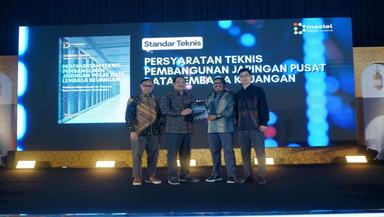
NIDA and Masyarakat Telematika Indonesia(MASTEL) Launch Data Center Network Standards Collaboration
Jakarta, April 27, 2026 – The Masyarakat Telematika Indonesia, (MASTEL) successfully hosted its "Halal Bihalal" event at the Bidakara Hotel in Jakarta. Under the theme "Strengthening Ties to Drive Collaboration and Digital Innovation in the Era of Global Communication Disruption,"the event brought together approximately 150 participants,including senior officials from Indonesia's Ministry of Communication and Digital Affairs, the Coordinating Ministry for Economic Affairs, the Ministry of National Development Planning (BAPPENAS), and other relevant ministries; representatives from telecommunications operators such as Telkom, Telkomsel, XLSmart, and Indosat Ooredoo Hutchison; vertical industry representatives from energy and finance; universities and research institutions; and equipment manufacturers including Huawei and Ericsson.Jointly Addressing the Challenges of the Digital AgeMASTEL Chairman Sarwoto Atmosutarno,in his speech, expressed high appreciation for the active contributions of all parties in advancing Indonesia's digital transformation. He stated:"As an organization that has been established for 33 years, MASTEL continues to play an active role in providing policy input and encouraging the strengthening of the national digital ecosystem. We also note that MASTEL has more than 112 member companies and over 300 professional members with extensive experience in the ICT field.""With this composition," Sarwoto said, "we are honored to serve as a strategic partner for ministries and institutions in providing policy input." MASTEL is actively developing global collaborations, including efforts to encourage professional standardization and enhance the country's digital literacy. These efforts are carried out through various initiatives, such as strengthening professional certification bodies and conducting research collaborations with international institutions.Government Perspective: The Strategic Direction of Digital TransformationDuring the keynote speech session, Dr. Ismail, Secretary General of the Ministry of Communication and Digital Affairs of Indonesia, delivered an important address. He emphasized the importance of cross-sector collaboration in facing the increasingly complex disruptions in the digital industry. He stated that changes in the digital industry landscape have transformed the role of telecommunications from being the primary driver to becoming the infrastructure foundation supporting various sectors of the digital economy. This situation requires strong collaboration between government, industry, academia, and society. He stressed that no single party can face digital transformation alone. "No institution, let alone a single company, can work single-handedly to address changes in Indonesia's digital industry. Including the government, we must all develop together."Ismail also cautioned that without strong collaboration, Indonesia risks becoming merely a market within the global digital ecosystem, rather than becoming a major sovereign actor. Therefore, he invited all stakeholders to strengthen their synergies in order to build an independent and competitive national digital industry.Voice from member:Director of Strategic Business Development & Portfolio at PT Telkom Indonesia, Seno Soemadji, emphasized that digital transformation is currently progressing at a very rapid pace and requires adequate infrastructure readiness. He noted that the advancement of technologies such as 5G, artificial intelligence (AI), and the potential of Artificial General Intelligence (AGI) demands that the telecommunications industry be prepared to provide reliable connectivity as well as sufficient data center capacity.Furthermore, Mohamad Rosidi, Director of ICT Strategy & Business, Huawei Indonesia, stated that with close collaboration between the government, industry, and all ecosystem stakeholders, Indonesia has the potential to become a global digital powerhouse.Core Outcome: Launch of Data Center Network Standardization CooperationThe central highlight of the event was the official launch of the "Financial Institution Data Center Network Standardization" cooperation project. Jointly advanced by MASTEL and the Network Innovation and Development Alliance (NIDA), this project aims to establish data center network standards for financial institutions, thereby enhancing the reliability, security, and inter-connectivity of Indonesia's critical information infrastructure. This initiative marks a crucial step for Indonesia in driving the digital transformation of the financial sector through standardization.Teguh Prasetya, Head of IoT, AI, and Big Data Industry at MASTEL, pointed out that financial data centers are a vital pillar of the national economy. Even a short-term network disruption could lead to significant economic losses and erode public trust. He emphasized that Indonesia currently faces a technological gap, as traditional network architectures struggle to simultaneously meet the demands of high-performance computing and cybersecurity.He further noted that due to the lack of binding standards with clear technical metrics, Indonesia currently lags behind regions such as Singapore, China, and the European Union. Therefore, establishing relevant standards is not only a necessity for technological advancement but also a prerequisite for participating in the global financial ecosystem. The standard system covers four core directions: high availability, lossless networking for the AI era, intelligent operations and maintenance, and data sovereignty and security. He highly recognized the collaboration with NIDA and expressed anticipation for deepening cooperation in more areas, including standards and talent development.Will Liu, Director of the Industry Development Department at NIDA,and Vice Chairman of the Asia-Pacific IPv6 Expert Council, expressed his gratitude for the collaboration with MASTEL and introduced NIDA's latest progress and achievements across its five working groups: Network Evolution, Autonomic Networks, Campus Networks, Data Center Networks, and Network Security. He stated that the jointly developed financial data center network standard is tailored to the demands of the AI era. By defining key technical requirements such as multi-site and multi-center interconnection, multi-layer resilience assurance, graded security protection, lossless high-performance transmission, and intelligent visualized operations and maintenance, it will serve as a crucial cornerstone supporting the development of Indonesia's digital infrastructure.He also emphasized that NIDA, as an open and inclusive international standards organization, will work with global industry partners to advance technical standards and white papers, focusing on high speed, high quality, high reliability, and high security. He welcomed more partners to join in collectively promoting the digital and intelligent development of society.About MASTELMASTEL (Masyarakat Telematika Indonesia), established in 1993, is one of the most influential independent non-profit industry organizations in the information and communication technology sector in Indonesia.
2026-04-30
188
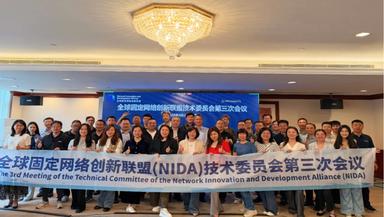
Successful conclusion of the third meeting of the NIDA Technical Committee
[April 23-24, 2026, Beihai, Guangxi] The third meeting of the Technical Committee (TC) of Network Innovation and Development Alliance (NIDA) was successfully held in Beihai, Guangxi. China Institute of Information and Communication, China Institute of Electronic Technology Standardization, Beijing Research Institute of China Telecom, China Mobile Communications Group Co., Ltd., China United Network Communications Co., Ltd., Jiangsu Future Network Innovation Research Institute, Huawei Technologies Co., Ltd., ZTE Corporation, Institute of High Energy Physics, Chinese Academy of Sciences, China Building Northeast Design and Research Institute Co., Ltd., Beijing Xinertai Technology Co., Ltd., China University of Mining and Technology, Shenzhen First Line Communication Co., Ltd., Huazhong Agricultural University, National (Hangzhou) New Internet Exchange Center, Zhuhai Xingyun Zhilian Technology Co., Ltd., Zijinshan Laboratory, etc. Experts and representatives attended the meeting.The two-day meeting included four agendas and 20 topics. First, we focus on the work tasks of the technical committee, covering three agendas: standard initiation review, work report of the working group, and system update of the technical committee, totaling 14 topics. Then, we started the technical sharing and discussion, and set up six topics for in-depth communication on six hot topics, including network standard technology progress, high-speed SerDes key technologies, data networking standards, intelligent network O&M, WLAN+X intelligent awareness, and IoA network infrastructure.This meeting was chaired by Ma Junfeng, member of NIDA Technical Committee and China Institute of Information and Communication Technology. He first reviewed NIDA's achievements in standard formulation, international connectivity, and industry promotion in 2025, and said that in 2026, the Technical Committee will continue to leverage the advantages of the Alliance's international platform to create greater value in standard formulation and implementation.The first item on the meeting agenda is the standard project initiation review. In this meeting, eight standards and technical reports were applied for project initiation, covering the work directions of four working groups: network evolution, self-intelligent network, campus network, and cyber security. Experts at the meeting carefully reviewed the project initiation documents and fully discussed the project initiation documents. On-site views exchanged and wisdom collided, which provided important guidance for high-quality project initiation and subsequent development of the documents.The second item on the agenda is the report on the annual work plan of the working group. The five working groups of network evolution, self-intelligent network, data center network, campus network, and cyber security described their positioning, scope, and work plans for the next one to three years. Through this systematic report, the experts and member units at the meeting have a clearer understanding of the overall layout and work objectives of the Technical Committee, which further stimulated the enthusiasm of participating in the standards work.The third item on the agenda is the review of the technical committee system update. After nearly two years of practice and exploration, NIDA and the Technical Committee have accumulated valuable experience and identified some work specifications and processes that need to be optimized. At the meeting, the NIDA Secretariat, together with the Technical Committee, updated some contents in the organizational document and process document, detailed the rights of members to participate in the work of the Technical Committee and the Working Group, supplemented the appointment procedure of the Vice-Chairs of the Working Group, updated the definition of the classification of manuscripts, and supplemented the standard work decision-making procedure of the Working Group. Experts at the meeting put forward many constructive suggestions based on their rich experience. After the meeting, the NIDA Secretariat will summarize and sort out the suggestions, update the contents of the system documents, and initiate online review and voting by the Technical Committee.After all tasks and topics of the technical committee are completed, the meeting enters the technical sharing and discussion phase. Special guest Zhao Huiling systematically reviewed the development trend, evolution and current progress of fixed network technologies and standards with the title of "Information Network Standard Technology Hotspots and Latest Progress", which brought profound inspiration to the experts attending the meeting.Subsequent technical discussions focused on five hot topics being promoted by NIDA: Hu Runlong, China Mobile Research Institute, introduced the progress of single-channel 400G MSA. Liu Yisha, China's New Internet Exchange Center (Hangzhou), shared the concept of the data networking standard framework. Han Sai, China Unicom Research Institute, interpreted the concept of network intelligent O&M agent technology and standard system. Bo Yang, NIDA Secretariat, explained the WLAN+X wireless intelligent sensing technology solution. Liu Bing, Huawei Technologies Co., Ltd. reported the MSA plan for IoA network infrastructure. Each topic attracted the attention and discussion of the experts attending the meeting. The on-site communication was adequate and the opinions were diverse.The meeting ended successfully in an efficient and warm atmosphere. Through in-depth exchanges, the experts at the meeting had a comprehensive understanding of the work achievements and future plans of the Technical Committee, and had a deep understanding of the cutting-edge technologies that the Alliance focused on promoting. In the next step, the NIDA Technical Committee will continue to move forward and invite more experts from the industry to jointly promote the innovation, development and application of fixed network technologies.
2026-04-24
132
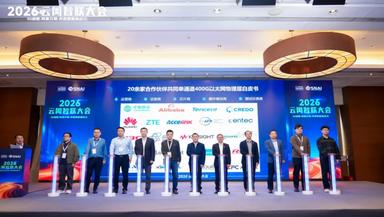
[Beijing, China, on April 15, ] NIDA 400G Per Lane MSA released the world's first White Paper on the Single-Channel 400G Ethernet Physical Layer at the Cloud Network SmartLink Conference 2026. The White Paper systematically proposed the technical framework of the Single-Channel 400G Ethernet physical layer, which is an important breakthrough in China's next-generation high-speed interconnection technology.The white paper was prepared by the Single Channel 400G Multi-Source Protocol Group (MSA), 400G Per Lane MSA of Network Innovation and Development Alliance (NIDA). It brings together the technical contributions of more than 20 world-leading enterprises and organizations, including China Mobile, Huawei, Mosheng Technology, Alibaba Cloud, Tencent Cloud, Deutsche Tech, and Viacom. Covers key technologies such as single-channel 400G optical interconnection, electrical channel, SerDes, FEC architecture, and modulation format, and fills the gap in the bottom-layer technology system of single-channel 400G Ethernet in the industry.As AI large model parameters exceed 100 billion, high-speed interconnection requirements between GPUs in the intelligent computing center are rapidly increasing, and higher interconnection bandwidth is urgently required. The bandwidth of a single GPU interconnection port has reached 1.6 Tbit/s. To achieve the bandwidth of a single GPU interconnection port at 3.2 Tbit/s, there are two paths: "Increase the single-channel rate" and "Increase the number of channels". The existing 200 Gbit/s single channel requires 16-channel aggregation, which imposes heavy pressure on ports, heat dissipation, and cabling, and is difficult to implement. A single channel of 400Gbps requires only eight channels of aggregation, which is the only feasible solution. 400 Gbit/s per channel is not a simple doubling of the rate. It is a systematic innovation that breaks the limits of physical transmission. It is facing multiple challenges, such as theory, material, integration, and industry collaboration, and is critical to the dominance of intelligent computing networks in the next decade.As the first milestone of single-channel 400G MSA, this white paper proposes a single-channel 400G Ethernet physical layer technical framework and systematically describes key technologies such as high-speed optical interconnection, electrical channels, and SerDes. In the aspect of optical interconnection, the technical progress of three mainstream modulator platforms is analyzed, and the supporting path for high-speed optical modules is defined. In the aspect of electrical channel, the influence of different materials and designs on signal integrity is discussed, which provides an important basis for the realization of higher rate electrical channel. In terms of SerDes technology, focus on its architecture optimization and process requirements to meet the core challenges of high-speed electrical interfaces. In addition, the paper systematically compares the performance of the two mainstream modulation formats based on the FEC architecture design, and points out that the final choice will depend on industry advances in passive channel bandwidth.In 2025, NIDA will join hands with more than 20 leading institutions around the world, including China Mobile, Alibaba, and Tencent, to establish a single-channel 400G MSA based on NIDA. The aim is to pool industry efforts and accelerate the development of standards, ecosystem improvement, and large-scale deployment of related technologies. Build a solid technical foundation for the high-quality development of next-generation high-speed Ethernet; Jointly promote the formulation of single-channel 400G technology standards and industry implementation, and build an open and collaborative ultra-high-speed Ethernet technology ecosystem for the next-generation intelligent computing center.NIDA 400G MSA will organize member units to continuously improve the technical framework, release detailed technical specifications, promote industry consensus and multi-vendor interconnection, and form international standards conducive to the development of China's high-speed interconnection industry and help China's industry gain advantages in the next-generation high-speed interconnection technology upgrade. Support the high-quality development of infrastructure in China's intelligent computing centers.
2026-04-16
276

400G per Lane MSA Releases White Paper on Next-Generation Ethernet PHY Technology
The 400G per Lane Multi-Source Agreement (MSA) hosted by NIDA released the industry's first comprehensive white paper on 400G per lane Ethernet physical layer (PHY) technologies. This industry-first analysis anticipates the emerging requirements for scaling AI clusters, where network bandwidth limitations increasingly constrain computing efficiency and cluster utilization.As AI model parameters scale to trillions and AI clusters regularly exceed 100,000 accelerators, communication overhead can consume 30 to 60 percent of total training time. Switch radix saturation---constrained by packaging and thermal limits to approximately 128 ports---has made higher bandwidth per lane the primary scaling vector. The transition to 400G per lane Ethernet PHY technology represents the next frontier, demanding lane speeds exceeding 400Gb/s to achieve switch capacities beyond 400 Terabit per second.Building upon a comprehensive assessment of the latest advancements in both optical technologies and electrical channels for 400G per lane signaling, the white paper evaluates modulation schemes and forward error correction (FEC) techniques, establishing a solid foundation for the development of interoperable Ethernet PHYs.The technical study represents a collaborative effort bringing together over 20 member organizations to establish early technical consensus on emerging requirements. Contributors span across operators, hyperscalers, equipment vendors, component suppliers, and test/measurement vendors, including China Mobile, Alibaba, Tencent, Huawei, Credo, Keysight, ZTE, Accelink, AFR, CAICT, Centec, H3C, Joywell, Ligent, Longsight, Luxshare-ICT, PhotonicX AI, Ruijie, Source Photonics, TFC, Viavi Solutions and Xinertel. This early alignment helps reduce future interoperability risks and positions the industry to move cohesively as 400G per lane technology matures.About 400G per Lane MSA and NIDAThe 400G per Lane Multi-Source Agreement (MSA) is dedicated to advancing 400G per lane Ethernet technologies and fostering multi-vendor interoperability. Founded in 2025, the MSA brings together leading operators, hyperscalers, equipment vendors, component suppliers, and test/measurement vendors to establish early technical direction and coordination for emerging 400G per lane technologies.The Network Innovation and Development Alliance (NIDA) is an international, industry-based, non-profit social group formed voluntarily by industry organizations, universities, research institutes, companies, and enterprises from all over the world, focusing on promoting fixed network technology innovation and industrial upgrades.To download the full whitepaper,please visit:[https://www.nida-alliance.org/uploadfile/202604/41cb8edec7edd48.pdf].
2026-04-07
493
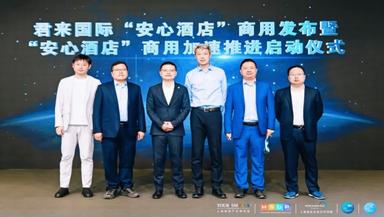
[Shanghai, China, April 1] The 2026 Chinese and Foreign Hotel Brand Innovation Forum was held during the 2026 Shanghai International Hotel Exhibition. The event focused on core topics such as digital transformation of the hotel industry and upgrade of smart residence scenarios. Bringing together top hotel brands at home and abroad, senior industry experts and eco-partners to explore new development paths. Bo Yang, vice director of NIDA's Industry Development Dept, attended the conference. He joined hands with Huawei, Junlai International, Anpu, Hanzhong, and held the launch ceremony of Junlai International's "Reassurance Hotel" solution and the "Reassurance Hotel" solution acceleration, marking the acceleration of the implementation of the smart and secure residence ecosystem.Peace of Mind Hotel is the main innovation direction of the Wireless Smart Awareness Joint Working Group jointly established by NIDA and WAA in the hotel industry. This industry alliance aims to combine industry forces in various countries and regions to enhance the innovation and wide application of WLAN Smart Awareness technologies in related scenarios. Huawei is committed to building an open and win-win ecosystem based on AI as the core driving force and IoT awareness capabilities brought by IEEE 802.11be. This ecosystem is first compatible with IoT plug-in cards or built-in IoT modules in the IEEE802.11ac/ax phase, and adds CSI (Channel State Information, channel state information) and millimeter wave radar technologies, enabling traditional WLANs focusing on connectivity to overlay powerful AI IoT sensing applications.Bo Yang expressed the theme of "WLAN smart sensing capabilities enable the hotel industry to accelerate all-domain digital intelligence". He proposed to build a converged network construction model of "perceived + IoT + security" based on APs, breaking the situation of multi-network coexistence in traditional hotel networks. Leveraging all-scenario leading Wi-Fi 7 products, CSI synaesthesia technology, RCU container sinking solution, and exclusive Smart Eye anti-scandal technology, hotels can help reduce costs, improve efficiency, and operate safely, and build a solid foundation for digital intelligence technologies.Since the concept of "Reassurance Hotel" was first proposed in Sanya last year, it has become a consensus and transformation direction in the industry. The concept of "Reassurance Hotel" is defined from two dimensions of guest and wine management and six levels of system to reshape the new digital culture and travel ecosystem of hotels. For guests, Peace of Mind is divided into three levels: Level 1 provides the ultimate Wi-Fi experience and standard Wi-Fi 7 premium network. Level 2 focuses on personal privacy protection to ensure that there is no candid camera in guest rooms. Level-3 focuses on providing a data security smart space for business negotiation and confidential office. For the wine management, the first level achieves green energy saving; Level-2 achieves intelligent O&M, fast delivery, and non-stop upgrade. Level 3 uses smart IoT and CSI synaesthesia technologies to build future-oriented smart hotels. Its system not only clearly defines the technology implementation path, but also provides a clear value anchor for differentiated hotel competition.At the conference, Junlai International released the "Reassurance Hotel" solution, which is another example of the implementation of Reassurance Hotel in the industry. Junlai International introduced the WLAN intelligent sensing solution, practiced the "Reassurance Hotel" standard, built the guest room anti-scanny shooting system, and upgraded the intelligent and secure operation, becoming the industry benchmark. As more and more customers, standards organizations, and ecosystem partners join the Anxin Hotel ecosystem, Huawei will continue to open up its technical capabilities, work with industry chain partners to improve standards, and expand scenarios. Drive more hotel brands to upgrade to secure and intelligent "hotels with peace of mind".The exhibitors at this Shanghai International Hotel Expo covered most of the mainstream hotel customer control solution vendors in China, among which BitSmart and John Zhong exhibited the complete solutions and application cases of "Reassuring Hotel", which were favored by hotel owners, tavern group customers, and upstream and downstream partners. Sufficiently, the concept of "easy hotel" with wireless intelligence as the core technology will become the industry leader!NIDA will work closely with industry, university, and research organizations, standards organizations, and industry organizations at home and abroad to build a complete and efficient wireless intelligent sensing ecosystem.
2026-04-03
249